

Universiteit van Amsterdam (UVA) • Kunstmatige intelligentie
Latest uploads for Kunstmatige intelligentie at Universiteit van Amsterdam (UVA). Looking for Kunstmatige intelligentie notes at Universiteit van Amsterdam (UVA)? We have lots of notes, study guides and study notes available for Kunstmatige intelligentie at Universiteit van Amsterdam (UVA).
-
51
- 0
-
7
Courses Kunstmatige intelligentie at Universiteit van Amsterdam (UVA)
Notes available for the following courses of Kunstmatige intelligentie at Universiteit van Amsterdam (UVA)
-
Computersystemen 2
-
Computersystemen' 5082COSY6Y 7
-
Filosofie en AI 4
-
Foundations of Multi-Agent Systems 1
-
Inleiding Cognitieve Psychologie 5082INCP6Y 5
-
Inleiding Kunstmatige Intelligentie 5082INKI6Y 18
-
Inleiding Logica 5082INLO6Y 5
-
Inleiding Logica (5082INLO6Y) 1
-
Leren 2
-
Lineaire Algebra 5082LIAL6Y 2
-
Problem Solving And Search 5082PRSS6Y 2
-
Taaltheorie en Taalverwerking 2
Popular books Universiteit van Amsterdam (UVA) • Kunstmatige intelligentie
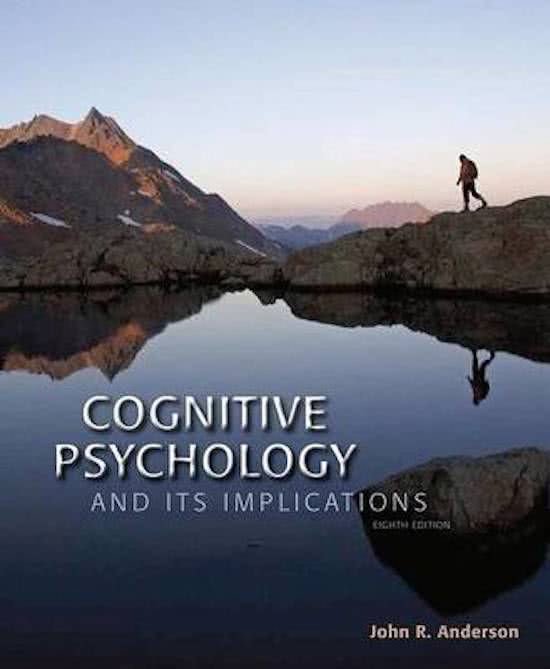
University John R Anderson, John R. Anderson • ISBN 9781464148910

John Anderson, Onbekend • ISBN 9781319279691
Clark Glymour • ISBN 9780262071413
Latest content Universiteit van Amsterdam (UVA) • Kunstmatige intelligentie
Summary of the article “Interactive intent modeling: Information discovery beyond search” by Ruotsalo et al. (2015). About an alternative to search engines that combines interactive intent modeling and visual user interfaces.
- Summary
- • 3 pages's •
-
Universiteit van Amsterdam•Inleiding Kunstmatige Intelligentie
Preview 1 out of 3 pages
Getting your document ready...
Summary of the article “Interactive intent modeling: Information discovery beyond search” by Ruotsalo et al. (2015). About an alternative to search engines that combines interactive intent modeling and visual user interfaces.
Summary of the piece “Vector-space models of words and sentences” by Repplinger et al. (2018). It describes in 4 steps how NLP made the transition from logic-based models to contemporary vector space models.
- Summary
- • 3 pages's •
-
Universiteit van Amsterdam•Inleiding Kunstmatige Intelligentie
Preview 1 out of 3 pages
Getting your document ready...
Summary of the piece “Vector-space models of words and sentences” by Repplinger et al. (2018). It describes in 4 steps how NLP made the transition from logic-based models to contemporary vector space models.
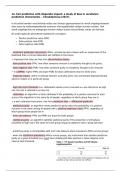
Summary of the piece 'Fair prediction with disparate impact: a study of bias in recidivism prediction instruments' by Chouldechova (2017). About the problems of AI systems that predict recidivism.
- Summary
- • 2 pages's •
-
Universiteit van Amsterdam•Inleiding Kunstmatige Intelligentie
Preview 1 out of 2 pages
Getting your document ready...
Summary of the piece 'Fair prediction with disparate impact: a study of bias in recidivism prediction instruments' by Chouldechova (2017). About the problems of AI systems that predict recidivism.
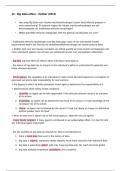
Summary of the piece “Big Data ethics” by Zwitter (2014). About the ethical challenges that Big Data causes.
- Summary
- • 3 pages's •
-
Universiteit van Amsterdam•Inleiding Kunstmatige Intelligentie
Preview 1 out of 3 pages
Getting your document ready...
Summary of the piece “Big Data ethics” by Zwitter (2014). About the ethical challenges that Big Data causes.
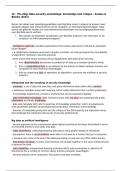
Summary of the piece 'The (Big) Data security assembly: Knowledge and critique' by Aradau & Blanke (2015). About views on Big Data and its criticisms.
- Summary
- • 2 pages's •
-
Universiteit van Amsterdam•Inleiding Kunstmatige Intelligentie
Preview 1 out of 2 pages
Getting your document ready...
Summary of the piece 'The (Big) Data security assembly: Knowledge and critique' by Aradau & Blanke (2015). About views on Big Data and its criticisms.
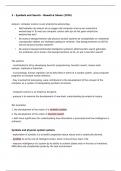
Summary of “Symbols and Search” by Newell & Simon (1976). About physical symbol systems and how they are used in AI.
- Summary
- • 7 pages's •
-
Universiteit van Amsterdam•Inleiding Kunstmatige Intelligentie
Preview 2 out of 7 pages
Getting your document ready...
Summary of “Symbols and Search” by Newell & Simon (1976). About physical symbol systems and how they are used in AI.
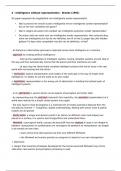
Summary of “Intelligence without representation” by Brooks (1991). About the possibility of intelligence without representation and its benefits for artificial intelligence.
- Summary
- • 4 pages's •
-
Universiteit van Amsterdam•Inleiding Kunstmatige Intelligentie
Preview 1 out of 4 pages
Getting your document ready...
Summary of “Intelligence without representation” by Brooks (1991). About the possibility of intelligence without representation and its benefits for artificial intelligence.
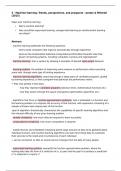
Summary of the article “Machine learning: Trends, perspectives, and prospects” by Jordan & Mitchell (2015). It covers various aspects of and concepts in machine learning.
- Summary
- • 4 pages's •
-
Universiteit van Amsterdam•Inleiding Kunstmatige Intelligentie
Preview 1 out of 4 pages
Getting your document ready...
Summary of the article “Machine learning: Trends, perspectives, and prospects” by Jordan & Mitchell (2015). It covers various aspects of and concepts in machine learning.
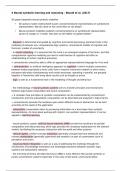
Summary of the piece “Neural-symbolic learning and reasoning” by Besold et al. (2017). It's about neural symbolic models that combine connectionist and symbolic representations into one model.
- Summary
- • 4 pages's •
-
Universiteit van Amsterdam•Inleiding Kunstmatige Intelligentie
Preview 1 out of 4 pages
Getting your document ready...
Summary of the piece “Neural-symbolic learning and reasoning” by Besold et al. (2017). It's about neural symbolic models that combine connectionist and symbolic representations into one model.
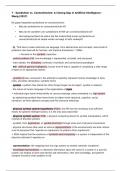
Summary of the text “Symbolism vs. Connectionism: A Closing Gap in Artificial Intelligence” by Wang (2017). About the differences between symbolic and connectionist AI.
- Summary
- • 6 pages's •
-
Universiteit van Amsterdam•Inleiding Kunstmatige Intelligentie
Preview 2 out of 6 pages
Getting your document ready...
Summary of the text “Symbolism vs. Connectionism: A Closing Gap in Artificial Intelligence” by Wang (2017). About the differences between symbolic and connectionist AI.