
PGI Rohtak
Derniers ajouts au PGI Rohtak. Vous recherchez des notes d'étude à PGI Rohtak? Nous avons de nombreuses notes de cours, guides d'étude et notes d'étude disponibles pour les cours de votre institution.
-
25
- 0
-
1
All courses for PGI Rohtak
-
ANAT105 2
-
Biochemistry BP 202 2
-
BP 202 1
-
BP103 BP103 3
-
BP104 BP104 5
-
BP104 BP104 1
-
MBB02 1
-
NNF101 1
-
Not know 6
Dernier contenu PGI Rohtak
This document details primary carbohydrate metabolism pathways, specifically glycolysis, gluconeogenesis, and the Citric Acid Cycle (TCA/Krebs cycle). It covers step-by-step enzymatic reactions, cellular locations, and total ATP/NADH yields, alongside pancreatic hormonal regulation of blood glucose levels via insulin and glucagon.
- Resume
- • 25 pages's •
-
PGI Rohtak•Biochemistry
This document covers introductory biochemistry, detailing the structure, classification, and chemical reactions of major biomolecules, primarily focusing on carbohydrates and lipids. It explores saccharide classifications, functional groups, chemical tests like Fehling's and Tollen's, and lipid categories including fatty acids, triacylglycerols, and phospholipids.
- Resume
- • 19 pages's •
-
PGI Rohtak•Biochemistry
Quick revision
- Book
- Resume
- • 14 pages's •
-
PGI Rohtak•MBB02
-
Essentials of Medical Microbiology • Apurba Sankar Sastry, Sandhya Bhat K• ISBN 9789352704798
This chapter on Carbohydrates covers their introduction, natural sources, and vital biological roles. It explains classification into monosaccharides, disaccharides, oligosaccharides, and polysaccharides. Further, it discusses isomerism, including stereoisomerism, optical isomerism, racemic mixtures, and mutarotation, providing a comprehensive understanding of their structural diversity and functional significance in biological systems.
- Resume
- • 5 pages's •
-
PGI Rohtak•101
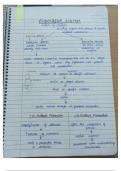
These are handwritten notes including all the previous year questions topics and as per INC Syllabus!!
- Notes de cours
- • 15 pages's •
-
PGI Rohtak•ANAT105
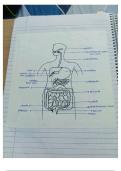
These are handwritten notes for Anatomy and Physiology including all the necessary diagrams....and including all the topics according to INC Syllabus and also previous year questions!!
- Notes de cours
- • 20 pages's •
-
PGI Rohtak•ANAT105
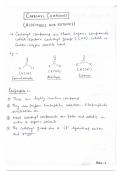
These notes on **Aldehydes and Ketones** provide a concise overview of their introduction, properties, and reactivity. Emphasis is given to nucleophilic addition reactions, the electromeric effect, and mechanisms of key reactions such as aldol, cross aldol, benzoin, Perkin, Cannizzaro, and cross Cannizzaro condensations, highlighting their importance in organic synthesis.
- Resume
- • 11 pages's •
-
PGI Rohtak•BP 202
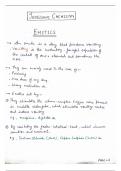
These notes explain the definition and introduction of emetics, which are agents used to induce vomiting in poisoning cases. They cover the mechanism of action of emetics and their important characteristics in simple terms. The notes also include the preparation, properties, and pharmaceutical uses of important inorganic emetics like Copper Sulphate and Sodium Potassium Tartrate, helping you understand their role and applications clearly for your inorganic chemistry studies and exams.
- Notes de cours
- • 3 pages's •
-
PGI Rohtak•BP104
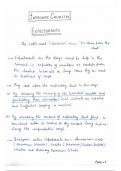
These notes cover expectoration and the role of expectorants in removing mucus from the respiratory tract. They explain the mechanism of action and ideal properties of effective expectorants in simple language. The notes also include the preparation, properties, and pharmaceutical uses of important inorganic expectorants like Ammonium Chloride and Potassium Iodide, helping you understand their applications in pharmacy and prepare well for your inorganic chemistry exams.
- Notes de cours
- • 4 pages's •
-
PGI Rohtak•BP104
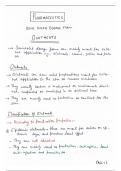
These notes explain what ointments are and why they are used in pharmacy. They cover the classification of ointments based on how deeply they act on the skin and their therapeutic uses. The notes also describe different ointment bases like oleaginous, absorption, emulsion, and water-soluble bases. Additionally, they help you understand how to select the right ointment base according to skin conditions and pharmaceutical factors for better patient care.
- Notes de cours
- • 9 pages's •
-
PGI Rohtak•BP103
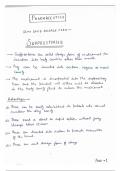
This chapter provides a detailed overview of pharmaceutical suppositories, including their advantages, such as bypassing first-pass metabolism and use in unconscious patients, and disadvantage,s like patient discomfort and limited drug load. It explains the various types of suppositories based on the site of insertion: rectal, vaginal, and urethral. The chapter also covers different bases used in formulatio,n such as fatty bases (like cocoa butter), water-soluble and water-miscible bases (like P...
- Notes de cours
- • 14 pages's •
-
PGI Rohtak•BP103
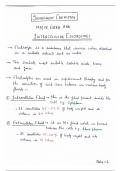
This chapter introduces major extracellular and intracellular electrolytes, along with the classification of body fluids. It explains the properties and roles of key electrolytes, such as calcium, potassium, phosphate, iron, magnesium, chloride, and sodium. Additionally, it covers electrolytes used in replacement therapy, including sodium chloride, calcium gluconate, and potassium chloride, as well as details on oral rehydration salts (ORS) and physiological acid-base balance.
- Notes de cours
- • 8 pages's •
-
PGI Rohtak•BP104
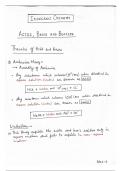
This chapter explains the fundamental concepts of acids, bases, and buffers, which are essential in pharmaceutical and biological systems. It covers definitions, theories (Arrhenius, Bronsted-Lowry, Lewis), pH scale, buffer systems, and their role in maintaining physiological pH. The chapter also highlights buffer capacity, preparation, and drug formulation and stability applications.
- Notes de cours
- • 10 pages's •
-
PGI Rohtak•BP104
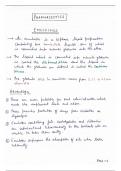
This chapter on emulsions provides a detailed overview of biphasic liquid dosage forms, focusing on their pharmaceutical significance. It includes an introduction to emulsions, their advantages, and classification into various types. The chapter also covers tests for identifying emulsion types, formulation ingredients, methods of preparation, and factors influencing the stability and shelf-life of emulsions.
- Notes de cours
- • 9 pages's •
-
PGI Rohtak•BP103
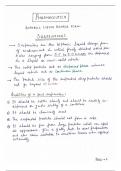
This chapter deals with biphasic liquid dosage forms, focusing on pharmaceutical suspensions. It includes the definition and importance of suspensions, essential qualities of a good suspension, their advantages and disadvantages, types or classifications, formulation aspects including ingredients used, and the factors affecting their physical stability in order to ensure safe and effective use.
- Notes de cours
- • 9 pages's •
-
PGI Rohtak•BP104\\\\\\\\
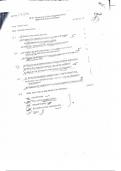
Providing the most important questions for the medical surgical nursing help to gain utmost knowledge in minimum time
- Examen
- • 1 pages's •
-
PGI Rohtak•NNF101

Hare krishna mere bhae bheno this is a my hand written notes of Bsc nursing . Nervous system i hope this is very helpfull for you .thThank you so much
- Notes de cours
- • 0 pages's •
-
PGI Rohtak•Not know
This is a my hand written notes of Bsc nursing nursing 1st year student and i will tried to write a clear and this notes are unit 10th Nervous system in anatomy and physiology. Ihope this very helpful for you and next time i will do a improve and provide a beautiful notes thank you so much
- Notes de cours
- • 0 pages's •
-
PGI Rohtak•Not know
My document is hand written notes of Bsc nursing 1st year Anatomy and physiology .in which We will provid 1at part of the Nervous system unit. I hope apko eski language esay lga
- Notes de cours
- • 0 pages's •
-
PGI Rohtak•Not know
My document is hand written notes of Bsc nursing 1st year Anatomy and physiology .in which We will provid 1at part of the Nervous system unit. I hope apko eski language esay lga
- Notes de cours
- • 0 pages's •
-
PGI Rohtak•Not know