

BIOD 151
Derniers ajouts au BIOD 151. Vous recherchez des notes d'étude à BIOD 151? Nous avons de nombreuses notes de cours, guides d'étude et notes d'étude disponibles pour les cours de votre institution.
-
2194
- 0
-
196
All courses for BIOD 151
-
BioD 151 2
-
BIOD 151 2193
-
BIOD 151, 1
-
BIOD 151: 4
-
BIOD 151( 3
-
Biod 151/ 1
-
Biod 151 1
-
Biod-151 2
Dernier contenu BIOD 151
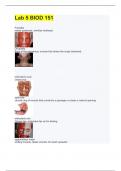
Lab 5 BIOD 151 Frontalis raises eyebrows, wrinkles forehead Occiptalis Back of the epicranius; muscle that draws the scalp backward. Brainpower Read More orbicularis oculi closes eye sphincter circular ring of muscle that constricts a passage or closes a natural opening orbicularis oris Closes lips, protrudes lips as for kissing zygomaticus major smiling muscle, raises corners of mouth upwards
- Examen
- • 4 pages's •
-
BIOD 151•BIOD 151
Aperçu 1 sur 4 pages
Préparation de vos documents...
Lab 5 BIOD 151 Frontalis raises eyebrows, wrinkles forehead Occiptalis Back of the epicranius; muscle that draws the scalp backward. Brainpower Read More orbicularis oculi closes eye sphincter circular ring of muscle that constricts a passage or closes a natural opening orbicularis oris Closes lips, protrudes lips as for kissing zygomaticus major smiling muscle, raises corners of mouth upwards
biod 151 lab 4 terms coronal suture the suture between the parietal and frontal bones of the skull midsaggital suture dense, fibrous connective tissue joint between the two parietal bones of the skull lambdoidal suture suture that separates parietal bones from occipital bone squamosal suture between parietal bone and temporal bone on side of the skull, bordered in back by occipital bone frontal bone forehead parietal bone either of two skull bones between the frontal and occipital ...
- Examen
- • 2 pages's •
-
biod 151•biod 151
Aperçu 1 sur 2 pages
Préparation de vos documents...
biod 151 lab 4 terms coronal suture the suture between the parietal and frontal bones of the skull midsaggital suture dense, fibrous connective tissue joint between the two parietal bones of the skull lambdoidal suture suture that separates parietal bones from occipital bone squamosal suture between parietal bone and temporal bone on side of the skull, bordered in back by occipital bone frontal bone forehead parietal bone either of two skull bones between the frontal and occipital ...
BIOD 151 lab 3 key terms (Portage) fibrous connective tissue A dense tissue with large numbers of collagenous fibers organized into parallel bundles. This is the dominant tissue in tendons and ligaments. bone Dense, hard connective tissue composing the skeleton. All bones are classified according to their shape. Cartilage cells are called chondrocytes that secrete the gel-like ground substance around themselves. contains no blood vessels; instead the blood vessels lay around it and drop ...
- Examen
- • 3 pages's •
-
BIOD 151•BIOD 151
Aperçu 1 sur 3 pages
Préparation de vos documents...
BIOD 151 lab 3 key terms (Portage) fibrous connective tissue A dense tissue with large numbers of collagenous fibers organized into parallel bundles. This is the dominant tissue in tendons and ligaments. bone Dense, hard connective tissue composing the skeleton. All bones are classified according to their shape. Cartilage cells are called chondrocytes that secrete the gel-like ground substance around themselves. contains no blood vessels; instead the blood vessels lay around it and drop ...
BIOD 151 Lab 2 Pharynx throat; passageway for food to the esophagus and air to the larynx Larynx voice box; passageway for air moving from pharynx to trachea; contains vocal cords Trachea a large membranous tube reinforced by rings of cartilage, extending from the larynx to the bronchial tubes and conveying air to and from the lungs; the windpipe. Bronchi/Bronchus The two tubes formed when the trachea divides into two, one passes into each lung Bronchioles smallest branches of the br...
- Examen
- • 2 pages's •
-
BIOD 151•BIOD 151
Aperçu 1 sur 2 pages
Préparation de vos documents...
BIOD 151 Lab 2 Pharynx throat; passageway for food to the esophagus and air to the larynx Larynx voice box; passageway for air moving from pharynx to trachea; contains vocal cords Trachea a large membranous tube reinforced by rings of cartilage, extending from the larynx to the bronchial tubes and conveying air to and from the lungs; the windpipe. Bronchi/Bronchus The two tubes formed when the trachea divides into two, one passes into each lung Bronchioles smallest branches of the br...
BIOD 151 FINAL EXAM QUESTIONS AND CORRECT ANSWERS, 346 QUESTIONS TO PREPARE FOR YOUR FINAL EXAM. A+ GUARANTEE. Anatomy Structure of the body Physiology How the body functions Atoms Smallest building blocks of matter Cell Smallest units of living organisms Organism A living thing composed of organ systems Epithelial tissue - Covers body surfaces and lines the cavities of the body - Specialized for tasks such as secretion and absorption - Closely packed cells w/ little matrix Musc...
- Examen
- • 25 pages's •
-
BIOD 151•BIOD 151
Aperçu 3 sur 25 pages
Préparation de vos documents...
BIOD 151 FINAL EXAM QUESTIONS AND CORRECT ANSWERS, 346 QUESTIONS TO PREPARE FOR YOUR FINAL EXAM. A+ GUARANTEE. Anatomy Structure of the body Physiology How the body functions Atoms Smallest building blocks of matter Cell Smallest units of living organisms Organism A living thing composed of organ systems Epithelial tissue - Covers body surfaces and lines the cavities of the body - Specialized for tasks such as secretion and absorption - Closely packed cells w/ little matrix Musc...
FINAL EXAM BIOD 151 QUESTIONS AND CORRECT ANSWERS. 1. List two organs contained in the abdominal cavity. The abdominal cavity contains the stomach, intestines, spleen and liver 1. List two organs contained in the pelvic cavity. The pelvic cavity contains the bladder, reproductive organs and the rectum a. The purpose of cellular respiration is to produce ADP. (T or F) False- (ATP is produced, not ADP) b. Peripheral proteins are found on the outer surface of a cell membrane. (T or F) Tru...
- Examen
- • 6 pages's •
-
BIOD 151•BIOD 151
Aperçu 2 sur 6 pages
Préparation de vos documents...
FINAL EXAM BIOD 151 QUESTIONS AND CORRECT ANSWERS. 1. List two organs contained in the abdominal cavity. The abdominal cavity contains the stomach, intestines, spleen and liver 1. List two organs contained in the pelvic cavity. The pelvic cavity contains the bladder, reproductive organs and the rectum a. The purpose of cellular respiration is to produce ADP. (T or F) False- (ATP is produced, not ADP) b. Peripheral proteins are found on the outer surface of a cell membrane. (T or F) Tru...
Biod 151 - final exam Questions and Answers, With Pictorial Diagrams, Complete Solution. What are the levels of organization in the body? atom, molecule, macromolecule, organelle, cell, tissue, organ, organ systems, organism What is superior v inferior? toward the head (above) v away from the head (below) What is ventral v dorsal? front (anterior) v back (posterior) What is medial v lateral? toward the midline of the body v away from the midline of the body What is proximal v distal? ...
- Examen
- • 12 pages's •
-
Biod 151•Biod 151
Aperçu 2 sur 12 pages
Préparation de vos documents...
Biod 151 - final exam Questions and Answers, With Pictorial Diagrams, Complete Solution. What are the levels of organization in the body? atom, molecule, macromolecule, organelle, cell, tissue, organ, organ systems, organism What is superior v inferior? toward the head (above) v away from the head (below) What is ventral v dorsal? front (anterior) v back (posterior) What is medial v lateral? toward the midline of the body v away from the midline of the body What is proximal v distal? ...
BIOD 151 Module 7 - Integumentary System (Summary). layers of skin 1. Epidermis 2. Dermis 3. Hypodermis (subcutaneous layer) function of skin 1. absorb UV light for vitamin D production 2. sensory receptors and glands 3. protection from temp. changes 4. protect from miroorganisms sensory organs 1. merkel cells 2. missener's corpuscles 3. nociceptors 4. thermoreceptors 5. pacinian corpuscles merkel cells mechanoreceptors detect mechanical sensory information of li...
- Examen
- • 9 pages's •
-
BIOD 151•BIOD 151
Aperçu 2 sur 9 pages
Préparation de vos documents...
BIOD 151 Module 7 - Integumentary System (Summary). layers of skin 1. Epidermis 2. Dermis 3. Hypodermis (subcutaneous layer) function of skin 1. absorb UV light for vitamin D production 2. sensory receptors and glands 3. protection from temp. changes 4. protect from miroorganisms sensory organs 1. merkel cells 2. missener's corpuscles 3. nociceptors 4. thermoreceptors 5. pacinian corpuscles merkel cells mechanoreceptors detect mechanical sensory information of li...
BIOD 151 Module 7 Questions and Correct Answers, Complete Solution 2024. what is the integumentary system consist of hair, skin, nails the largest organ in the body skin outer layer of skin epidermis middle layer of skin dermis inner layer of skin epidermis another name for epidermis subcutaneous layer how is vitamin D produced skin cells absorb ultraviolet radiation what does the integumentary system contain to protect the skin and underlying tissues sensory receptors and glands...
- Examen
- • 5 pages's •
-
BIOD 151•BIOD 151
Aperçu 2 sur 5 pages
Préparation de vos documents...
BIOD 151 Module 7 Questions and Correct Answers, Complete Solution 2024. what is the integumentary system consist of hair, skin, nails the largest organ in the body skin outer layer of skin epidermis middle layer of skin dermis inner layer of skin epidermis another name for epidermis subcutaneous layer how is vitamin D produced skin cells absorb ultraviolet radiation what does the integumentary system contain to protect the skin and underlying tissues sensory receptors and glands...
BIOD 151 Module 7 Exam Questions and Correct Answers With Complete Solution, 2024. The integumentary system is comprised of what three parts of the body? skin, hair, nails List the layers of the skin superficial to deep. epidermis, dermis, hypodermis Describe 3 functions of the integumentary system. production of vitamin D, contain sense organs for protection of skin and underlying tissue, protection from pathogens T or F: Thermoreceptors detect fine touch. false; Merkel's cells and M...
- Examen
- • 4 pages's •
-
BIOD 151•BIOD 151
Aperçu 1 sur 4 pages
Préparation de vos documents...
BIOD 151 Module 7 Exam Questions and Correct Answers With Complete Solution, 2024. The integumentary system is comprised of what three parts of the body? skin, hair, nails List the layers of the skin superficial to deep. epidermis, dermis, hypodermis Describe 3 functions of the integumentary system. production of vitamin D, contain sense organs for protection of skin and underlying tissue, protection from pathogens T or F: Thermoreceptors detect fine touch. false; Merkel's cells and M...