

Thompson River University (TRU ) • Nursing
Meest recente samenvattingen voor de opleiding Nursing op de Thompson River University (TRU ). Op zoek naar een samenvatting voor Nursing? Wij hebben diverse samenvattingen voor de opleiding Nursing op de Thompson River University (TRU ).
-
75
- 0
-
2
Vakken Nursing op de Thompson River University (TRU )
Er zijn samenvattingen beschikbaar voor de volgende vakken van Nursing op Thompson River University (TRU )
-
AIT Nursing RS 43
-
Anatomy and Physiology AIT-NAB 1
-
Master of Nursing Behavioral Exam 16
-
NR601 NR601 15
Laatste content Thompson River University (TRU ) • Nursing
- Tentamen (uitwerkingen)
- • 2 pagina's's •
-
Thompson River University•Master of Nursing
Voorbeeld 1 van de 2 pagina's
Document laden...
What are the four hormone classes? 17.2 ● Hormones can be divided into two major groups on the basis of the chemical structure- derived from amino acids or lipids 1. Amine Hormone- Amino acids with modified groups (norepinephrines carboxyl group is replaced with a benzene ring) 2. Peptide Hormone- Short chains of linked amino acids 3. Protein Hormone- Long chains of linked amino acids 4. Steroid Hormones- Derived from the lipid cholesterol Which are lipid soluble vs. water soluble? W...
- Tentamen (uitwerkingen)
- • 6 pagina's's •
-
Thompson River University•Master of Nursing
Voorbeeld 2 van de 6 pagina's
Document laden...
What are the four hormone classes? 17.2 ● Hormones can be divided into two major groups on the basis of the chemical structure- derived from amino acids or lipids 1. Amine Hormone- Amino acids with modified groups (norepinephrines carboxyl group is replaced with a benzene ring) 2. Peptide Hormone- Short chains of linked amino acids 3. Protein Hormone- Long chains of linked amino acids 4. Steroid Hormones- Derived from the lipid cholesterol Which are lipid soluble vs. water soluble? W...
Overview Pharmacokinetics and pharmacodynamics in women Factors that influence medication administration Factors that influence positive outcomes Common problems Gay and lesbian health Women as Patients Prescribing during childbearing years Constant awareness of possible pregnancy Lactation requires careful prescribing. Women are at risk for violence. All women should be screened. Women live longer than men. Live alone Poverty Changes in cognitive and physical functioning...
- Boek
- Samenvatting
- • 18 pagina's's •
-
Thompson River University•Master of Nursing
-
Pharmacotherapeutics For Advanced Practice Nurse Prescribers • Teri Moser Woo, Marylou V Robinson• ISBN 9780803645813
Voorbeeld 3 van de 18 pagina's
Document laden...
Overview Pharmacokinetics and pharmacodynamics in women Factors that influence medication administration Factors that influence positive outcomes Common problems Gay and lesbian health Women as Patients Prescribing during childbearing years Constant awareness of possible pregnancy Lactation requires careful prescribing. Women are at risk for violence. All women should be screened. Women live longer than men. Live alone Poverty Changes in cognitive and physical functioning...
Question 1 The Brain 1. List the four parts of the human brain. The human brain is made up of the cerebral hemispheres, diencephalon, brain stem, and cerebellum. 2. Describe the number, location and function of the brain ventricles. There are four ventricles in the interior of the brain, chambers filled with cerebrospinal fluid which is produced there. 3. Label the ventricles. See figure in module. 4. Describe the brain meninges and the layers. The meninges are three layers of connecti...
- Tentamen (uitwerkingen)
- • 14 pagina's's •
-
Thompson River University•Master of Nursing
Voorbeeld 2 van de 14 pagina's
Document laden...
Question 1 The Brain 1. List the four parts of the human brain. The human brain is made up of the cerebral hemispheres, diencephalon, brain stem, and cerebellum. 2. Describe the number, location and function of the brain ventricles. There are four ventricles in the interior of the brain, chambers filled with cerebrospinal fluid which is produced there. 3. Label the ventricles. See figure in module. 4. Describe the brain meninges and the layers. The meninges are three layers of connecti...
Problem Set 1: 1. The function of the nervous system is to integrate and control the other body systems. Explain how the nervous system does this. The nervous system receives and processes information and sends out signals to the muscle and glands to elicit an appropriate response. In this way the nervous system integrates and controls the other systems of the human body 2. List the 2 parts of the central nervous system. brain and spinal cord 3. How are the parts of the central nervous syst...
- Tentamen (uitwerkingen)
- • 14 pagina's's •
-
Thompson River University•Master of Nursing
Voorbeeld 2 van de 14 pagina's
Document laden...
Problem Set 1: 1. The function of the nervous system is to integrate and control the other body systems. Explain how the nervous system does this. The nervous system receives and processes information and sends out signals to the muscle and glands to elicit an appropriate response. In this way the nervous system integrates and controls the other systems of the human body 2. List the 2 parts of the central nervous system. brain and spinal cord 3. How are the parts of the central nervous syst...
Question 1 The Brain 1. List the four parts of the human brain. The human brain is made up of the cerebral hemispheres, diencephalon, brain stem, and cerebellum. 2. Describe the number, location and function of the brain ventricles. There are four ventricles in the interior of the brain, chambers filled with cerebrospinal fluid which is produced there. 3. Label the ventricles. See figure in module. 4. Describe the brain meninges and the layers. The meninges are three layers of connecti...
- Tentamen (uitwerkingen)
- • 14 pagina's's •
-
Thompson River University•Master of Nursing
Voorbeeld 2 van de 14 pagina's
Document laden...
Question 1 The Brain 1. List the four parts of the human brain. The human brain is made up of the cerebral hemispheres, diencephalon, brain stem, and cerebellum. 2. Describe the number, location and function of the brain ventricles. There are four ventricles in the interior of the brain, chambers filled with cerebrospinal fluid which is produced there. 3. Label the ventricles. See figure in module. 4. Describe the brain meninges and the layers. The meninges are three layers of connecti...
Question 1 This layer of the meninges is tightly attached to the brain. Pia mater (menix) Question 2 The _______ fissure separates the right and left cerebral hemispheres. Median longitudinal Question 3 What is the purpose of the blood-brain barrier? Describe its maintenance from a cellular level. The blood-brain barrier is a diffusion barrier which prevents most particles from entering the central nervous system tissue, keeping the brain and spinal cord separate from general blood...
- Tentamen (uitwerkingen)
- • 12 pagina's's •
-
Thompson River University•Master of Nursing
Voorbeeld 2 van de 12 pagina's
Document laden...
Question 1 This layer of the meninges is tightly attached to the brain. Pia mater (menix) Question 2 The _______ fissure separates the right and left cerebral hemispheres. Median longitudinal Question 3 What is the purpose of the blood-brain barrier? Describe its maintenance from a cellular level. The blood-brain barrier is a diffusion barrier which prevents most particles from entering the central nervous system tissue, keeping the brain and spinal cord separate from general blood...
Intro to Nervous System 1. The function of the nervous system is to integrate and control the other body systems. Explain how the nervous system does this. Nervous system processes information and sends out signals to the muscles and glands, which causes a response. 2. List the 2 parts of the central nervous system. Brain and the spinal cord 3. How are the parts of the central nervous system protected? Brain is protected by the skull, and the spinal cord is protected by the vertebrae...
- Tentamen (uitwerkingen)
- • 32 pagina's's •
-
Thompson River University•Master of Nursing
Voorbeeld 4 van de 32 pagina's
Document laden...
Intro to Nervous System 1. The function of the nervous system is to integrate and control the other body systems. Explain how the nervous system does this. Nervous system processes information and sends out signals to the muscles and glands, which causes a response. 2. List the 2 parts of the central nervous system. Brain and the spinal cord 3. How are the parts of the central nervous system protected? Brain is protected by the skull, and the spinal cord is protected by the vertebrae...
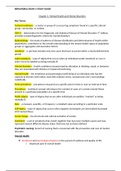
Key Terms: Cultural syndrome – a cluster or group of co-occurring symptoms found in a specific cultural group, community, or context DSM-5 – abbreviation for the Diagnostic and Statistical Manual of Mental Disorders 5th edition; provides revised diagnostic criteria for mental disorders Epidemiology – the study of patterns of disease distribution and determinants of health within populations; contributes to the overall understanding of the mental health status of population groups or ag...
- Tentamen (uitwerkingen)
- • 40 pagina's's •
-
Thompson River University•Master of Nursing
Voorbeeld 4 van de 40 pagina's
Document laden...
Key Terms: Cultural syndrome – a cluster or group of co-occurring symptoms found in a specific cultural group, community, or context DSM-5 – abbreviation for the Diagnostic and Statistical Manual of Mental Disorders 5th edition; provides revised diagnostic criteria for mental disorders Epidemiology – the study of patterns of disease distribution and determinants of health within populations; contributes to the overall understanding of the mental health status of population groups or ag...
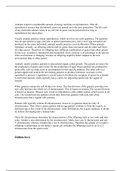
Problem Set 1: 1. What is the general term used to describe animal sex cells? What are the specific male and female sex cells called? sex cells are the gametes, males are (sperm) sprematocytes, females are (eggs) oocytes 2. How does it happen that an offspring has a different combination of genes than either parent? When a male and a female reproduce sexually, an offspring is form and inherits a set of genes from the mom and a set of genes from the dad. This results in a different combina...
- Tentamen (uitwerkingen)
- • 36 pagina's's •
-
Thompson River University•Master of Nursing
Voorbeeld 4 van de 36 pagina's
Document laden...
Problem Set 1: 1. What is the general term used to describe animal sex cells? What are the specific male and female sex cells called? sex cells are the gametes, males are (sperm) sprematocytes, females are (eggs) oocytes 2. How does it happen that an offspring has a different combination of genes than either parent? When a male and a female reproduce sexually, an offspring is form and inherits a set of genes from the mom and a set of genes from the dad. This results in a different combina...