

Kings College London (KCL)
Latest uploads at Kings College London (KCL). Looking for notes at Kings College London (KCL)? We have lots of notes, study guides and study notes available for your school.
-
777
-
28
-
60
Majors at Kings College London (KCL)
Notes available for the following studies at Kings College London (KCL)
-
A-level 1
-
BA Geography 1
-
Biochemistry 4
-
Biology 1
-
Biomedical science 1
-
Biomedical/Medicine 5
-
BSc Biomedical Sciences 19
-
BSc Business Management 1
-
BSc Psychology 8
-
Business 1
-
Dentistry/ Medicine undegraduate 1
-
English Literature 1
-
French with English 1
-
International Management 20
-
International Relations 1
-
Kings College London 167
-
Law LLB 26
-
Politics, Philosophy and Law 2
-
Software Development 2
Popular books Kings College London (KCL)
Ellen G. Strauss, James H. Strauss • ISBN 9780123737410
Andrew Le Sueur, Maurice Sunkin • ISBN 9780199644186

A P Simester, John Spencer • ISBN 9781849467223
Latest content Kings College London (KCL)
This essay focuses on the inherited cancer syndromes. Some examples include Lynch syndrome, familial adenomatous polyposis (FAP), BRCA1/2 related disease, multiple endocrine neoplasia and Li-Fraumeni syndrome. Lynch syndrome is caused by impaired DNA repair, FAP is caused by a faulty TSG, BRCA1/2 related disease is caused by impaired double stranded break repair and Li-Fraumeni syndrome is associated with TP53 defects.
- Essay
- • 3 pages's •
-
Kings College London•Cancer genetics
Preview 1 out of 3 pages
Getting your document ready...
This essay focuses on the inherited cancer syndromes. Some examples include Lynch syndrome, familial adenomatous polyposis (FAP), BRCA1/2 related disease, multiple endocrine neoplasia and Li-Fraumeni syndrome. Lynch syndrome is caused by impaired DNA repair, FAP is caused by a faulty TSG, BRCA1/2 related disease is caused by impaired double stranded break repair and Li-Fraumeni syndrome is associated with TP53 defects.
Lecture one focuses on the Mechanisms of carcinogenesis. The lifetime risk for any individual to develop cancer is 50%. 38% of these cases are preventable, including melanoma, lung cancer and breast cancer. 15% of cancer cases are related to smoking and 3%-10% are related to obesity. Predisposing factors to cancer include toxins, inflammation and immunity, genetic mutations, hormones and ethnicity. Risk factors include occupation, family and medical history, age, gender, ethnicity, genes, immuni...
- Essay
- • 5 pages's •
-
Kings College London•Cancer genetics
Preview 2 out of 5 pages
Getting your document ready...
Lecture one focuses on the Mechanisms of carcinogenesis. The lifetime risk for any individual to develop cancer is 50%. 38% of these cases are preventable, including melanoma, lung cancer and breast cancer. 15% of cancer cases are related to smoking and 3%-10% are related to obesity. Predisposing factors to cancer include toxins, inflammation and immunity, genetic mutations, hormones and ethnicity. Risk factors include occupation, family and medical history, age, gender, ethnicity, genes, immuni...
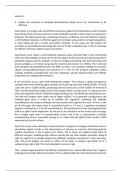
These essays cover in depth lecture 3 in Immunology of Human Disease. The two questions allow to organise and structure your response for your exam. These questions are: Explain the principle of antibody diversification which occurs for vaccination to be effective; and Explain the principles of vaccination, elucidating the mechanisms through which vaccines induce adaptive immune responses. Discuss the role of B cells, antibodies, and T cells in mounting an effective immune response upon vaccinat...
- Class notes
- • 4 pages's •
-
Kings College London•Immunology of Human Disease
Preview 1 out of 4 pages
Getting your document ready...
These essays cover in depth lecture 3 in Immunology of Human Disease. The two questions allow to organise and structure your response for your exam. These questions are: Explain the principle of antibody diversification which occurs for vaccination to be effective; and Explain the principles of vaccination, elucidating the mechanisms through which vaccines induce adaptive immune responses. Discuss the role of B cells, antibodies, and T cells in mounting an effective immune response upon vaccinat...
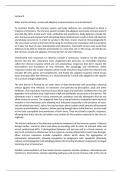
This essay covers all the lecture content of lecture 8 of Immunology of Human Disease. It focuses on two main aspects: the intrinsic, innate and adaptive immune barriers to viral infection; and pattern recognition. To maintain health, the immune system and body defences are coordinated to block a majority of infections. Pattern recognition involves the recognition pathogen associated molecular patterns by PRRs upon virus infection of host cells.
- Package deal
- Class notes
- • 4 pages's •
-
Kings College London•Immunology of Human Disease
-
8 lectures on Immunology of Human Disease - 6BBBI608• Byines5
Preview 1 out of 4 pages
Getting your document ready...
This essay covers all the lecture content of lecture 8 of Immunology of Human Disease. It focuses on two main aspects: the intrinsic, innate and adaptive immune barriers to viral infection; and pattern recognition. To maintain health, the immune system and body defences are coordinated to block a majority of infections. Pattern recognition involves the recognition pathogen associated molecular patterns by PRRs upon virus infection of host cells.
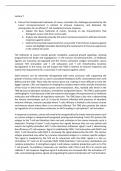
This essay covers all the content of lecture 7 of Immunology of Human Disease. The essay question is: Discuss the fundamental hallmarks of cancer, elucidate the challenges presented by the tumour microenvironment in relation to immune responses, and delineate the prerequisites for an efficient T cell-mediated immune response.
- Package deal
- Class notes
- • 4 pages's •
-
Kings College London•Immunology of Human Disease
-
8 lectures on Immunology of Human Disease - 6BBBI608• Byines5
Preview 1 out of 4 pages
Getting your document ready...
This essay covers all the content of lecture 7 of Immunology of Human Disease. The essay question is: Discuss the fundamental hallmarks of cancer, elucidate the challenges presented by the tumour microenvironment in relation to immune responses, and delineate the prerequisites for an efficient T cell-mediated immune response.
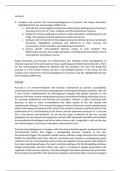
These essays cover all the content of lecture 6 in Immunology of Human Disease. The first question delves into he immuno-pathogenesis of psoriasis and atopic dermatitis, highlighting their key immunological differences. There are 4 subquestions focusing on different aspects of the diseases. The second question delves into analysing the current challenges in the treatment of inflammatory skin diseases, discussing the limitations and advancements in therapeutic approaches.
- Package deal
- Class notes
- • 5 pages's •
-
Kings College London•Immunology of Human Disease
-
8 lectures on Immunology of Human Disease - 6BBBI608• Byines5
Preview 2 out of 5 pages
Getting your document ready...
These essays cover all the content of lecture 6 in Immunology of Human Disease. The first question delves into he immuno-pathogenesis of psoriasis and atopic dermatitis, highlighting their key immunological differences. There are 4 subquestions focusing on different aspects of the diseases. The second question delves into analysing the current challenges in the treatment of inflammatory skin diseases, discussing the limitations and advancements in therapeutic approaches.
This essay covers all the content of lecture 5 of Immunology of Human Disease. It discusses Allergy and Asthma. The question is: Discuss the intricate immune mechanisms underlying IgE-mediated allergy, the diagnostic tests utilized for identifying this allergic condition, and the range of targeted therapies employed in managing IgE-mediated allergies.
- Package deal
- Class notes
- • 3 pages's •
-
Kings College London•Immunology of Human Disease
-
8 lectures on Immunology of Human Disease - 6BBBI608• Byines5
Preview 1 out of 3 pages
Getting your document ready...
This essay covers all the content of lecture 5 of Immunology of Human Disease. It discusses Allergy and Asthma. The question is: Discuss the intricate immune mechanisms underlying IgE-mediated allergy, the diagnostic tests utilized for identifying this allergic condition, and the range of targeted therapies employed in managing IgE-mediated allergies.
These essays cover all the lecture content of lecture 4 of 6BBBI608. It discusses the pathogenesis of Type 1 Diabetes (T1D). The first question is: Elaborate on the multifaceted significance of Type 1 Diabetes (T1D), considering its clinical features, epidemiology, and underlying pathology. Subsequently, explain the relevance of comprehending T1D in an Immunology course, highlighting its classification as an autoimmune disease and delving into the immunological mechanisms behind pancreatic bet...
- Package deal
- Class notes
- • 4 pages's •
-
Kings College London•Immunology of Human Disease
-
8 lectures on Immunology of Human Disease - 6BBBI608• Byines5
Preview 1 out of 4 pages
Getting your document ready...
These essays cover all the lecture content of lecture 4 of 6BBBI608. It discusses the pathogenesis of Type 1 Diabetes (T1D). The first question is: Elaborate on the multifaceted significance of Type 1 Diabetes (T1D), considering its clinical features, epidemiology, and underlying pathology. Subsequently, explain the relevance of comprehending T1D in an Immunology course, highlighting its classification as an autoimmune disease and delving into the immunological mechanisms behind pancreatic bet...
This essay covers all the content of lecture 10 of Immunology of Human Disease. It discusses Rheumatoid arthritis as a chronic immune-mediated inflammatory disease. It discusses that chronic inflammatory disease results from an ongoing stimulus during which innate helper cells try to resolve but the ongoing stimulus results in more cell recruitment, causing an increased inflammation and changes in the cells. This causes a repetitive cycle and an increased disease. The chronic inflammation in RA ...
- Package deal
- Class notes
- • 3 pages's •
-
Kings College London•Immunology of Human Disease
-
8 lectures on Immunology of Human Disease - 6BBBI608• Byines5
Preview 1 out of 3 pages
Getting your document ready...
This essay covers all the content of lecture 10 of Immunology of Human Disease. It discusses Rheumatoid arthritis as a chronic immune-mediated inflammatory disease. It discusses that chronic inflammatory disease results from an ongoing stimulus during which innate helper cells try to resolve but the ongoing stimulus results in more cell recruitment, causing an increased inflammation and changes in the cells. This causes a repetitive cycle and an increased disease. The chronic inflammation in RA ...
This essay covers all the content of lecture 2 in Immunology of Human Disease. It discusses the main components of the gut mucosal immune system and their roles in maintaining intestinal homeostasis. It elaborates on the importance of gut microbiota in maintaining gut health and its role in the pathogenesis of Inflammatory Bowel Disease.
- Package deal
- Class notes
- • 2 pages's •
-
Kings College London•Immunology of Human Disease
-
8 lectures on Immunology of Human Disease - 6BBBI608• Byines5
Preview 1 out of 2 pages
Getting your document ready...
This essay covers all the content of lecture 2 in Immunology of Human Disease. It discusses the main components of the gut mucosal immune system and their roles in maintaining intestinal homeostasis. It elaborates on the importance of gut microbiota in maintaining gut health and its role in the pathogenesis of Inflammatory Bowel Disease.