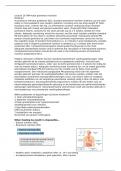
Lecture 10 TPN=total parenteral nutrition
Kinderen:
According to relevant guidelines [61], standard parenteral nutrition solutions can be used
safely in most paediatric and newborn patients, including very low body weight M. Tubic-
Grozdanis and I. Krämer 501 Fig. 21.4 Parenteral nutrition containing three chamber
infusion bag with closed and opened separation seals. (Copyright Peter Pulkowski)
premature infants, certainly for the short periods (up to 2–3 weeks) needed for most
infants. Adequate monitoring should be assured, and the most suitable available standard
PN formulation for the infant’s condition should be prescribed. Individually tailored PN
solution should generally be used when the nutritional requirements cannot be met by
the available range of standard formulations (i.e. in critically ill and metabolically unstable
patients) and if longterm parenteral nutrition is needed (e.g. in infants with short bowel
syndrome) [61]. Computerized programs should guide the physician to the most
adequate standardized solution and to optimize the calculation of individualized solutions.
Computerized prescription should also be used in the ordering process of parenteral
nutrition preparations [61].
Volgens relevante richtlijnen kunnen standaard parenterale voedingsoplossingen veilig
worden gebruikt bij de meeste pediatrische en pasgeboren patiënten, inclusief zeer
lichtgewicht premature baby's, zeker voor de korte periodes (tot 2-3 weken) die nodig zijn
voor de meeste baby's. Adequate monitoring moet verzekerd zijn, en de meest geschikte
beschikbare standaard PN-formulering voor de conditie van de baby moet worden
voorgeschreven. Een individueel aangepaste PN-oplossing moet over het algemeen
worden gebruikt wanneer de voedingsbehoeften niet kunnen worden voldaan met het
beschikbare assortiment standaardformuleringen (d.w.z. bij kritisch zieke en metabool
instabiele patiënten) en als langdurige parenterale voeding nodig is (bijv. bij baby's met
kortdarmsyndroom). Gecomputeriseerde programma's moeten de arts leiden naar de
meest adequate gestandaardiseerde oplossing en de berekening van geïndividualiseerde
oplossingen optimaliseren. Gecomputeriseerd voorschrijven moet ook worden gebruikt in
het bestelproces van parenterale voedingsbereidingen.
Welke problemen en beperkingen bij kleine kinderen??
1. Geen standaardmengsels
2. Beperkte vloeistofbelasting
3.Hoge gevoeligheid voor hyperosmolariteit
4.Kwetsbaarheid voor infecties
5.Specifieke elektrolytenbehoeften
6.Micronutrienten balans
7.Instabiliteit van mengsel
8.toxiciteit van grotere vetdruppels
When feeding by mouth is impossible…
› Enteral nutrition (EN)
› Parenteral nutrition (PN)
› Healthy adult: metabolic catabolism after ca. 14 h not eating
› Increased protein breakdown: post operation, after trauma
, Intensive care, → parenterale voeding→ alles bij elkaar stopt totale voeding.
Uur of 14 niet eten→ afbraak eiwitten
What is TPN?
Total Parenteral Nutrition
§ Nutrient substances and fluids administered by
intravenous infusion
§ Alone or in combination with enteral feeding
§ Contains everything the body needs
Eigenlijk wat in een hamburger zit in TPN,
koolhydraten, vetten en eiwitten.
When is TPN applied?
› Short-term treatment
§ To restore or to optimise nutritional state of a patient
§ If within 24 h no enteral nutrition is possible
› Long-term treatment
§ Severe malabsorption
- Short bowel syndrome (>70% resected), radiation injury
§ Severe motility disorders - E.g., ileus
§ Obstruction of the gut - E.g., tumours
§ Insufficient energy intake - Critical illness, heavy vomiting
Wanneer gebruik je TPN, kortere periodes (intensive care), long term treatment→
verminderde absorptie, obstructie maagdarm.
Short history of TPN
› 12th century, Ibn Zuhr: ‘nourishing’ a human with aid of hollow silver needle
› 1710: i.v. infusion of dog with olive oil
› 1873: i.v. infusion of milk to treat cholera
› 1915: infusion pump for i.v. glucose
› 1930s: i.v. infusion of hydrolysed proteins
› Early 1960s: development and testing fatty emulsion i.v.
› Early 1970s: introduction first ‘all-in-one’ TPN (Arvid Wretlind)
› 50 years of development and advancement in clinical use of TPN
Voeding aanbieden in bloedvaten was al erg lang geleden bedacht. 1 zak waar alles in
zit→ TPN(all in one)
All -in -one TPN
› Three compartments
§ Glucose solution
§ Amino acid solution
§ Lipid emulsion
Kinderen:
According to relevant guidelines [61], standard parenteral nutrition solutions can be used
safely in most paediatric and newborn patients, including very low body weight M. Tubic-
Grozdanis and I. Krämer 501 Fig. 21.4 Parenteral nutrition containing three chamber
infusion bag with closed and opened separation seals. (Copyright Peter Pulkowski)
premature infants, certainly for the short periods (up to 2–3 weeks) needed for most
infants. Adequate monitoring should be assured, and the most suitable available standard
PN formulation for the infant’s condition should be prescribed. Individually tailored PN
solution should generally be used when the nutritional requirements cannot be met by
the available range of standard formulations (i.e. in critically ill and metabolically unstable
patients) and if longterm parenteral nutrition is needed (e.g. in infants with short bowel
syndrome) [61]. Computerized programs should guide the physician to the most
adequate standardized solution and to optimize the calculation of individualized solutions.
Computerized prescription should also be used in the ordering process of parenteral
nutrition preparations [61].
Volgens relevante richtlijnen kunnen standaard parenterale voedingsoplossingen veilig
worden gebruikt bij de meeste pediatrische en pasgeboren patiënten, inclusief zeer
lichtgewicht premature baby's, zeker voor de korte periodes (tot 2-3 weken) die nodig zijn
voor de meeste baby's. Adequate monitoring moet verzekerd zijn, en de meest geschikte
beschikbare standaard PN-formulering voor de conditie van de baby moet worden
voorgeschreven. Een individueel aangepaste PN-oplossing moet over het algemeen
worden gebruikt wanneer de voedingsbehoeften niet kunnen worden voldaan met het
beschikbare assortiment standaardformuleringen (d.w.z. bij kritisch zieke en metabool
instabiele patiënten) en als langdurige parenterale voeding nodig is (bijv. bij baby's met
kortdarmsyndroom). Gecomputeriseerde programma's moeten de arts leiden naar de
meest adequate gestandaardiseerde oplossing en de berekening van geïndividualiseerde
oplossingen optimaliseren. Gecomputeriseerd voorschrijven moet ook worden gebruikt in
het bestelproces van parenterale voedingsbereidingen.
Welke problemen en beperkingen bij kleine kinderen??
1. Geen standaardmengsels
2. Beperkte vloeistofbelasting
3.Hoge gevoeligheid voor hyperosmolariteit
4.Kwetsbaarheid voor infecties
5.Specifieke elektrolytenbehoeften
6.Micronutrienten balans
7.Instabiliteit van mengsel
8.toxiciteit van grotere vetdruppels
When feeding by mouth is impossible…
› Enteral nutrition (EN)
› Parenteral nutrition (PN)
› Healthy adult: metabolic catabolism after ca. 14 h not eating
› Increased protein breakdown: post operation, after trauma
, Intensive care, → parenterale voeding→ alles bij elkaar stopt totale voeding.
Uur of 14 niet eten→ afbraak eiwitten
What is TPN?
Total Parenteral Nutrition
§ Nutrient substances and fluids administered by
intravenous infusion
§ Alone or in combination with enteral feeding
§ Contains everything the body needs
Eigenlijk wat in een hamburger zit in TPN,
koolhydraten, vetten en eiwitten.
When is TPN applied?
› Short-term treatment
§ To restore or to optimise nutritional state of a patient
§ If within 24 h no enteral nutrition is possible
› Long-term treatment
§ Severe malabsorption
- Short bowel syndrome (>70% resected), radiation injury
§ Severe motility disorders - E.g., ileus
§ Obstruction of the gut - E.g., tumours
§ Insufficient energy intake - Critical illness, heavy vomiting
Wanneer gebruik je TPN, kortere periodes (intensive care), long term treatment→
verminderde absorptie, obstructie maagdarm.
Short history of TPN
› 12th century, Ibn Zuhr: ‘nourishing’ a human with aid of hollow silver needle
› 1710: i.v. infusion of dog with olive oil
› 1873: i.v. infusion of milk to treat cholera
› 1915: infusion pump for i.v. glucose
› 1930s: i.v. infusion of hydrolysed proteins
› Early 1960s: development and testing fatty emulsion i.v.
› Early 1970s: introduction first ‘all-in-one’ TPN (Arvid Wretlind)
› 50 years of development and advancement in clinical use of TPN
Voeding aanbieden in bloedvaten was al erg lang geleden bedacht. 1 zak waar alles in
zit→ TPN(all in one)
All -in -one TPN
› Three compartments
§ Glucose solution
§ Amino acid solution
§ Lipid emulsion