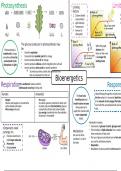
Photosynthesis Limiting Limit
Factors
1. Carbon dioxide D
concentration a
2. Light intensity p
3. Temperature
4. Amount of
chlorophyll
The glucose produced in photosynthesis may When the graph
Photosynthesis is be: plateaus, the
endothermic. Energy • Used for respiration factor on the x-axis
is transferred from the • Converted into insoluble starch for storage is no longer the
environment to the • Used to produce fat or oil for storage limiting factor.
chloroplasts by light • Used to produce cellulose, which strengthens the cell wall
• Used to produce amino acids for protein synthesis
To produce proteins, plants also use nitrate ions
Bioenergetics
that are absorbed from the soil
Respiration=continuously
The exothermic reaction which is
occurring in living cells
Respons
Aerobic Anaerobic Blood flowing through the muscles trans
The heart rate,
the liver where it is converted back into
- Oxygen - No oxygen breathing rate and is the amount of extra oxygen the body
- Glucose and oxygen are converted to - In animals: glucose converted to lactic acid breath volume increase
carbon dioxide and water - In plants and yeast (fermentation): glucose react with the accumulated lactic acid an
during exercise to
- More energy released converted to ethanol and carbon dioxide cells.
- Less energy transferred since the oxidation supply the muscles with
of glucose is incomplete more oxygenated
blood.
Metabolism includes:
• Conversion of glucose to starch, glycogen and c
Organisms need • The formation of lipid molecules from a molecu
energy for... Metabolism-
the sum of all the three molecules of fatty acids
1. Chemical reactions to • The use of glucose and nitrate ions to form ami
build larger molecules reactions in a cell or
the body are used to synthesise proteins
2. Movement • Respiration
3. Keeping warm • Breakdown of excess proteins to form urea for
Factors
1. Carbon dioxide D
concentration a
2. Light intensity p
3. Temperature
4. Amount of
chlorophyll
The glucose produced in photosynthesis may When the graph
Photosynthesis is be: plateaus, the
endothermic. Energy • Used for respiration factor on the x-axis
is transferred from the • Converted into insoluble starch for storage is no longer the
environment to the • Used to produce fat or oil for storage limiting factor.
chloroplasts by light • Used to produce cellulose, which strengthens the cell wall
• Used to produce amino acids for protein synthesis
To produce proteins, plants also use nitrate ions
Bioenergetics
that are absorbed from the soil
Respiration=continuously
The exothermic reaction which is
occurring in living cells
Respons
Aerobic Anaerobic Blood flowing through the muscles trans
The heart rate,
the liver where it is converted back into
- Oxygen - No oxygen breathing rate and is the amount of extra oxygen the body
- Glucose and oxygen are converted to - In animals: glucose converted to lactic acid breath volume increase
carbon dioxide and water - In plants and yeast (fermentation): glucose react with the accumulated lactic acid an
during exercise to
- More energy released converted to ethanol and carbon dioxide cells.
- Less energy transferred since the oxidation supply the muscles with
of glucose is incomplete more oxygenated
blood.
Metabolism includes:
• Conversion of glucose to starch, glycogen and c
Organisms need • The formation of lipid molecules from a molecu
energy for... Metabolism-
the sum of all the three molecules of fatty acids
1. Chemical reactions to • The use of glucose and nitrate ions to form ami
build larger molecules reactions in a cell or
the body are used to synthesise proteins
2. Movement • Respiration
3. Keeping warm • Breakdown of excess proteins to form urea for