Week 1:
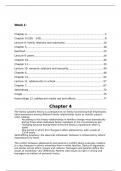
Chapter 4.....................................................................................................1
Chapter 9 (236 – 243)..................................................................................8
Lecture 8: family relations and autonomy..................................................10
Chapter 5...................................................................................................18
Kaufman.....................................................................................................23
Lecture 9: peers.........................................................................................24
Chapter 10.................................................................................................30
Chapter 11.................................................................................................35
Lecture 10: romantic relations and sexuality.............................................40
Chapter 6...................................................................................................48
Chapter 12.................................................................................................52
Lecture 11: adolescents in school..............................................................57
Chapter 7...................................................................................................67
Valkenburg.................................................................................................72
Cingel.........................................................................................................75
Hoorcollege 12: adolescent media use and effects....................................77
Chapter 4
The family systems theory is a perspective on family functioning that emphasizes
interconnections among different family relationships (such as marital, parent-
child, sibling).
- According to this theory relationships in families change most dramatically
during times when individual family members or the circumstances are
changing because during these times the family’s equilibrium often is
upset
- One period in which this changes is often adolescence, with a peak at
13/14 years
Self-fulfilling prophecy: the idea that individuals’ behavior is influenced by others'
expectations for them.
The conflict between adolescents and parents is conflict about everyday matters.
It is less frequent in ethnic minorities than in white families. Topics of arguments
are similar across ethnic groups and cultures. Teenagers and parents define the
issues of contention very differently. Parents view issues as right or wrong and
teenagers as matters of personal choice
,Youngsters rarely rebel against their parents just for the sake of rebelling.
Adolescents are willing to accept the rules of their parents as legitimate when
they agree that the issue is a moral one or an issue of safety. They tend to
disagree when they see the issue as a personal one. Adolescents who are less
likely to believe their parents have a right to know how to spend their time are
more likely to not tell the truth about their activities. Adolescents who think that
their parents are overcontrolling are likely to become oppositional. How parents
get their information about their teenagers matters for the teenagers.
Adolescents understand that some issues are matters of personal choice, rather
than social convention. Parents are more likely to lie to younger adolescents than
older ones about activities they wish their teens wouldn’t do.
It is important to keep in mind that adolescence is a period of change and
reorganization in family relationships and daily interactions, even though it is
incorrect to characterize adolescence as a time of high conflict in most families.
What impact could an overlap in life crisis have on family relationships?
Many parents are in their forties when their child reaches adolescence. A lot of
people have difficulties with being in their forties. Some theorists have called this
a time of midlife crisis. That is a psychological crisis over identity believed to
occur between the ages of 35 and 45. When midlife meets adolescence there is a
certain overlap in crisis and this is likely to have an impact on family
relationships. Society has labeled adolescents as one of the most physically
attractive, while parents have started to feel increased concern about their
bodies and physical attractiveness. Adults in midlife are starting to measure time
in terms of how much longer they have to live, while people younger than this
measure time in terms of how long they have been alive. Adults in midlife are
starting to feel that possibilities for changing their lives are limited. Adolescence
is a time of endless possibilities, while midlife starts to be a time of accepting the
consequences of choices made earlier in life.
A strained relationship between a midlife parent and his or her adolescent child
may
drive the parent to devote relatively more time to work. Parents’ mental health
problems negatively affect the way they interact with their adolescents. Parents’
mental health is worse during their teens and adolescence than when they leave
the home.
But this generalization about the collision of adolescence and midlife must be
tempered because the average age of marriage and childbearing is higher now
and as a consequence, parents tend to be older when their children reach
adolescence. The consequence of this has not been studied.
It varies across ethnic groups how adolescents and parents adjust because
certain cultures are more likely to stress family obligations. Some cultures place a
high value on familism. That is an orientation toward life in which the needs of
one’s family take precedence over the needs of the individual. Adolescents who
value familism are more likely to develop prosocial values and less
likely to get depressed and get into antisocial peer groups. Parental effectiveness
was greater in families where the parents and teenagers preferred to speak the
same language.
2
,Immigrant parents’ ideas sometimes clash with the more individualistic
orientation of the many mainstream American families. Different expectations
between immigrant parents and teenagers lead to stress. Sometimes there is a
generational dissonance. That is a divergence of views between adolescents and
parents that is common in families of immigrant parents and adolescents born in
America.
Transformations in family relations
All the transitions of adolescence, changes in midlife experienced by parents, and
the changes the family experiences during this stage set in motion a series of
transformations in family relationships:
- Changes in the balance of power. First adolescents try to play a more
forceful role in the family (with little impact then) and slowly with age, they
gain more power. An increase in adolescents’ negative feelings about their
mothers goes together with an increase in the extent to which they are
more focused on themselves. By middle adolescence, teenagers act and
are treated more as adults. Between ages 16-20, adolescents’ relationships
with parents improve. Frequent communication between parents and
teenagers over mobile devices strengthens the relationship and helps
FOMO. Parents and teenagers live in separate ‘realities’. Parents describe
their parenting more positively than their teenagers do.
- The role of puberty. Puberty seems to distance adolescents from their
parents and there is more bickering. Diminished closeness is manifested
more in increased privacy and less physical affection. The frequent
bickering can take a toll on parents’ and teenagers’ mental health. The first
half of adolescence is a more strained and distant time for firstborns than
later-borns
Differences between the family relations of sons and daughters are minimal.
Some evidence is that adolescent girls are more affected by the quality of their
relationship with their parents. Adolescents tend to be closer to their mothers.
Fathers often rely on mothers for information about their adolescent’s activities,
they are more distant authority figures, and this leads to them being consulted
for objective information, not emotional support. Adolescents fight more often
with their mothers and perceive their mothers as more controlling, but this
doesn’t jeopardize the relationship. Time spent with fathers is more predictive of
adolescents’ social competence and feelings of self-worth.
Socialization is a two-way street: parents affect their adolescents’ behavior and
adolescents affect how their parents behave. The link between negative
parenting and adolescent problem behavior is stronger among adolescents who
are more temperamentally impulsive.
According to Diana Baumrind, a psychologist, two aspects of the behavior of
parents toward the adolescent are critical:
- Parental responsiveness: the extent to which the parent responds to the
child’s needs in an accepting, supportive
manner.
- Parental demandingness: the degree to
which the parent expects and demands
mature, responsible behavior.
The possible combinations of these two
dimensions lead to the following four styles of
parenting:
3
, - Authoritative parents: parents who use warmth, firm control, and rational,
issue-oriented discipline, in which emphasis is placed on the development
of self-direction.
- Authoritarian parents: parents who use punitive, absolute, and forceful
discipline and who place a premium on obedience and conformity.
- Indulgent parents: parents who are characterized by responsiveness but
low demandingness, and who are mostly concerned with the happiness of
the child.
- Indifferent parents: parents who are characterized by low levels of both
responsiveness and demandingness.
Adolescents seem to fare best with the authoritative style of parenting. Young
people raised in this household are more psychologically mature and have better
regulation of emotions. Authoritative parenting is less prevalent among black,
Asian, or Latinx families than among whites. Ethnic minority parents are often
more demanding than White parents. Authoritative parenting is linked to healthy
adolescent development for a few reasons:
- These parents provide an appropriate balance between restrictiveness and
autonomy.
- The adolescent can develop self-control while providing the standards that
teenagers still need
- More independence when getting older leads to the development of self-
assurance and enhances the ability to withstand potentially negative
influences
- Authoritative parents engage their children in verbal give-and-take.
Because of this, they are more likely to promote intellectual development
for the development of maturity
- Authoritative parents are less likely to assert their authority by turning
adolescents’ personal decisions into moral issues
- Authoritative parenting is based on a warm parent-child relationship.
Adolescents are more likely to identify with, admire, and form strong
attachments to their parents which makes them more open to their
influence
- The child’s behavior, temperament, and personality shape parenting
practices.
Tiger Mother: an approach to parenting that may foster academic achievement,
but that may also increase adolescents’ anxiety and distress. Strict affectionate:
protective, not authoritarian
As children mature into early adolescence, sibling conflict increases. Two common
sources of sibling conflict:
1. Invasion of the personal (like wearing a siblings’ sweater)
2. Disagreements over equity and fairness
Adolescents see aggression towards siblings as more acceptable. In same-sex
dyads, intimacy increases between pre-adolescence and middle adolescence and
then declines. In mixed-sex dyads the pattern is opposite. By late adolescence,
brothers and sisters are closer than same-sex siblings. The quality of the parent-
adolescent relationship influences the quality of relations
among siblings. Adolescents learn much about social relationships from sibling
interactions and bring this knowledge to other relations (the reverse is true as
well). Positive sibling relationships contribute to adolescents’ academic
competence, romantic competence, familism, sociability, health, autonomy, and
self-worth. Siblings influence each other’s development.
4
Chapter 4.....................................................................................................1
Chapter 9 (236 – 243)..................................................................................8
Lecture 8: family relations and autonomy..................................................10
Chapter 5...................................................................................................18
Kaufman.....................................................................................................23
Lecture 9: peers.........................................................................................24
Chapter 10.................................................................................................30
Chapter 11.................................................................................................35
Lecture 10: romantic relations and sexuality.............................................40
Chapter 6...................................................................................................48
Chapter 12.................................................................................................52
Lecture 11: adolescents in school..............................................................57
Chapter 7...................................................................................................67
Valkenburg.................................................................................................72
Cingel.........................................................................................................75
Hoorcollege 12: adolescent media use and effects....................................77
Chapter 4
The family systems theory is a perspective on family functioning that emphasizes
interconnections among different family relationships (such as marital, parent-
child, sibling).
- According to this theory relationships in families change most dramatically
during times when individual family members or the circumstances are
changing because during these times the family’s equilibrium often is
upset
- One period in which this changes is often adolescence, with a peak at
13/14 years
Self-fulfilling prophecy: the idea that individuals’ behavior is influenced by others'
expectations for them.
The conflict between adolescents and parents is conflict about everyday matters.
It is less frequent in ethnic minorities than in white families. Topics of arguments
are similar across ethnic groups and cultures. Teenagers and parents define the
issues of contention very differently. Parents view issues as right or wrong and
teenagers as matters of personal choice
,Youngsters rarely rebel against their parents just for the sake of rebelling.
Adolescents are willing to accept the rules of their parents as legitimate when
they agree that the issue is a moral one or an issue of safety. They tend to
disagree when they see the issue as a personal one. Adolescents who are less
likely to believe their parents have a right to know how to spend their time are
more likely to not tell the truth about their activities. Adolescents who think that
their parents are overcontrolling are likely to become oppositional. How parents
get their information about their teenagers matters for the teenagers.
Adolescents understand that some issues are matters of personal choice, rather
than social convention. Parents are more likely to lie to younger adolescents than
older ones about activities they wish their teens wouldn’t do.
It is important to keep in mind that adolescence is a period of change and
reorganization in family relationships and daily interactions, even though it is
incorrect to characterize adolescence as a time of high conflict in most families.
What impact could an overlap in life crisis have on family relationships?
Many parents are in their forties when their child reaches adolescence. A lot of
people have difficulties with being in their forties. Some theorists have called this
a time of midlife crisis. That is a psychological crisis over identity believed to
occur between the ages of 35 and 45. When midlife meets adolescence there is a
certain overlap in crisis and this is likely to have an impact on family
relationships. Society has labeled adolescents as one of the most physically
attractive, while parents have started to feel increased concern about their
bodies and physical attractiveness. Adults in midlife are starting to measure time
in terms of how much longer they have to live, while people younger than this
measure time in terms of how long they have been alive. Adults in midlife are
starting to feel that possibilities for changing their lives are limited. Adolescence
is a time of endless possibilities, while midlife starts to be a time of accepting the
consequences of choices made earlier in life.
A strained relationship between a midlife parent and his or her adolescent child
may
drive the parent to devote relatively more time to work. Parents’ mental health
problems negatively affect the way they interact with their adolescents. Parents’
mental health is worse during their teens and adolescence than when they leave
the home.
But this generalization about the collision of adolescence and midlife must be
tempered because the average age of marriage and childbearing is higher now
and as a consequence, parents tend to be older when their children reach
adolescence. The consequence of this has not been studied.
It varies across ethnic groups how adolescents and parents adjust because
certain cultures are more likely to stress family obligations. Some cultures place a
high value on familism. That is an orientation toward life in which the needs of
one’s family take precedence over the needs of the individual. Adolescents who
value familism are more likely to develop prosocial values and less
likely to get depressed and get into antisocial peer groups. Parental effectiveness
was greater in families where the parents and teenagers preferred to speak the
same language.
2
,Immigrant parents’ ideas sometimes clash with the more individualistic
orientation of the many mainstream American families. Different expectations
between immigrant parents and teenagers lead to stress. Sometimes there is a
generational dissonance. That is a divergence of views between adolescents and
parents that is common in families of immigrant parents and adolescents born in
America.
Transformations in family relations
All the transitions of adolescence, changes in midlife experienced by parents, and
the changes the family experiences during this stage set in motion a series of
transformations in family relationships:
- Changes in the balance of power. First adolescents try to play a more
forceful role in the family (with little impact then) and slowly with age, they
gain more power. An increase in adolescents’ negative feelings about their
mothers goes together with an increase in the extent to which they are
more focused on themselves. By middle adolescence, teenagers act and
are treated more as adults. Between ages 16-20, adolescents’ relationships
with parents improve. Frequent communication between parents and
teenagers over mobile devices strengthens the relationship and helps
FOMO. Parents and teenagers live in separate ‘realities’. Parents describe
their parenting more positively than their teenagers do.
- The role of puberty. Puberty seems to distance adolescents from their
parents and there is more bickering. Diminished closeness is manifested
more in increased privacy and less physical affection. The frequent
bickering can take a toll on parents’ and teenagers’ mental health. The first
half of adolescence is a more strained and distant time for firstborns than
later-borns
Differences between the family relations of sons and daughters are minimal.
Some evidence is that adolescent girls are more affected by the quality of their
relationship with their parents. Adolescents tend to be closer to their mothers.
Fathers often rely on mothers for information about their adolescent’s activities,
they are more distant authority figures, and this leads to them being consulted
for objective information, not emotional support. Adolescents fight more often
with their mothers and perceive their mothers as more controlling, but this
doesn’t jeopardize the relationship. Time spent with fathers is more predictive of
adolescents’ social competence and feelings of self-worth.
Socialization is a two-way street: parents affect their adolescents’ behavior and
adolescents affect how their parents behave. The link between negative
parenting and adolescent problem behavior is stronger among adolescents who
are more temperamentally impulsive.
According to Diana Baumrind, a psychologist, two aspects of the behavior of
parents toward the adolescent are critical:
- Parental responsiveness: the extent to which the parent responds to the
child’s needs in an accepting, supportive
manner.
- Parental demandingness: the degree to
which the parent expects and demands
mature, responsible behavior.
The possible combinations of these two
dimensions lead to the following four styles of
parenting:
3
, - Authoritative parents: parents who use warmth, firm control, and rational,
issue-oriented discipline, in which emphasis is placed on the development
of self-direction.
- Authoritarian parents: parents who use punitive, absolute, and forceful
discipline and who place a premium on obedience and conformity.
- Indulgent parents: parents who are characterized by responsiveness but
low demandingness, and who are mostly concerned with the happiness of
the child.
- Indifferent parents: parents who are characterized by low levels of both
responsiveness and demandingness.
Adolescents seem to fare best with the authoritative style of parenting. Young
people raised in this household are more psychologically mature and have better
regulation of emotions. Authoritative parenting is less prevalent among black,
Asian, or Latinx families than among whites. Ethnic minority parents are often
more demanding than White parents. Authoritative parenting is linked to healthy
adolescent development for a few reasons:
- These parents provide an appropriate balance between restrictiveness and
autonomy.
- The adolescent can develop self-control while providing the standards that
teenagers still need
- More independence when getting older leads to the development of self-
assurance and enhances the ability to withstand potentially negative
influences
- Authoritative parents engage their children in verbal give-and-take.
Because of this, they are more likely to promote intellectual development
for the development of maturity
- Authoritative parents are less likely to assert their authority by turning
adolescents’ personal decisions into moral issues
- Authoritative parenting is based on a warm parent-child relationship.
Adolescents are more likely to identify with, admire, and form strong
attachments to their parents which makes them more open to their
influence
- The child’s behavior, temperament, and personality shape parenting
practices.
Tiger Mother: an approach to parenting that may foster academic achievement,
but that may also increase adolescents’ anxiety and distress. Strict affectionate:
protective, not authoritarian
As children mature into early adolescence, sibling conflict increases. Two common
sources of sibling conflict:
1. Invasion of the personal (like wearing a siblings’ sweater)
2. Disagreements over equity and fairness
Adolescents see aggression towards siblings as more acceptable. In same-sex
dyads, intimacy increases between pre-adolescence and middle adolescence and
then declines. In mixed-sex dyads the pattern is opposite. By late adolescence,
brothers and sisters are closer than same-sex siblings. The quality of the parent-
adolescent relationship influences the quality of relations
among siblings. Adolescents learn much about social relationships from sibling
interactions and bring this knowledge to other relations (the reverse is true as
well). Positive sibling relationships contribute to adolescents’ academic
competence, romantic competence, familism, sociability, health, autonomy, and
self-worth. Siblings influence each other’s development.
4