Chemistry of foods
Sophomore / 10th grade
All 14 results
Sort by
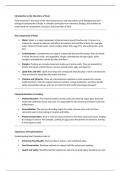
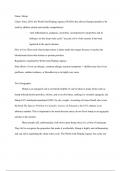
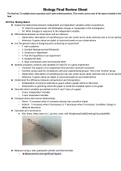
IN THIS DOCUMENT I PROVIDED A SUMMARY ON INTRODUCTION TO THE CHEMISTRY OF FFOODS
-
Class Notes: 1990s-2000s U.S. History
- Summary • 4 pages • 2024
-
- $8.49
- + learn more
This document covers the American Yawp's chapter " 30. The Recent Past." In this document, you will find the key moments covered in this unit as well as important terms such as the "Third Way" and "New Democrats."
-
Class Notes: Hemp as an Ergogenic
- Class notes • 3 pages • 2024
-
- $6.99
- + learn more
This document contains notes on how hemp is used as an ergogenic in the realm of athletics. It includes different forms of hemp, the effects, statistics, and reputable sources in which this information was synthesized from.
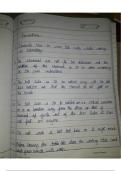
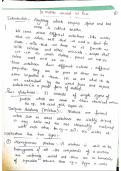
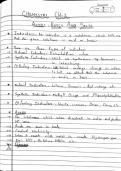
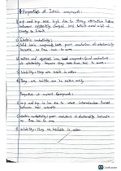
this document has notes that can help with the knowledge of practical chemistry of a 10th grade student .
Buy it to get more marks in Chemistry
how we can see our surroundings
-
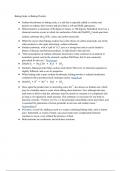
Impact of Baking Soda vs Baking Powder on Cookies from a Chemistry Standpoint
- Summary • 1 pages • 2024
-
- $3.69
- + learn more
This document presents some brief and creative research on the chemistry of baking. Specifically, it describes the different impacts of baking soda compared to baking powder on the chemical reactions occurring inside the cookie.
-
Chemistry help mass, volume, density and more!
- Class notes • 0 pages • 2024
-
- $8.89
- + learn more
Key Concepts in Chemistry 
1. Mass 
 
Definition: Mass is the measure of the amount of matter in an object. It does not change regardless of the object's location (whether on Earth, the Moon, etc.). 
Units: Common units include grams (g), kilograms (kg), and milligrams (mg). 
Measurement: Mass can be measured using a balance or scale. It’s important to ensure the balance is calibrated for accurate readings. Etc
-
Class notes Chemistry of foods
- Interview • 1 pages • 2023
-
- $7.99
- + learn more
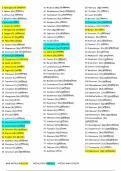
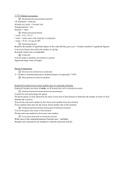
Molar Conversions: 
Identifying the representative particle 
All nonmetals = molecule 
Includes any metal = Formula Unit 
Charged particle = Ion 
Element = Atom 
Molar conversion factors 
1 mole = 6.02 *10^23 
1 mole = molar mass of the element or compound 
1 mole = 22.4 L of a gas at STP 
Significant figures 
Round to the number of significant figures in the value that they give u (ie: 2.4 moles would be 2 significant figures) 
Conversion factors don't affect the number of sig figs 
Round th...
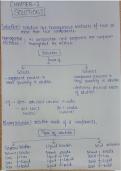
It's the notes regarding chemistry for class 10 and it will help you alot!!thankyou!!
$6.50 for your textbook summary multiplied by 100 fellow students... Do the math: that's a lot of money! Don't be a thief of your own wallet and start uploading yours now. Discover all about earning on Stuvia