Software Engineering (CSCI370)

Queens College

Here are the best resources to pass Software Engineering (CSCI370). Find Software Engineering (CSCI370) study guides, notes, assignments, and much more.

All 27 results

Sort by:
3000 SOVED PROBLEMS IN CALCULUS ( Calculus I, Calculus II, Calculus III,  AP Calculus, Advanced Calculus)
  • Summary

    3000 SOVED PROBLEMS IN CALCULUS ( Calculus I, Calculus II, Calculus III, AP Calculus, Advanced Calculus)

  • Step by Step solutions to problem with complete explanations for every steps.
  • nimairao
    $14.79 More Info
CSCI 370 Notes 23
  • Class notes

    CSCI 370 Notes 23

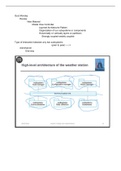
  • The following notes discuss the model-view-controller model, layered architecture pattern, organization of subsystems, high-level architecture of the weather system, repository architecture for an IDE, client-server architecture, and concurrency.
  • ashiqkhan
    $3.49 More Info
CSCI370 Notes 21
  • Class notes

    CSCI370 Notes 21

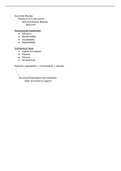
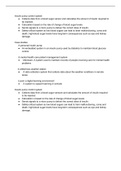
  • The following notes discuss non-functional requirements including efficiency, maintainability, acceptability, and dependability. In addition, it discusses architectural views including logical conceptual, physical, process, and development. Moreover, it discusses interaction model, behavioral model, process pipe, filter pattern, view, development, physical view, process views, the Model-View-Controller (MVC), and layered architecture.
  • ashiqkhan
    $3.49 More Info
CSCI370 Notes 18
  • Class notes

    CSCI370 Notes 18

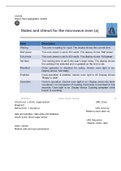
  • The following notes discuss states and stimuli for the microwave oven including waiting, half power, full power, set time, disabled, enabled, and operation. In addition, it discusses structural diagrams, behavioral diagrams, data, activities, method calls, order processing, and context models.
  • ashiqkhan
    $3.49 More Info
CSCI 370 Notes 16
  • Class notes

    CSCI 370 Notes 16

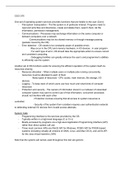
  • The following notes discuss functions provided by operating-system services including file-system manipulation, communications, debugging facilities, resource allocation, logging, protection, and security. In addition, it discusses system calls.
  • ashiqkhan
    $3.49 More Info
CSCI 370 Notes 13
  • Class notes

    CSCI 370 Notes 13

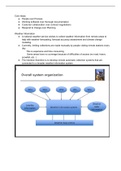
  • The following notes discuss core ideas, weather information, overall system organization, system context for the weather station, weather station characteristics, and install instruments including an anemometer, barometer, ground and air thermometers, etc. In addition, it discusses five characteristics of software including abstract, understandability, accuracy, predictiveness, and cost-effectiveness.
  • ashiqkhan
    $3.49 More Info
CSCI 370 Notes 11
  • Class notes

    CSCI 370 Notes 11

  • The following notes discuss the insulin pump control system and case studies including a personal insulin pump, a mental health care patient management system, a wilderness weather station, and iLearn. In addition, it discusses software prototyping, prototype development, and issues.
  • ashiqkhan
    $3.49 More Info
CSCI 370 Notes 27
  • Class notes

    CSCI 370 Notes 27

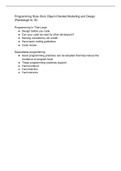
  • The following notes discuss the programming system from object-oriented modeling and design, programming in the large, dependable programming, good practice guidelines for dependable programming, limiting the visibility of information in a program, checking all inputs for validity, and error-prone constructs including floating-point numbers, pointers, and dynamic memory allocation.
  • ashiqkhan
    $3.49 More Info
CSCI 370 Notes 26
  • Class notes

    CSCI 370 Notes 26

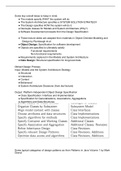
  • The following notes discuss overall ideas to keep in mind, the object design process, the platform-independent object design specification, the object-design step, concurrency, fundamental patterns, the data design, system architecture, and design models.
  • ashiqkhan
    $3.49 More Info
CSCI 370 Notes 25
  • Class notes

    CSCI 370 Notes 25

  • The following notes discuss run-time partitioning of the partition by tasks, identifying those tasks, activity diagram, data flows, state diagrams, SW control, and processing units. In addition, it discusses architecture and system characteristics including performance, security, safety, availability, and maintainability. Moreover, it discusses the structure of the transaction processing applications and compiler components such as a lexical analyzer, symbol table, syntax analyzer, and a syntax...
  • ashiqkhan
    $3.49 More Info
Fear of missing out? Then don’t!
Do you wonder why so many students wear nice clothes, have money to spare and enjoy tons of free time? Well, they sell on Stuvia! Imagine your study notes being downloaded a dozen times for $15 each. Every. Single. Day.