Lewis University
Latest uploads at Lewis University. Looking for notes at Lewis University? We have lots of notes, study guides and study notes available for your school.
-
18
- 0
-
3
All courses for Lewis University
Latest content Lewis University
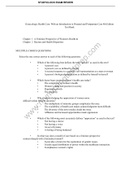
Gynecologic Health Care: With an Introduction to Prenatal and Postpartum Care 4th Edition Test Bank
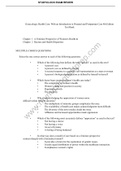
Gynecologic Health Care: With an Introduction to Prenatal and Postpartum Care 4th Edition Test Bank
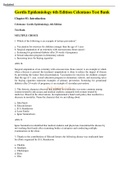
Gordis Epidemiology 6th Edition Celentano Test Bank-1. Which of the following is an example of tertiary prevention? a. Vaccination for rotavirus for children younger than the age of 1 year b. Surgical amputation of an extremity with osteosarcoma (bone cancer) c. Screening for gestational diabetes after 24 weeks of pregnancy d. Sexual education program in elementary schools e. Increasing taxes for buying cigarettes ANS: B Surgical amputation of an extremity with osteosarcoma (bone cancer)...
Gynecologic Health Care: With an Introduction to Prenatal and Postpartum Care 4th Edition Test Bank
LEWIS'S MEDICAL-SURGICAL NURSING: ASSESSMENT AND MANAGEMENT OF CLINICAL PROBLEMS 11TH EDITION TESTBANK LEWIS'S MEDICAL-SURGICAL NURSING: ASSESSMENT AND MANAGEMENT OF CLINICAL PROBLEMS 11TH EDITION TESTBANK LEWIS'S MEDICAL-SURGICAL NURSING: ASSESSMENT AND MANAGEMENT OF CLINICAL PROBLEMS 11TH EDITION TESTBANK
American Red Cross CPR/AED for the Professional Rescuer and First Aid Exam A 1. How can you best protect yourself from possible bloodborne pathogen transmission when providing care? a. Ask the victim first if he or she has any communicable diseases. b. Thoroughly wash your hands before providing care. c. Use first aid supplies, such as dressings and bandages, as a barrier when in contact with the victim. d. Use personal protective equipment (PPE), such as disposable gloves and a breathing barrie...
American Red Cross CPR/AED for the Professional Rescuer and First Aid Exam A 1. How can you best protect yourself from possible bloodborne pathogen transmission when providing care? a. Ask the victim first if he or she has any communicable diseases. b. Thoroughly wash your hands before providing care. c. Use first aid supplies, such as dressings and bandages, as a barrier when in contact with the victim. d. Use personal protective equipment (PPE), such as disposable gloves and a breathing barrie...