

12 class
Latest uploads at 12 class. Looking for notes at 12 class? We have lots of notes, study guides and study notes available for your school.
-
237
- 0
-
5
All courses for 12 class
Latest content 12 class
Ionization enthalpy is the energy required to remove an electron from a gaseous atom or ion. It is influenced by nuclear charge, atomic size, shielding effect, and electron configuration. Generally, ionization enthalpy increases across a period due to increasing nuclear charge and decreases down a group due to increased atomic size and shielding. Successive ionization enthalpies increase significantly as more electrons are removed. Elements with stable electronic configurations, like noble gases...
- Book
- Class notes
- • 2 pages's •
-
12 class•12 class
-
NCERT Examplar Chemistry Class 12th • Ramashish Paul• ISBN 9789351764649
Preview 1 out of 2 pages
Getting your document ready...
Ionization enthalpy is the energy required to remove an electron from a gaseous atom or ion. It is influenced by nuclear charge, atomic size, shielding effect, and electron configuration. Generally, ionization enthalpy increases across a period due to increasing nuclear charge and decreases down a group due to increased atomic size and shielding. Successive ionization enthalpies increase significantly as more electrons are removed. Elements with stable electronic configurations, like noble gases...

Transition elements are metals found in groups 3–12 of the periodic table. They exhibit unique properties such as variable oxidation states, formation of colored compounds, and the ability to act as catalysts. These elements, including iron, copper, and gold, have high melting points, density, and electrical conductivity. They form complex ions and participate in redox reactions. Their d-orbitals allow them to bond with ligands, leading to diverse chemical behavior. Transition metals are widel...
- Book
- Class notes
- • 1 pages's •
-
12 class•12 class
-
NCERT Examplar Chemistry Class 12th • Ramashish Paul• ISBN 9789351764649
Preview 1 out of 1 pages
Getting your document ready...
Transition elements are metals found in groups 3–12 of the periodic table. They exhibit unique properties such as variable oxidation states, formation of colored compounds, and the ability to act as catalysts. These elements, including iron, copper, and gold, have high melting points, density, and electrical conductivity. They form complex ions and participate in redox reactions. Their d-orbitals allow them to bond with ligands, leading to diverse chemical behavior. Transition metals are widel...

The M²⁺/M electrode potential (E°) represents the tendency of a metal (M) to be reduced from its +2 oxidation state to its metallic form. Trends in these potentials are influenced by ionization energy, hydration energy, and lattice energy. Alkaline Earth Metals (Group 2): E° becomes more negative down the group due to decreasing ionization energy. Transition Metals: Generally, E° values are less negative or even positive due to strong metal-ligand interactions. Post-Transition Met...
- Book
- Class notes
- • 1 pages's •
-
12 class•12 class
-
NCERT Examplar Chemistry Class 12th • Ramashish Paul• ISBN 9789351764649
Preview 1 out of 1 pages
Getting your document ready...
The M²⁺/M electrode potential (E°) represents the tendency of a metal (M) to be reduced from its +2 oxidation state to its metallic form. Trends in these potentials are influenced by ionization energy, hydration energy, and lattice energy. Alkaline Earth Metals (Group 2): E° becomes more negative down the group due to decreasing ionization energy. Transition Metals: Generally, E° values are less negative or even positive due to strong metal-ligand interactions. Post-Transition Met...

M³⁺/M²⁺ electrode potential trends reflect the relative stability of oxidation states in transition metals. These potentials depend on factors like ionization energy, hydration energy, and crystal field stabilization. Generally, early transition metals (e.g., Sc, Ti) show more positive potentials due to the high stability of M³⁺. Middle transition metals (e.g., Fe, Co, Ni) exhibit variable trends influenced by ligand effects and electron configurations. Late transition metals (e.g., Cu)...
- Book
- Class notes
- • 2 pages's •
-
12 class•12 class
-
NCERT Examplar Chemistry Class 12th • Ramashish Paul• ISBN 9789351764649
Preview 1 out of 2 pages
Getting your document ready...
M³⁺/M²⁺ electrode potential trends reflect the relative stability of oxidation states in transition metals. These potentials depend on factors like ionization energy, hydration energy, and crystal field stabilization. Generally, early transition metals (e.g., Sc, Ti) show more positive potentials due to the high stability of M³⁺. Middle transition metals (e.g., Fe, Co, Ni) exhibit variable trends influenced by ligand effects and electron configurations. Late transition metals (e.g., Cu)...
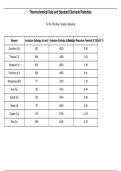
Thermochemical data and electrode potentials are essential in understanding chemical reactions, particularly redox processes. Thermochemical data include enthalpy (), entropy (), and Gibbs free energy (), which predict reaction spontaneity. Electrode potentials () measure a substance’s tendency to gain or lose electrons, indicating its strength as an oxidizing or reducing agent. The Nernst equation relates electrode potential to concentration. Standard electrode potentials (SHE reference) help...
- Book
- Class notes
- • 1 pages's •
-
12 class•12 class
-
NCERT Examplar Chemistry Class 12th • Ramashish Paul• ISBN 9789351764649
Preview 1 out of 1 pages
Getting your document ready...
Thermochemical data and electrode potentials are essential in understanding chemical reactions, particularly redox processes. Thermochemical data include enthalpy (), entropy (), and Gibbs free energy (), which predict reaction spontaneity. Electrode potentials () measure a substance’s tendency to gain or lose electrons, indicating its strength as an oxidizing or reducing agent. The Nernst equation relates electrode potential to concentration. Standard electrode potentials (SHE reference) help...

The periodic table position of an element is determined by its atomic number, electron configuration, and periodic trends. Elements are arranged in periods (rows) and groups (columns) based on increasing atomic number. Groups (1-18) share similar chemical properties due to valence electron configurations, while periods (1-7) represent principal energy levels. The table is divided into s-, p-, d-, and f-blocks, with metals on the left, nonmetals on the right, and metalloids in between. Position i...
- Book
- Class notes
- • 2 pages's •
-
12 class•12 class
-
NCERT Examplar Chemistry Class 12th • Ramashish Paul• ISBN 9789351764649
Preview 1 out of 2 pages
Getting your document ready...
The periodic table position of an element is determined by its atomic number, electron configuration, and periodic trends. Elements are arranged in periods (rows) and groups (columns) based on increasing atomic number. Groups (1-18) share similar chemical properties due to valence electron configurations, while periods (1-7) represent principal energy levels. The table is divided into s-, p-, d-, and f-blocks, with metals on the left, nonmetals on the right, and metalloids in between. Position i...

The electronic configuration of d-block elements (transition metals) follows the general pattern [noble gas] (n-1)d¹⁻¹⁰ ns¹⁻². These elements have partially filled d-orbitals, leading to unique properties like variable oxidation states, colored compounds, and catalytic behavior. The filling of d-orbitals follows Aufbau’s principle, but exceptions occur due to extra stability in half-filled (d⁵) and fully filled (d¹⁰) configurations. Common anomalies include Cr ([Ar] 3d⁵ 4s¹) ...
- Book
- Class notes
- • 2 pages's •
-
12 class•12 class
-
NCERT Examplar Chemistry Class 12th • Ramashish Paul• ISBN 9789351764649
Preview 1 out of 2 pages
Getting your document ready...
The electronic configuration of d-block elements (transition metals) follows the general pattern [noble gas] (n-1)d¹⁻¹⁰ ns¹⁻². These elements have partially filled d-orbitals, leading to unique properties like variable oxidation states, colored compounds, and catalytic behavior. The filling of d-orbitals follows Aufbau’s principle, but exceptions occur due to extra stability in half-filled (d⁵) and fully filled (d¹⁰) configurations. Common anomalies include Cr ([Ar] 3d⁵ 4s¹) ...

Transition elements have a general electronic configuration of . Their distinguishing feature is the gradual filling of the (n-1)d orbitals. The 3d, 4d, and 5d series correspond to periods 4, 5, and 6, respectively. Irregularities occur due to stability preferences, such as half-filled (d⁵) and fully filled (d¹⁰) configurations, seen in elements like chromium and copper . These configurations influence their variable oxidation states, colored ions, magnetic properties, and catalytic behavi...
- Book
- Class notes
- • 2 pages's •
-
12 class•12 class
-
NCERT Examplar Chemistry Class 12th • Ramashish Paul• ISBN 9789351764649
Preview 1 out of 2 pages
Getting your document ready...
Transition elements have a general electronic configuration of . Their distinguishing feature is the gradual filling of the (n-1)d orbitals. The 3d, 4d, and 5d series correspond to periods 4, 5, and 6, respectively. Irregularities occur due to stability preferences, such as half-filled (d⁵) and fully filled (d¹⁰) configurations, seen in elements like chromium and copper . These configurations influence their variable oxidation states, colored ions, magnetic properties, and catalytic behavi...
Transition elements exhibit unique properties due to their partially filled d-orbitals. They have high melting and boiling points, high density, and are good conductors of heat and electricity due to strong metallic bonding. They show multiple oxidation states because of the similar energy levels of 3d and 4s electrons. Many transition metals form colored compounds due to d-d electron transitions. They exhibit paramagnetism due to unpaired electrons. They also act as catalysts in chemical reacti...
- Book
- Class notes
- • 2 pages's •
-
12 class•12 class
-
NCERT Examplar Chemistry Class 12th • Ramashish Paul• ISBN 9789351764649
Preview 1 out of 2 pages
Getting your document ready...
Transition elements exhibit unique properties due to their partially filled d-orbitals. They have high melting and boiling points, high density, and are good conductors of heat and electricity due to strong metallic bonding. They show multiple oxidation states because of the similar energy levels of 3d and 4s electrons. Many transition metals form colored compounds due to d-d electron transitions. They exhibit paramagnetism due to unpaired electrons. They also act as catalysts in chemical reacti...
Transition metals exhibit unique physical properties due to their d-electron configuration and metallic bonding. They have high melting and boiling points due to strong metallic bonds formed by delocalized electrons. Their high density results from closely packed atomic structures. Good electrical and thermal conductivity arises from free-moving electrons. They are hard and strong due to metallic bonding and variable oxidation states. Malleability and ductility result from non-directional bondin...
- Book
- Class notes
- • 2 pages's •
-
12 class•12 class
-
NCERT Examplar Chemistry Class 12th • Ramashish Paul• ISBN 9789351764649
Preview 1 out of 2 pages
Getting your document ready...
Transition metals exhibit unique physical properties due to their d-electron configuration and metallic bonding. They have high melting and boiling points due to strong metallic bonds formed by delocalized electrons. Their high density results from closely packed atomic structures. Good electrical and thermal conductivity arises from free-moving electrons. They are hard and strong due to metallic bonding and variable oxidation states. Malleability and ductility result from non-directional bondin...