NRNP 6531 FINAL EXAM 2026/2027
• Latest Multiple Versions
• 100 Verified questions and Answers in Each Version
• Complete and Best Document for Exam Preparation
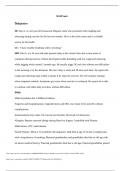
, NRNP 6531 Final Exam
Question 1
What is the maximum compensation of PaC02 in metabolic acidosis?
26
Signs of preeclampsia
BP > 140/90
Proteinuria 300mg of protein in urine in 24 hours
Headache
Visual changes
2+ pitting edema
Question 2.
Which of the following is a potential acquired cause of thrombophilia?
Homocystinuria
Protein C deficiency
Factor V Leiden
Antiphospholipid antibodies
Question 3
Phalen's test, 90°wrist flexion for 60 seconds, reproduces symptoms of:
Ulnar tunnel syndrome
Carpal tunnel syndrome
Tarsal tunnel syndrome
Myofascial pain syndrome
Question 4
Which patient would benefit most from screening for type 2 diabetes?
A 30 year old female with unintended weight loss.
A 25 year old male with family history of type 1 diabetes
An obese female with recurrent vaginitis
A 50 year old hyperlipidemic male
Question 5
A 72 year old female patient reports a 6 month history of gradually progressive swollen and painful distal
interphalangeal (DIP) joints of one hand. She has no systemic symptoms but the erythrocyte
sedimentation rate (ESR), antinuclear antibody (ANA), and rheumatoid factor (RF) are all minimally
elevated. What is the most likely diagnosis?
Rheumatoid arthritis (RA)
Osteoarthritis (OA)
Lupus
Peripheral neuropathy
,Question 6
A 32 year old male patient complains of urinary frequency and burning on urination for 3 days. Urinalysis
reveals bacteriuria. He denies any past history of urinary tract infection. The initial treatment should be:
Trimethoprim-sulfamethoxazole for 3 days
Ciprofloxacin for 7-10 days
Trimethoprim-sulfamethoxazole for 14 days
Ciprofloxacin for 3 days
A thymectomy is usually recommended in the early treatment of which disease?
Parkinson's disease
Multiple sclerosis
Myasthenia gravis
Huntington's chorea
Question 8
The diagnosis of human papilloma virus (HPV) infection in males is usually made by
Clinical appearance
Viral culture
Tzanck smear
KOH prep
Question 9
The most effective intervention(s) to prevent stroke is (are):
81 mg of aspirin daily
Carotid endarterectomy for patients with high-grade carotid lesions
Routine screening for carotid artery stenosis with auscultation for bruits
Smoking cessation and treatment of hypertension
Question 10
What is the most common cause of Cushing's syndrome?
Excessive ACTH production
Administration of a glucocorticoid or ACTH
Pituitary adenoma or a non-pituitary ACTH-producing tumor
Autonomous cortisol production from adrenal tissue
Question 11
Diagnostic radiological studies are indicated for low back pain:
Routinely after 3 weeks of low back pain symptoms.
To screen for spondylolithiasis in patients less than 20 years of age with 2 weeks of more of low back
, pain.
When there is a suspicion of a space-occupying lesion, fracture, cauda equina, or infection.
As a part of a pre-employment physical when heavy lifting is included in the job description.
Question 12
After treating a patient for Helicobacter pylori infection, what test do you order to see if it has been
cured?
An enzyme-linked immunosorbent assay titer
A urea breath test
A rapid urease test
A repeat endoscopy
Question 13
Which appropriate test for the initial assessment of Alzheimer's disease provides the performance
ratings on 10 complex, higher order activities?
MMSE
CAGE questionnaire
FAQ - Functional Activities Questionnaire
Holmes and Rahe social readjustment scale
Question 14
Major depression occurs most often in which of the following conditions?
A. Myocardial infarction
Parkinson's disease
Stroke
Alzheimer's disease
Question 15
Which of the following statements about multiple sclerosis (MS) is correct?
MS is a chronic, untreatable illness that is almost always fatal.
MS is a disease of steadily progressive and unrelenting neurologic deterioration.
MS is a chronic, treatable illness with unknown cause and a variable course.
Patients with MS who take active steps to improve their health have the best cure rate.
Question 16
Diagnostic evaluation of hypothyroidism reveals:
Elevated TSH and decreased T4
Decreased TSH and increased T4
Decreased TSH and decreased T3
Elevated TSH and increased T4
• Latest Multiple Versions
• 100 Verified questions and Answers in Each Version
• Complete and Best Document for Exam Preparation
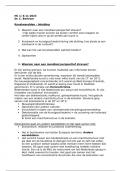
, NRNP 6531 Final Exam
Question 1
What is the maximum compensation of PaC02 in metabolic acidosis?
26
Signs of preeclampsia
BP > 140/90
Proteinuria 300mg of protein in urine in 24 hours
Headache
Visual changes
2+ pitting edema
Question 2.
Which of the following is a potential acquired cause of thrombophilia?
Homocystinuria
Protein C deficiency
Factor V Leiden
Antiphospholipid antibodies
Question 3
Phalen's test, 90°wrist flexion for 60 seconds, reproduces symptoms of:
Ulnar tunnel syndrome
Carpal tunnel syndrome
Tarsal tunnel syndrome
Myofascial pain syndrome
Question 4
Which patient would benefit most from screening for type 2 diabetes?
A 30 year old female with unintended weight loss.
A 25 year old male with family history of type 1 diabetes
An obese female with recurrent vaginitis
A 50 year old hyperlipidemic male
Question 5
A 72 year old female patient reports a 6 month history of gradually progressive swollen and painful distal
interphalangeal (DIP) joints of one hand. She has no systemic symptoms but the erythrocyte
sedimentation rate (ESR), antinuclear antibody (ANA), and rheumatoid factor (RF) are all minimally
elevated. What is the most likely diagnosis?
Rheumatoid arthritis (RA)
Osteoarthritis (OA)
Lupus
Peripheral neuropathy
,Question 6
A 32 year old male patient complains of urinary frequency and burning on urination for 3 days. Urinalysis
reveals bacteriuria. He denies any past history of urinary tract infection. The initial treatment should be:
Trimethoprim-sulfamethoxazole for 3 days
Ciprofloxacin for 7-10 days
Trimethoprim-sulfamethoxazole for 14 days
Ciprofloxacin for 3 days
A thymectomy is usually recommended in the early treatment of which disease?
Parkinson's disease
Multiple sclerosis
Myasthenia gravis
Huntington's chorea
Question 8
The diagnosis of human papilloma virus (HPV) infection in males is usually made by
Clinical appearance
Viral culture
Tzanck smear
KOH prep
Question 9
The most effective intervention(s) to prevent stroke is (are):
81 mg of aspirin daily
Carotid endarterectomy for patients with high-grade carotid lesions
Routine screening for carotid artery stenosis with auscultation for bruits
Smoking cessation and treatment of hypertension
Question 10
What is the most common cause of Cushing's syndrome?
Excessive ACTH production
Administration of a glucocorticoid or ACTH
Pituitary adenoma or a non-pituitary ACTH-producing tumor
Autonomous cortisol production from adrenal tissue
Question 11
Diagnostic radiological studies are indicated for low back pain:
Routinely after 3 weeks of low back pain symptoms.
To screen for spondylolithiasis in patients less than 20 years of age with 2 weeks of more of low back
, pain.
When there is a suspicion of a space-occupying lesion, fracture, cauda equina, or infection.
As a part of a pre-employment physical when heavy lifting is included in the job description.
Question 12
After treating a patient for Helicobacter pylori infection, what test do you order to see if it has been
cured?
An enzyme-linked immunosorbent assay titer
A urea breath test
A rapid urease test
A repeat endoscopy
Question 13
Which appropriate test for the initial assessment of Alzheimer's disease provides the performance
ratings on 10 complex, higher order activities?
MMSE
CAGE questionnaire
FAQ - Functional Activities Questionnaire
Holmes and Rahe social readjustment scale
Question 14
Major depression occurs most often in which of the following conditions?
A. Myocardial infarction
Parkinson's disease
Stroke
Alzheimer's disease
Question 15
Which of the following statements about multiple sclerosis (MS) is correct?
MS is a chronic, untreatable illness that is almost always fatal.
MS is a disease of steadily progressive and unrelenting neurologic deterioration.
MS is a chronic, treatable illness with unknown cause and a variable course.
Patients with MS who take active steps to improve their health have the best cure rate.
Question 16
Diagnostic evaluation of hypothyroidism reveals:
Elevated TSH and decreased T4
Decreased TSH and increased T4
Decreased TSH and decreased T3
Elevated TSH and increased T4