Case NURSING N/A Heart Failure Clinical Reasoning Case
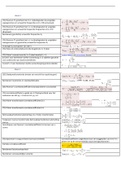
Data Collection History of Present Problem: Carlos Boccerini is a 68-year-old male who has a 5-year history of systolic heart failure secondary to ischemic cardiomyopathy with a current ejection fraction (EF) of only 15%. He presents to the emergency department (ED) for shortness of breath (SOB) the past 3 days. His shortness of breath has progressed from SOB with activity to becoming SOB at rest. The last two nights he had to sleep in his recliner chair to rest comfortably with his head partially elevated. He is able to speak only a partial sentence and then has to take a breath when talking to the nurse. He has noted increased swelling in his lower legs and has gained 6 pounds in the last 3 days. He is being transferred from the ED to the cardiac step-down where you are assigned to care for him. Personal/Social History: Carlos has been married for 45 years and has 4 children. He is a retired baker who had to retire early due to medical problems secondary to his progressive heart failure. The family celebrated two birthdays this week and Jim made it to both parties. His wife does most of the cooking at home and follows his need for sodium restrictions, but during the celebrations, Carlos made his own dietary choices. DATA Radiology Reports: Results: Clinical Significance: Bilateral diffuse pulmonary infiltrates consistent with pulmonary edema Results indicate fluid like substance within the lungs which correlates to the diagnosis of pulmonary edema with possible left sided heart failure EKG Strip What is the ventricular rate? 100 bpm Is the rhythm regular or irregular? Irregular Identify this rhythm: atrial fibrillation Laboratory Values: References: Pagana, K.D., & Pagana, T.J. (2014). Mosby's diagnostic and laboratory test reference (12ed.). New York: Mosby, Elsevier. Basic Metabolic Panel (BMP): Current: High/Low/WNL? Sodium (135-145 mEq/L) 133 low CHF and fluid on his lungs Potassium (3.5-5.0 mEq/L) 5.5 high Heart ischemia / possible acute renal failure Chloride (95-105 mEq/L) 98 normal CO2 (Bicarb) (21-31 mmol/L) 22 Normal Anion Gap (AG) (7-16 mEq/l) 10 Normal Glucose (70-110 mg/dL) 122 high Renal failure Calcium (8.4-10.2 mg/dL) 8.8 Normal BUN (7 - 25 mg/dl) 48 high CHF Creatinine (0.6-1.2 mg/dL) 2.7 high CHF Magnesium (1.6-2.0 mEq/L) 1.9 Cardiac Labs: Current: High/Low/WNL? Most Recent: Troponin (<0.4 ng/mL) 0.01 Normal 0.00 CPK total (26-140 U/l ) 40 Normal 38 CPK-MB (<5%) 0 Normal 0 BNP (B-natriuretic Peptide) (<100 ng/L) 1855 high Cardiomyopathy 155 What data is important & RELEVANT? RELEVANT Data from Present Problem: Clinical Significance: 1. EF of 15% 2. sleeping in chair to rest comfortably 3. edema in lower legs and 6lb weight gain in 3 days 4. SOB for last 3 days and now with activity 1.End- stage of heart failure 2. left sided heart failure exacerbation 3. right sided heart failure 4. Pulmonary edema is present and becoming worst What is the RELATIONSHIP of your patient’s past medical history (PMH) and current meds? (Match medication to condition) PMH: Home Meds: Pharm. Classification: Expected Therapeutic Outcome of Medication • Atrial fibrillation – 6, 7 • Heart failure (systolic) secondary to ischemic cardiomyopathy – 2, 4, 5 • MI with CAB x3 in 2008 – 1, 7 • Hyperlipidemia - 3 • Chronic renal insufficiency – 5, 6 • ICD placed 2008- 1 1. ASA 81 mg daily 2. Carvedilol (Coreg) 3.25 mg daily 3. Ezetimide (Zetia) 10 mg daily 4. Hydralazine (Apresoline) 25 mg 4x daily 5. Torsemide (Demedex) 20 mg bid 6. KCL 20 meq daily 7. Warfarin (Coumadin) 5 mg daily 1. Myocardial infarction with CAB 2. Heart failure 3. hyperlipidemia 4. heart failure 5. chronic renal insufficiency 6. atrial fibrillation 7. MI w/CAB 1. thrombus prevention 2. Decreased HR & BP 3. Decreased cholesterol in vessels to increase perfusion and decrease vascular resistance 4. Increased CO and SV 5. Decreased fluid retention 6. K regulation 7. Thrombus formation prevention
Written for
- Institution
-
Southwest Tennessee Community College
- Course
-
NURSING N/A
Document information
- Uploaded on
- February 24, 2021
- Number of pages
- 7
- Written in
- 2020/2021
- Type
- Case
- Professor(s)
- Prof
- Grade
- A
Subjects
-
heart failure clinical reasoning case study
-
carlos boccerini is a 68 year old male who has a 5 year history of systolic heart failure secondary to ischemic cardiomyopathy with a current ejection fract