NURS 341 Final Exam – Questions With Reviewed Solutions
Save
Students also studied
Sherpath: Diabetes Mellitus Chapter 21 Test Case Study 4 (Short
30 terms 24 terms 22 terms
jesssbee Preview kenanderson2017 Preview Brittany182
Terms in this set (212)
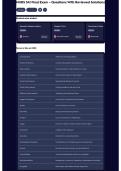
Schizophrenia Affects 1% of the population.
Positive Symptoms Include hallucinations and delusions.
Hallucinations False perceptions, often auditory or visual.
Auditory Hallucinations Most common type of hallucination.
Visual Hallucinations Seeing things that aren't present.
Tactile Hallucinations Feeling sensations that aren't real.
Olfactory Hallucinations Smelling odors that aren't there.
Negative Symptoms Include lack of interest and motivation.
Apathy Lack of interest or concern.
Flat Affect Reduced emotional expression.
Avolition Lack of motivation to initiate tasks.
Alogia Poverty of speech, limited verbal communication.
Anhedonia Inability to feel pleasure.
Asociality Disinterest in social interactions.
Schizoaffective Disorder Combination of schizophrenia and mood disorder.
Anxiety Normal response to stress; can be protective.
Comorbidities Anxiety and depression often occur together.
Neurotransmitters Imbalances in serotonin, dopamine, norepinephrine involved.
Amygdala Brain region associated with fear responses.
, Prefrontal Cortex Regulates emotions and decision-making.
Panic Episode Intense fear with physical symptoms.
Social Anxiety Fear of embarrassment in social situations.
Generalized Anxiety Disorder Excessive worry about various aspects of life.
Obsessive-Compulsive Disorder (OCD) Involves obsessions and compulsions.
Obsessions Persistent, intrusive thoughts causing distress.
Compulsions Ritualistic behaviors to alleviate anxiety.
Suicidal Ideation Thoughts about self-harm or suicide.
Risk Factors for Suicide Includes chronic illness, hopelessness, and losses.
Safety Plan Evidence-based strategy for suicide prevention.
SSRIs Selective serotonin reuptake inhibitors for anxiety/depression.
Sertraline First-line SSRI, effective for anxiety and depression.
SNRIs Serotonin-norepinephrine reuptake inhibitors for anxiety
disorders.
Venlafaxine Effective SNRI, particularly for generalized anxiety disorder.
Tricyclic Antidepressants Older antidepressants with significant side effects.
Amitriptyline Common TCA, useful but toxic in overdose.
Benzodiazepines Short-term anxiety management, risk of dependence.
Alprazolam Benzodiazepine, fast-acting for panic attacks.
Buspirone Mild tranquilizer, slow-acting for generalized anxiety.
Beta-blockers Control physical symptoms of anxiety, especially phobias.
MAOIs Monoamine oxidase inhibitors, avoid tyramine-rich foods.
Phenelzine MAOI used for depression, requires dietary restrictions.
ECT Electroconvulsive therapy, causes temporary headaches.
Ketamine Used for treatment-resistant depression, monitored closely.
Lithium Gold standard mood stabilizer, narrow therapeutic index.
Anticonvulsants Mood stabilizers, e.g., Carbamazepine for mood disorders.
1st Generation Antipsychotics Dopamine blockers, significant extrapyramidal side effects.
Save
Students also studied
Sherpath: Diabetes Mellitus Chapter 21 Test Case Study 4 (Short
30 terms 24 terms 22 terms
jesssbee Preview kenanderson2017 Preview Brittany182
Terms in this set (212)
Schizophrenia Affects 1% of the population.
Positive Symptoms Include hallucinations and delusions.
Hallucinations False perceptions, often auditory or visual.
Auditory Hallucinations Most common type of hallucination.
Visual Hallucinations Seeing things that aren't present.
Tactile Hallucinations Feeling sensations that aren't real.
Olfactory Hallucinations Smelling odors that aren't there.
Negative Symptoms Include lack of interest and motivation.
Apathy Lack of interest or concern.
Flat Affect Reduced emotional expression.
Avolition Lack of motivation to initiate tasks.
Alogia Poverty of speech, limited verbal communication.
Anhedonia Inability to feel pleasure.
Asociality Disinterest in social interactions.
Schizoaffective Disorder Combination of schizophrenia and mood disorder.
Anxiety Normal response to stress; can be protective.
Comorbidities Anxiety and depression often occur together.
Neurotransmitters Imbalances in serotonin, dopamine, norepinephrine involved.
Amygdala Brain region associated with fear responses.
, Prefrontal Cortex Regulates emotions and decision-making.
Panic Episode Intense fear with physical symptoms.
Social Anxiety Fear of embarrassment in social situations.
Generalized Anxiety Disorder Excessive worry about various aspects of life.
Obsessive-Compulsive Disorder (OCD) Involves obsessions and compulsions.
Obsessions Persistent, intrusive thoughts causing distress.
Compulsions Ritualistic behaviors to alleviate anxiety.
Suicidal Ideation Thoughts about self-harm or suicide.
Risk Factors for Suicide Includes chronic illness, hopelessness, and losses.
Safety Plan Evidence-based strategy for suicide prevention.
SSRIs Selective serotonin reuptake inhibitors for anxiety/depression.
Sertraline First-line SSRI, effective for anxiety and depression.
SNRIs Serotonin-norepinephrine reuptake inhibitors for anxiety
disorders.
Venlafaxine Effective SNRI, particularly for generalized anxiety disorder.
Tricyclic Antidepressants Older antidepressants with significant side effects.
Amitriptyline Common TCA, useful but toxic in overdose.
Benzodiazepines Short-term anxiety management, risk of dependence.
Alprazolam Benzodiazepine, fast-acting for panic attacks.
Buspirone Mild tranquilizer, slow-acting for generalized anxiety.
Beta-blockers Control physical symptoms of anxiety, especially phobias.
MAOIs Monoamine oxidase inhibitors, avoid tyramine-rich foods.
Phenelzine MAOI used for depression, requires dietary restrictions.
ECT Electroconvulsive therapy, causes temporary headaches.
Ketamine Used for treatment-resistant depression, monitored closely.
Lithium Gold standard mood stabilizer, narrow therapeutic index.
Anticonvulsants Mood stabilizers, e.g., Carbamazepine for mood disorders.
1st Generation Antipsychotics Dopamine blockers, significant extrapyramidal side effects.