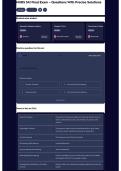
NURS 341 Final Exam – Questions With Precise Solutions
Save
Students also studied
Sherpath: Diabetes Mellitus Chapter 21 Test Case Study 4 (Short
30 terms 24 terms 22 terms
jesssbee Preview kenanderson2017 Preview Brittany182
Practice questions for this set
Learn 1 /7 Study using Learn
normal distribution
Choose an answer
1 Osmotic Pressure 2 first spacing fluid spacing
3 Hypernatremia 4 third spacing fluid spacing
Don't know?
Terms in this set (124)
Osmotic Pressure The amount of pressure required to stop the osmotic flow of
water is determined by the concentration of solutes in the
solution.
Hydrostatic Pressure The pressure within a blood vessel that tends to push water
out of the vessel. Overall fluid volume increases this
oncotic pressure The pressure to pull fluid into vessels
first spacing fluid spacing normal distribution
second spacing fluid spacing abnormal (edema)
third spacing fluid spacing fluid accumulation in a part of the body where it is not easily
exchanged with ECF. An example is acites
Maintaining fluid balance in the body kidneys, heart, liver, adrenal and pituitary glands, and nervous
involves system
, insensible water loss invisible vaporization from the lungs and skin, which can be
approximately 600-900mL/day and does not result in
electrolyte loss
Isotonic Solutions (neutral not doing lactated ringers
anything) 0.9% normal saline
dextrose 5% in water
hypotonic solutions (swells cells) half normal saline
0.33% sodium chloride
hypertonic solutions (shrinks cells) Dextrose 5% in half-normal saline
Dextrose 5% in NS
Dextrose 5% in LR
sodium role in the body ECF volume and concentration, generation and transmission
of nerve impuleses, muscle contractility
sodium correlates with neurological complications
Hypernatremia occurs with water loss or sodium gain, which causes
hyperosmolality, leading to cellular dehydration
What is the primary protection of thirst
hypernatremia from the hypothalamus
Hypernatremia clinical manifestations thirst, lethargy, agitation, seizures, coma, impaired LOC,
crackles in the lungs
nursing management of hypernatramia treat the underlying cause, replace fluid orally or with isotonic
or hypotonic fluids if water deficit, for excess sodium, dilute
with sodium-free IV fluids, monitor carefully
hyponatremia results from loss of sodium-
containing fluids or from water excess
hyponatremia clinical manifestations confusion, irritability, headache, seizures, and coma
nursing management for hyponatremia If it is water excess fluid restriction is needed, if there are
severe symptoms like seziures give a small amount of
hypertonic saline solution (3%NaCl), if it is abnormal fluid loss
replace with sodium-containing solution
potassium role in the body transmission and conduction of nerve and muscle impulses,
cellular growth, maintenance of cardiac rhythms, and acid-
base balance
potassium correlate with cardiac system
potassium sources to AVOID bananas, citrus fruits, broccoli, avocado (fruits and
vegetables) salt substitutes for renal failure
what is potassium regulated by the kidneys
what causes hyperkalemia renal failure, excessive K intake, and shifts from ICF to ECF
(trauma or acidosis)
Save
Students also studied
Sherpath: Diabetes Mellitus Chapter 21 Test Case Study 4 (Short
30 terms 24 terms 22 terms
jesssbee Preview kenanderson2017 Preview Brittany182
Practice questions for this set
Learn 1 /7 Study using Learn
normal distribution
Choose an answer
1 Osmotic Pressure 2 first spacing fluid spacing
3 Hypernatremia 4 third spacing fluid spacing
Don't know?
Terms in this set (124)
Osmotic Pressure The amount of pressure required to stop the osmotic flow of
water is determined by the concentration of solutes in the
solution.
Hydrostatic Pressure The pressure within a blood vessel that tends to push water
out of the vessel. Overall fluid volume increases this
oncotic pressure The pressure to pull fluid into vessels
first spacing fluid spacing normal distribution
second spacing fluid spacing abnormal (edema)
third spacing fluid spacing fluid accumulation in a part of the body where it is not easily
exchanged with ECF. An example is acites
Maintaining fluid balance in the body kidneys, heart, liver, adrenal and pituitary glands, and nervous
involves system
, insensible water loss invisible vaporization from the lungs and skin, which can be
approximately 600-900mL/day and does not result in
electrolyte loss
Isotonic Solutions (neutral not doing lactated ringers
anything) 0.9% normal saline
dextrose 5% in water
hypotonic solutions (swells cells) half normal saline
0.33% sodium chloride
hypertonic solutions (shrinks cells) Dextrose 5% in half-normal saline
Dextrose 5% in NS
Dextrose 5% in LR
sodium role in the body ECF volume and concentration, generation and transmission
of nerve impuleses, muscle contractility
sodium correlates with neurological complications
Hypernatremia occurs with water loss or sodium gain, which causes
hyperosmolality, leading to cellular dehydration
What is the primary protection of thirst
hypernatremia from the hypothalamus
Hypernatremia clinical manifestations thirst, lethargy, agitation, seizures, coma, impaired LOC,
crackles in the lungs
nursing management of hypernatramia treat the underlying cause, replace fluid orally or with isotonic
or hypotonic fluids if water deficit, for excess sodium, dilute
with sodium-free IV fluids, monitor carefully
hyponatremia results from loss of sodium-
containing fluids or from water excess
hyponatremia clinical manifestations confusion, irritability, headache, seizures, and coma
nursing management for hyponatremia If it is water excess fluid restriction is needed, if there are
severe symptoms like seziures give a small amount of
hypertonic saline solution (3%NaCl), if it is abnormal fluid loss
replace with sodium-containing solution
potassium role in the body transmission and conduction of nerve and muscle impulses,
cellular growth, maintenance of cardiac rhythms, and acid-
base balance
potassium correlate with cardiac system
potassium sources to AVOID bananas, citrus fruits, broccoli, avocado (fruits and
vegetables) salt substitutes for renal failure
what is potassium regulated by the kidneys
what causes hyperkalemia renal failure, excessive K intake, and shifts from ICF to ECF
(trauma or acidosis)