MOMENTUM 2
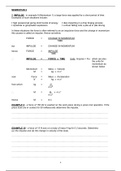
2. IMPULSE - in example 8 (Momentum 1) a large force was applied for a short period of time.
Examples of such situations include:
high powered jet giving short bursts of energy dies impacting in a drop forging process
dynamite or gunpowder explosions a driver falling onto a pile as in pile driving
In these situations the force is often referred to as an impulsive force and the change in momentum
this causes is called an impulse. Hence as before.
FORCE = CHANGE IN MOMENTUM
TIME
but IMPULSE = CHANGE IN MOMENTUM
hence FORCE = IMPULSE
TIME
IMPULSE = FORCE x TIME Units Impulse = N.s which are also
the units for
momentum as
shown below
Momentum = Mass x Velocity
M = kg x m s-1
now Force = Mass x Acceleration
N = kg x m s-2
from which kg = N
m s-2
M = N x m s-1
m s-2
Hence M = Ns
EXAMPLE 9 - a force of 150 kN is exerted on the work piece during a press tool operation. If the
press tools are in contact for 50 milliseconds determine the impulse.
…………………………………………………………………………………………………………………
…………………………………………………………………………………………………………………
…………………………………………………………………………………………………………………
EXAMPLE 10 - a force of 15 N acts on a body of mass 4 kg for 0.2 seconds. Determine:
(a) the impulse and (b) the change in velocity of the body.
…………………………………………………………………………………………………………………
…………………………………………………………………………………………………………………
…………………………………………………………………………………………………………………
…………………………………………………………………………………………………………………
…………………………………………………………………………………………………………………
8
, 3. PRINCIPLE OF CONSERVATION OF MOMENTUM - this states that:
“the total linear momentum of a body or system of
bodies in one direction remains constant unless
acted upon by an external force in that direction”
The total momentum of a system of bodies is obtained by adding together the momentum of each
body.
This principle allows problems to be solved involving bodies which:
collide, or impact, with each other
repel, or recoil, from each other and
suddenly attach, or engage, themselves to each other.
(a) ELASTIC BODIES – this covers situations where objects impinge on each other but then move
apart after the incident has taken place. For example:
ball bearing bouncing on a steel surface
a car shunting another car from behind
a bullet being fired from a gun
electro-magnetic metal forming processes.
Just before impact At impact Just after impact
u1 > u2 v1 < v2
u1 u2 v1 v2
m1 m2 m1 m2 m1 m2
Momentum before impact = Momentum after impact
m1u1 + m2u2 = m1v1 + m2v2
(b) INELASTIC BODIES – this covers situations where objects impinge on each other and then
remain in contact after the incident has taken place. For example:
a bullet hitting and embedding itself in a target
two cars colliding and locking together.
Just before impact At impact Just after impact
u1 > u2 common velocity
u1 u2 v
m1 m2 m1 m2 m1 m2
Momentum before impact = Momentum after impact
m1u1 + m2u2 = (m1 + m2)v
9
2. IMPULSE - in example 8 (Momentum 1) a large force was applied for a short period of time.
Examples of such situations include:
high powered jet giving short bursts of energy dies impacting in a drop forging process
dynamite or gunpowder explosions a driver falling onto a pile as in pile driving
In these situations the force is often referred to as an impulsive force and the change in momentum
this causes is called an impulse. Hence as before.
FORCE = CHANGE IN MOMENTUM
TIME
but IMPULSE = CHANGE IN MOMENTUM
hence FORCE = IMPULSE
TIME
IMPULSE = FORCE x TIME Units Impulse = N.s which are also
the units for
momentum as
shown below
Momentum = Mass x Velocity
M = kg x m s-1
now Force = Mass x Acceleration
N = kg x m s-2
from which kg = N
m s-2
M = N x m s-1
m s-2
Hence M = Ns
EXAMPLE 9 - a force of 150 kN is exerted on the work piece during a press tool operation. If the
press tools are in contact for 50 milliseconds determine the impulse.
…………………………………………………………………………………………………………………
…………………………………………………………………………………………………………………
…………………………………………………………………………………………………………………
EXAMPLE 10 - a force of 15 N acts on a body of mass 4 kg for 0.2 seconds. Determine:
(a) the impulse and (b) the change in velocity of the body.
…………………………………………………………………………………………………………………
…………………………………………………………………………………………………………………
…………………………………………………………………………………………………………………
…………………………………………………………………………………………………………………
…………………………………………………………………………………………………………………
8
, 3. PRINCIPLE OF CONSERVATION OF MOMENTUM - this states that:
“the total linear momentum of a body or system of
bodies in one direction remains constant unless
acted upon by an external force in that direction”
The total momentum of a system of bodies is obtained by adding together the momentum of each
body.
This principle allows problems to be solved involving bodies which:
collide, or impact, with each other
repel, or recoil, from each other and
suddenly attach, or engage, themselves to each other.
(a) ELASTIC BODIES – this covers situations where objects impinge on each other but then move
apart after the incident has taken place. For example:
ball bearing bouncing on a steel surface
a car shunting another car from behind
a bullet being fired from a gun
electro-magnetic metal forming processes.
Just before impact At impact Just after impact
u1 > u2 v1 < v2
u1 u2 v1 v2
m1 m2 m1 m2 m1 m2
Momentum before impact = Momentum after impact
m1u1 + m2u2 = m1v1 + m2v2
(b) INELASTIC BODIES – this covers situations where objects impinge on each other and then
remain in contact after the incident has taken place. For example:
a bullet hitting and embedding itself in a target
two cars colliding and locking together.
Just before impact At impact Just after impact
u1 > u2 common velocity
u1 u2 v
m1 m2 m1 m2 m1 m2
Momentum before impact = Momentum after impact
m1u1 + m2u2 = (m1 + m2)v
9