lOMoAR cPSD| 47061011
1
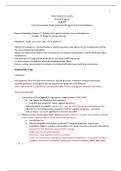
West Liberty University
Nursing Program
NUR 320
Psychotherapeutic Drugs: antipsychotic agents and mood stabilizers
Required Reading: Chapter 31, Antipsychotic agents and their use in schizophrenia
Chapter 33, Drugs for bipolar disorder
Objectives: by the end of this class, the student will
Explain the indications, contraindications, adverse reactions, side effects for the antipsychotic and for
the mood stabilizing medications.
Explain the differences between the conventional, the atypical antipsychotic, and the third generation
medications.
Give examples of antipsychotic medications and mood stabilizing agents.
List interventions for patients who have medication side effects.
Discuss nursing interventions for patients on antipsychotic and mood stabilizing medications.
Antipsychotic Drugs
Indications:
Schizophrenia (first line) and other psychosis, bipolar disorders, treatment resistant depression,
Tourette syndrome, Huntington’s chorea, suppression of emesis (ocd, delirium)
Such a vast amount of side effects- treatment/benefit should outweigh the potential side effects
Three overall groups:
1. Conventional (Older, typical, first generation antipsychotics -FGA) 1950s
a. Very rarely are these first line treatment
b. Only positive symptoms, rarely negative symptoms
(bad side effects. Ex. Haldol- typical and 1st gen act exclusively on the dopamine system,
effective at controlling positive symptoms, bad for negative symptoms-.. can cause
hallucinations- can cause significant movement disorder)
2. Atypical (newer, second generation- SGA) (modulate serotonin, noreepi, and possibly histamine
transmission- adjunct med for mood and anxiety disorders)
a. Usually first line
b. Improve Negative and positive symptoms!! (negative symptoms- depression,
motivation, fatigue.. positive- hallucinations etc.. fewer movement disorder side effects)
Norepinephrine- alertness, concentration, energy
Dopamine- reward and motivation
Histamine- sleep cognition memory emotions
Used a lot- lurasidone, risperidone, halaparadone, eloparadone, orlansipine, quitipine,
clozapine, esenopine, eropiprozol, respiprozol, cariprozine (dones, pines, pips, rips)
3. )
, lOMoAR cPSD| 47061011
2
a. Their MOA differs a little from the rest
b. Negative and positive symptoms
Be able to differentiate between the MOA of these because of side effects.
Mechanism of Action: blocks dopamine in the brain
FGA-Conventional: block dopamine postsynaptically in the limbic system and the basal ganglia
They also block other neurotransmitters as listed below, leading to side effects. FGA block D2 receptors
sites more completely than do the SGAs.
SGA- Atypical: block D2 receptors and some serotonin receptors (5-HT2) leading to better safety and side
effect profile
Third generation: stabilize/modulate dopamine
Both FGA s and SGAs are equally as effective. Only one SGA, clozapine, has more efficacy as
demonstrated through research.
Advantages of atypical antipsychotic medications, SGAs and TGAs:
Relief of positive and negative symptoms (conventional, mostly positive symptoms)
Decrease of affective symptoms (depression and anxiety) and suicidal behaviors
Improvement in neurocognitive symptoms (memory and thinking)
Fewer EPS symptoms (movement)
Fewer anticholinergic symptoms (except for clozapine)
Disadvantages of SGAs: Metabolic profile, so watch for weight gain, esp. around waist, hyperglycemia
(relive positive symptoms, improve negative symptoms, improve neurocognitive symptoms, fewer
movement disorder symptoms.. disadvantages- metabolic syndrome- baseline labs order cmp lipids
a1cincfease cv disease type 2 stroke- increase bp blood sugar, excess body fat around waist, increase
cholesterol and triglycerides- ATYPICAL ANTIPSYCHOTICS INCREASE RISK FOR METABOLIC SYNDROMES-
ORDER LABS
Contraindications: known allergy and significant CNS depression
There is an increased risk of death in the elderly with dementia related psychosis.
Not usually safe for pregnancy (black box warning)
Avoid alcohol
Adverse effects: related to receptor interaction
Receptor Adverse Effect
1
West Liberty University
Nursing Program
NUR 320
Psychotherapeutic Drugs: antipsychotic agents and mood stabilizers
Required Reading: Chapter 31, Antipsychotic agents and their use in schizophrenia
Chapter 33, Drugs for bipolar disorder
Objectives: by the end of this class, the student will
Explain the indications, contraindications, adverse reactions, side effects for the antipsychotic and for
the mood stabilizing medications.
Explain the differences between the conventional, the atypical antipsychotic, and the third generation
medications.
Give examples of antipsychotic medications and mood stabilizing agents.
List interventions for patients who have medication side effects.
Discuss nursing interventions for patients on antipsychotic and mood stabilizing medications.
Antipsychotic Drugs
Indications:
Schizophrenia (first line) and other psychosis, bipolar disorders, treatment resistant depression,
Tourette syndrome, Huntington’s chorea, suppression of emesis (ocd, delirium)
Such a vast amount of side effects- treatment/benefit should outweigh the potential side effects
Three overall groups:
1. Conventional (Older, typical, first generation antipsychotics -FGA) 1950s
a. Very rarely are these first line treatment
b. Only positive symptoms, rarely negative symptoms
(bad side effects. Ex. Haldol- typical and 1st gen act exclusively on the dopamine system,
effective at controlling positive symptoms, bad for negative symptoms-.. can cause
hallucinations- can cause significant movement disorder)
2. Atypical (newer, second generation- SGA) (modulate serotonin, noreepi, and possibly histamine
transmission- adjunct med for mood and anxiety disorders)
a. Usually first line
b. Improve Negative and positive symptoms!! (negative symptoms- depression,
motivation, fatigue.. positive- hallucinations etc.. fewer movement disorder side effects)
Norepinephrine- alertness, concentration, energy
Dopamine- reward and motivation
Histamine- sleep cognition memory emotions
Used a lot- lurasidone, risperidone, halaparadone, eloparadone, orlansipine, quitipine,
clozapine, esenopine, eropiprozol, respiprozol, cariprozine (dones, pines, pips, rips)
3. )
, lOMoAR cPSD| 47061011
2
a. Their MOA differs a little from the rest
b. Negative and positive symptoms
Be able to differentiate between the MOA of these because of side effects.
Mechanism of Action: blocks dopamine in the brain
FGA-Conventional: block dopamine postsynaptically in the limbic system and the basal ganglia
They also block other neurotransmitters as listed below, leading to side effects. FGA block D2 receptors
sites more completely than do the SGAs.
SGA- Atypical: block D2 receptors and some serotonin receptors (5-HT2) leading to better safety and side
effect profile
Third generation: stabilize/modulate dopamine
Both FGA s and SGAs are equally as effective. Only one SGA, clozapine, has more efficacy as
demonstrated through research.
Advantages of atypical antipsychotic medications, SGAs and TGAs:
Relief of positive and negative symptoms (conventional, mostly positive symptoms)
Decrease of affective symptoms (depression and anxiety) and suicidal behaviors
Improvement in neurocognitive symptoms (memory and thinking)
Fewer EPS symptoms (movement)
Fewer anticholinergic symptoms (except for clozapine)
Disadvantages of SGAs: Metabolic profile, so watch for weight gain, esp. around waist, hyperglycemia
(relive positive symptoms, improve negative symptoms, improve neurocognitive symptoms, fewer
movement disorder symptoms.. disadvantages- metabolic syndrome- baseline labs order cmp lipids
a1cincfease cv disease type 2 stroke- increase bp blood sugar, excess body fat around waist, increase
cholesterol and triglycerides- ATYPICAL ANTIPSYCHOTICS INCREASE RISK FOR METABOLIC SYNDROMES-
ORDER LABS
Contraindications: known allergy and significant CNS depression
There is an increased risk of death in the elderly with dementia related psychosis.
Not usually safe for pregnancy (black box warning)
Avoid alcohol
Adverse effects: related to receptor interaction
Receptor Adverse Effect