NR 508 Week 6_NR508 Advanced Pharmacology Week 6 Questions And Answers
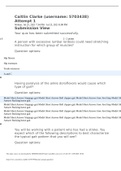
1. A patient is diagnosed with a condition that causes chronic pain. The primary care NP prescribes an opioid analgesic and should instruct the patient to: (Points : 2) wait until the pain is at a moderate level before taking the medication. take the medication at regular intervals and not just when pain is present. start the medication at higher doses initially and taper down gradually. take the minimum amount needed even when pain is severe to avoid dependency. Chronic pain requires routine administration of drugs, and patients should take analgesicsroutinely without waiting for increased pain Question 2.2. A patient who is taking methotrexate for RA sees the primary care NP for an annual physical examination. The patient’s alanine aminotransferase (ALT) and AGT are elevated. The NP should: (Points : 2) decrease the dose of methotrexate. recheck ALT and AGT levels in 2 weeks. contact the patient’s rheumatologist to discuss discontinuing the drug. counsel the patient not to take acetaminophen while taking methotrexate. Liver enzyme elevations are frequent, are usually transient and asymptomatic, and do notappear predictive of subsequent hepatic disease. A decrease in dose or discontinuation of thedrug is not indicated. Coadministration with acetaminophen is not contraindicated. Question 3.3. A patient who has migraine headaches tells the primary care NP that drinking coffee and taking nonsteroidal antiinflammatory drugs (NSAIDs) seems to help with discomfort. The NP should tell the patient that: (Points : 2) this combination can lead to longer lasting headache pain. these substances are not indicated for migraine headaches. doing this can increase the risk of more chronic migraines. an opioid analgesic would be a better choice for migraine pain. Overuse of pain or migraine medications can cause a transformed migraine,which is a long-lasting headache. Following a migraine episode, the patienthas rebound headache daily or nearly daily. NSAIDs, caffeine, opiates, andtriptans can cause these rebound headaches. NSAIDs and caffeine are oftenused to treat migraines. Narcotics and barbiturates increase the risk fordevelopment of chronic migraine headaches and should not be first-linedrugs
Written for
Document information
- Uploaded on
- February 22, 2021
- Number of pages
- 7
- Written in
- 2020/2021
- Type
- Exam (elaborations)
- Contains
- Questions & answers
Subjects
- nr 508 week 6
- nr508 week 6
-
nr 508 advanced pharmacology week 6
-
nr508 advanced pharmacology week 6
-
nr 508 advanced pharmacology
-
nr508 advanced pharmacology