JPR 5.3.3 Control a Flammable Gas Cylinder Fire
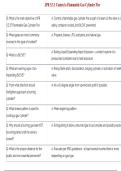
Q: What is the main objective of JPR A: Control a flammable gas cylinder fire as part of a team so the valve is cl
5.3.3? Flammable Gas Cylinder Fire safely, container cooled, and BLEVE prevented.
Q: What gases are most commonly A: Propane, butane, LPG, acetylene, and natural gas.
involved in this type of incident?
A: Boiling Liquid Expanding Vapor Explosion - a violent rupture of a
Q: What is a BLEVE?
pressurized container due to heat exposure.
Q: What are warning signs of an A: Rising flame pitch, discoloration, bulging cylinder, or activation of relief
impending BLEVE? valve.
Q: From what direction should A: At a 45-degree angle from upwind and uphill if possible.
firefighters approach a burning
cylinder?
Q: What stream pattern is used for A: Wide-angle fog pattern.
cooling a gas cylinder?
Q: Why should a burning gas leak NOT A: Extinguishing it allows unburned gas to accumulate and possibly explod
be extinguished until the valve is
closed?
Q: What is the proper distance for the A: Evacuate per ERG guidebook - at least several hundred feet or more
public and non-essential personnel? depending on gas type.
Q: What is the main objective of JPR A: Control a flammable gas cylinder fire as part of a team so the valve is cl
5.3.3? Flammable Gas Cylinder Fire safely, container cooled, and BLEVE prevented.
Q: What gases are most commonly A: Propane, butane, LPG, acetylene, and natural gas.
involved in this type of incident?
A: Boiling Liquid Expanding Vapor Explosion - a violent rupture of a
Q: What is a BLEVE?
pressurized container due to heat exposure.
Q: What are warning signs of an A: Rising flame pitch, discoloration, bulging cylinder, or activation of relief
impending BLEVE? valve.
Q: From what direction should A: At a 45-degree angle from upwind and uphill if possible.
firefighters approach a burning
cylinder?
Q: What stream pattern is used for A: Wide-angle fog pattern.
cooling a gas cylinder?
Q: Why should a burning gas leak NOT A: Extinguishing it allows unburned gas to accumulate and possibly explod
be extinguished until the valve is
closed?
Q: What is the proper distance for the A: Evacuate per ERG guidebook - at least several hundred feet or more
public and non-essential personnel? depending on gas type.