matl Exam 3
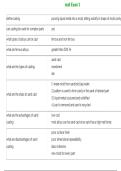
define castrig pouring liquid metal into a mold, letting solidify in shape of mold cavity
can casting be used for complex parts yes
what types of alloys can be cast ferrous and non ferrous
what are ferrous alloys greater than 50% Fe
sand cast
what are the types of casting investment
die
1.) make mold from sand/oil/clay/water
2.) pattern is used to form cavity in the sand of desired part
what are the steps to sand cast
3.) liquid metal is poured and solidified
4.) part is removed and sand is recycled
what are the advantages of sand low cost
casting most alloys can be sand cast since sand has a high melt temp
poor surface finish
what are disadvantages of sand poor dimensional repeatability
casting labor intensive
new mold for every part
, matl Exam 3
1.) make part out of wax
2.) coat wax with ceramic slurry and let dry (repeat)
what are the steps to investment
3.) melt wax from ceramic producing a ceramic mold
casting
4.)pour liquid metal into mold
5.) break ceramic mold from metal part
better surface finish
what are the advantages of investment
good dimensional repeatability
casting
most all metals
what are disadvantages of investment high cost, time
casting new mold for every part
what is cast iron an alloy of Fe, C, and Si
what is the purpose of Silicon in cast better flow when pouring
iron
what %C is cast iron 2-4.3%
what % Si is cast iron 1-3%
Is cast iron cheaper or more expensive cheaper since excess carbon does not need refined
than steel and why
, matl Exam 3
what microstructure does cast iron matrix of ferrite, pearlite, or martensite
have
how is the microstructure of cast iron rate of solidification and heat treat
controlled
graphite flakes
what types of excess carbon does cast
graphite spheres
iron have
iron carbide
gray
white
what are the types of cast iron malleable
ductile
compacted graphite
what is the most common type of cast gray, approx 75%
iron
what microstructure does gray cast matrix of pearlite and ferrite with graphite flake
iron have
define castrig pouring liquid metal into a mold, letting solidify in shape of mold cavity
can casting be used for complex parts yes
what types of alloys can be cast ferrous and non ferrous
what are ferrous alloys greater than 50% Fe
sand cast
what are the types of casting investment
die
1.) make mold from sand/oil/clay/water
2.) pattern is used to form cavity in the sand of desired part
what are the steps to sand cast
3.) liquid metal is poured and solidified
4.) part is removed and sand is recycled
what are the advantages of sand low cost
casting most alloys can be sand cast since sand has a high melt temp
poor surface finish
what are disadvantages of sand poor dimensional repeatability
casting labor intensive
new mold for every part
, matl Exam 3
1.) make part out of wax
2.) coat wax with ceramic slurry and let dry (repeat)
what are the steps to investment
3.) melt wax from ceramic producing a ceramic mold
casting
4.)pour liquid metal into mold
5.) break ceramic mold from metal part
better surface finish
what are the advantages of investment
good dimensional repeatability
casting
most all metals
what are disadvantages of investment high cost, time
casting new mold for every part
what is cast iron an alloy of Fe, C, and Si
what is the purpose of Silicon in cast better flow when pouring
iron
what %C is cast iron 2-4.3%
what % Si is cast iron 1-3%
Is cast iron cheaper or more expensive cheaper since excess carbon does not need refined
than steel and why
, matl Exam 3
what microstructure does cast iron matrix of ferrite, pearlite, or martensite
have
how is the microstructure of cast iron rate of solidification and heat treat
controlled
graphite flakes
what types of excess carbon does cast
graphite spheres
iron have
iron carbide
gray
white
what are the types of cast iron malleable
ductile
compacted graphite
what is the most common type of cast gray, approx 75%
iron
what microstructure does gray cast matrix of pearlite and ferrite with graphite flake
iron have