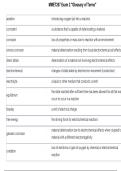
MMET207 Exam 2 "Glossary of Terms"
aeration introducing oxygen (air) into a reaction
corrodent a substance that is capable of deteriorating a material
corrosion loss of properties or mass due to reaction with an environment
crevice corrosion material deterioration resulting from local electrochemical cell effects
direct attack deterioration of a material not involving electrochemical effects
electrochemical changes of state aided by electron/ion movement (conduction)
electrolyte a liquid or other medium that conducts current
the state reached after sufficient time has been allowed for all that may
equilibrium
occur to occur in a reaction
faraday a unit of electrical charge
free energy the driving force for electrochemical reactions
material deterioration due to electrochemical effects when coupled to
galvanic corrosion
material with a different electronegativity
loss of electrons or gain of oxygen by chemical or electrochemical
oxidation
reaction
, MMET207 Exam 2 "Glossary of Terms"
passivity the ability of a metal to form a surface layer that inhibits corrosion
polarization the development of regions of low chemical activity in a chemical cell
redox reduction/oxidation reactions
reduction gain of electrons in an electrochemical reaction
uniform attack deterioration in which all of an exposed surface is affected—not local
allotropy the ability to change crystal structure
annealing softening of a steel by heating just into the austenitic range
on quenching, holding a hardenable steel for a length of time at a
austempering
temperature above the Ms temperature
austenite face-centered cubic iron
binary phase diagrams for alloy with only two major atomic species
boronizing heating steel in an atmosphere that causes B to diffuse into the surface
bright hardening hardening in a furnace atmosphere that is neither oxidizing nor reducin
carbonitriding diffusion of carbon plus nitrogen into a steel surface
carburizing diffusion of carbon into the surface of a steel part
aeration introducing oxygen (air) into a reaction
corrodent a substance that is capable of deteriorating a material
corrosion loss of properties or mass due to reaction with an environment
crevice corrosion material deterioration resulting from local electrochemical cell effects
direct attack deterioration of a material not involving electrochemical effects
electrochemical changes of state aided by electron/ion movement (conduction)
electrolyte a liquid or other medium that conducts current
the state reached after sufficient time has been allowed for all that may
equilibrium
occur to occur in a reaction
faraday a unit of electrical charge
free energy the driving force for electrochemical reactions
material deterioration due to electrochemical effects when coupled to
galvanic corrosion
material with a different electronegativity
loss of electrons or gain of oxygen by chemical or electrochemical
oxidation
reaction
, MMET207 Exam 2 "Glossary of Terms"
passivity the ability of a metal to form a surface layer that inhibits corrosion
polarization the development of regions of low chemical activity in a chemical cell
redox reduction/oxidation reactions
reduction gain of electrons in an electrochemical reaction
uniform attack deterioration in which all of an exposed surface is affected—not local
allotropy the ability to change crystal structure
annealing softening of a steel by heating just into the austenitic range
on quenching, holding a hardenable steel for a length of time at a
austempering
temperature above the Ms temperature
austenite face-centered cubic iron
binary phase diagrams for alloy with only two major atomic species
boronizing heating steel in an atmosphere that causes B to diffuse into the surface
bright hardening hardening in a furnace atmosphere that is neither oxidizing nor reducin
carbonitriding diffusion of carbon plus nitrogen into a steel surface
carburizing diffusion of carbon into the surface of a steel part