NSG-434 Exam 1
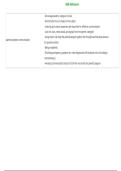
-Encourage parents/ caregiver to talk
-Directing the focus to keep on the subject
-Listening and cultural awareness are important for effective communication
-Look for clues, verbal leads, and signals from the parent/ caregiver
-Using silence can help the parent/caregiver gather their thoughts and develop answers
parent/caregiver communication
for questions asked
-Being empathetic
-Providing anticipatory guidance (ex: client diagnosed with leukemia who will undergo
chemotherapy)
-Avoiding communication blocks for both the nurse and the parent/caregiver
, NSG-434 Exam 1
-Until infants reach the age at which they experience stranger anxiety, they readily
respond to any firm, gentle handling and quiet, calm speech.
-Play is an effective way of communicating with younger children
-Children younger than 5 years of age are egocentric.
-Younger school-age children rely less on what they see and more on what they know
when faced with new problems
-Functional aspect of all procedures, objects, and activities
-What is going to take place and why it is being done to them specifically
-School-age children have a heightened concern about body integrity
-As children move into adolescence, they fluctuate between child and adult thinking
and behavior
-Privacy and confidentiality is important to them
communicating with children
General Tips:
-Avoid sudden or rapid advances, broad smiles, extended eye contact, and other
gestures that may be seen as threatening.
-Talk to the parent if the child is initially shy.
-Communicate through transition objects (such as, dolls, puppets, and stuffed animals)
before questioning a young child directly.
-Give older children the opportunity to talk without the parents present.
-Assume a position that is at eye level with the child.
-Speak in a quiet, unhurried, and confident voice.
-Speak clearly, be specific, and use simple words and short sentences.
-State directions and suggestions positively.
-Offer a choice only when one exists.
-Be honest with children.
, NSG-434 Exam 1
-Allow children to express their concerns and fears.
-Use a variety of communication techniques.
, NSG-434 Exam 1
-The format used for history taking may be (1) direct, in which the nurse asks for
information via direct interview with the informant, or (2) indirect, in which the informant
supplies the information by completing some type of questionnaire.
-Informant: the person(s) who furnishes the information
-Chief complaint: specific reason
-Present illness: narrative of the chief complaint
-Analyzing of symptom(s): assessment includes type, location, severity, duration, and
influencing factors
-Birth History: health during pregnancy, the labor and delivery, and infant's condition
immediately after birth
-Dietary History
-Previous Illnesses, Injuries, and Operations: begin with a general question
-Allergies: ask about commonly known allergic disorders; unusual reactions to drugs,
food, or latex products;
reactions to other contact agents, such as poisonous plants, animals, household
products, or fabrics
history taking
-Current Medications: vitamins, antipyretics (especially aspirin), antibiotics,
antihistamines, decongestants, nutritional supplements, or herbs and homeopathic
medications
-Immunizations
-Growth and Development:
-Review the child's growth including the following:
•Measurements of weight, length, and head circumference at birth
•Patterns of growth on the growth chart and any significant deviations from previous
percentiles
-Habits:
•Behavior patterns, such as nail biting, thumb sucking, pica (habitual ingestion of
nonfood substances), rituals ("security" blanket or toy), and unusual movements (head
-Encourage parents/ caregiver to talk
-Directing the focus to keep on the subject
-Listening and cultural awareness are important for effective communication
-Look for clues, verbal leads, and signals from the parent/ caregiver
-Using silence can help the parent/caregiver gather their thoughts and develop answers
parent/caregiver communication
for questions asked
-Being empathetic
-Providing anticipatory guidance (ex: client diagnosed with leukemia who will undergo
chemotherapy)
-Avoiding communication blocks for both the nurse and the parent/caregiver
, NSG-434 Exam 1
-Until infants reach the age at which they experience stranger anxiety, they readily
respond to any firm, gentle handling and quiet, calm speech.
-Play is an effective way of communicating with younger children
-Children younger than 5 years of age are egocentric.
-Younger school-age children rely less on what they see and more on what they know
when faced with new problems
-Functional aspect of all procedures, objects, and activities
-What is going to take place and why it is being done to them specifically
-School-age children have a heightened concern about body integrity
-As children move into adolescence, they fluctuate between child and adult thinking
and behavior
-Privacy and confidentiality is important to them
communicating with children
General Tips:
-Avoid sudden or rapid advances, broad smiles, extended eye contact, and other
gestures that may be seen as threatening.
-Talk to the parent if the child is initially shy.
-Communicate through transition objects (such as, dolls, puppets, and stuffed animals)
before questioning a young child directly.
-Give older children the opportunity to talk without the parents present.
-Assume a position that is at eye level with the child.
-Speak in a quiet, unhurried, and confident voice.
-Speak clearly, be specific, and use simple words and short sentences.
-State directions and suggestions positively.
-Offer a choice only when one exists.
-Be honest with children.
, NSG-434 Exam 1
-Allow children to express their concerns and fears.
-Use a variety of communication techniques.
, NSG-434 Exam 1
-The format used for history taking may be (1) direct, in which the nurse asks for
information via direct interview with the informant, or (2) indirect, in which the informant
supplies the information by completing some type of questionnaire.
-Informant: the person(s) who furnishes the information
-Chief complaint: specific reason
-Present illness: narrative of the chief complaint
-Analyzing of symptom(s): assessment includes type, location, severity, duration, and
influencing factors
-Birth History: health during pregnancy, the labor and delivery, and infant's condition
immediately after birth
-Dietary History
-Previous Illnesses, Injuries, and Operations: begin with a general question
-Allergies: ask about commonly known allergic disorders; unusual reactions to drugs,
food, or latex products;
reactions to other contact agents, such as poisonous plants, animals, household
products, or fabrics
history taking
-Current Medications: vitamins, antipyretics (especially aspirin), antibiotics,
antihistamines, decongestants, nutritional supplements, or herbs and homeopathic
medications
-Immunizations
-Growth and Development:
-Review the child's growth including the following:
•Measurements of weight, length, and head circumference at birth
•Patterns of growth on the growth chart and any significant deviations from previous
percentiles
-Habits:
•Behavior patterns, such as nail biting, thumb sucking, pica (habitual ingestion of
nonfood substances), rituals ("security" blanket or toy), and unusual movements (head