Thermodynamics
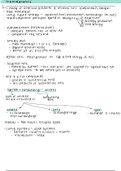
Ks study of chemical processes El whetherrxns spontaneousnonspore
Heat movement
i living require Energy obtained from environmentourroundings ex sun
Thermodynamicprinciples basedon analytic heneftwptylofroduction
freeenergy
standard state referenceAate
compare before run vs after an
comparison req reference
Energy cells
near neutralpH 7 or t z faverage
depend location body
effect pH on And freeenergies
effect cono reactproduct on net isfreeenergy of An
coupled mens
biological system runs non mon are coupled to spontaneous ran
nonspanruns 8 Nb control pts in processes
ATP El Erich compounds
provide E biochemical ring
are products of biochemical Hhs
system surroundings universe
J iseverything
part of universe
we are interested in are
isolated cloned open
no exchange exchangeEnergy exchange Et matter
with turroundings
Matter has mass t occupiesspace
Livingsystems opensystems
nutrients t waste products matter
metabolism heat
, 1st Law Thermodynamics
Energy cannot be created nor destroyed only converted from one
form to another
µ U t pV or DU Qt w
OnWtam
intertalenergy hqaqtnq.glwork done l
Eor U bysystem0
all Energy forms can be converted into other forms
energy conservation
total Energy in isolated system is conserved
internal Energy E represents all E exchanged in physical Chem rims
independentof pathway
statefunction enthalpy entropy internal E
parameteronly depends on presentstate ofsystem
NOT how it reaches that state
Describing Energy change
H Enthalpy amount neat present system
type t bonds in reactants 1 products of An
teat present before rxn vs after ran hence look at DH
transferred heat cornant pressure
DH Absorbed ENDOTHERMIC
DH heatloop EXOTHERMIC from Motown to Remaindings
8 Entropy measure disorder1randomnest in system
LOW 8 orderedstate high Estate unfavourable
High8 disordered state low Estate favourable
8 KenW D8 KlmWf Kenwi
Bottzman
constant b
biochemists are
14 1.38 10 23TIK interestedinchange
s represents energy dispersion dispersion of E among molecular motion
related to discrete microstates
dispersion molecules legglass water
eachmolecule 1micron ate
diff molecularmotion8 bending twitting movement
98 9 Microstate 1 macro state made up of a lot microstates
if macro state system has only 1 Micron ate has no choice
or freedom choosemicrostate zeroentropy
Ks study of chemical processes El whetherrxns spontaneousnonspore
Heat movement
i living require Energy obtained from environmentourroundings ex sun
Thermodynamicprinciples basedon analytic heneftwptylofroduction
freeenergy
standard state referenceAate
compare before run vs after an
comparison req reference
Energy cells
near neutralpH 7 or t z faverage
depend location body
effect pH on And freeenergies
effect cono reactproduct on net isfreeenergy of An
coupled mens
biological system runs non mon are coupled to spontaneous ran
nonspanruns 8 Nb control pts in processes
ATP El Erich compounds
provide E biochemical ring
are products of biochemical Hhs
system surroundings universe
J iseverything
part of universe
we are interested in are
isolated cloned open
no exchange exchangeEnergy exchange Et matter
with turroundings
Matter has mass t occupiesspace
Livingsystems opensystems
nutrients t waste products matter
metabolism heat
, 1st Law Thermodynamics
Energy cannot be created nor destroyed only converted from one
form to another
µ U t pV or DU Qt w
OnWtam
intertalenergy hqaqtnq.glwork done l
Eor U bysystem0
all Energy forms can be converted into other forms
energy conservation
total Energy in isolated system is conserved
internal Energy E represents all E exchanged in physical Chem rims
independentof pathway
statefunction enthalpy entropy internal E
parameteronly depends on presentstate ofsystem
NOT how it reaches that state
Describing Energy change
H Enthalpy amount neat present system
type t bonds in reactants 1 products of An
teat present before rxn vs after ran hence look at DH
transferred heat cornant pressure
DH Absorbed ENDOTHERMIC
DH heatloop EXOTHERMIC from Motown to Remaindings
8 Entropy measure disorder1randomnest in system
LOW 8 orderedstate high Estate unfavourable
High8 disordered state low Estate favourable
8 KenW D8 KlmWf Kenwi
Bottzman
constant b
biochemists are
14 1.38 10 23TIK interestedinchange
s represents energy dispersion dispersion of E among molecular motion
related to discrete microstates
dispersion molecules legglass water
eachmolecule 1micron ate
diff molecularmotion8 bending twitting movement
98 9 Microstate 1 macro state made up of a lot microstates
if macro state system has only 1 Micron ate has no choice
or freedom choosemicrostate zeroentropy