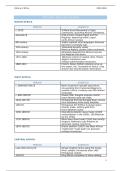
History of Africa 2025-2026
TIMELINES FOR EACH REGION
NORTH AFRICA
PERIOD EVENT(S)
c. 30 CE St Mark found Alexandria’s Coptic
community, launching African Christianity.
639-642 CE Arab armies conquer Egypt and the
Maghreb, beginning Islam’s rapid
north-African spread.
8th century Arabic replaces local languages; Kairouan
becomes a scholarly hub.
11th century Almoravid dynasty unites
Morocco-Algeria, pushes Islam southward.
12th century Almohads expand from Morocco across
the Maghreb into Iberia.
1510-1660 Ottoman control of coastal cities (Tripoli,
Algiers) introduces new
military-administrative structures.
1880-1912 French, Italian, British colonies carve up
the region; the “Scramble for Africa” map
shows near-total European domination.
WEST AFRICA
PERIOD EVENT(S)
c. 3000 BCE-500 CE Bantu Expansion spreads agriculture,
iron-working from Cameroon/Nigeria to
southern Africa, creating over-500 related
languages.
c. 800-1300 CE Ghana, Mali, Songhai empires control
trans-Saharan gold-salt trade.
1444-1447 CE Portuguese first raid Senegal River; strong
local resistance limits early foothold.
1482 CE Portuguese fort El Mina (Loango) opens
Atlantic trade, shifting gold from
trans-Saharan routes.
1500-1800 CE Intensifying Atlantic slave trade; 10 000
enslaved/year in the 1600s, 100 000/year
by the 1790s.
1730-1808 CE Benin bans slave trade (1516) then briefly
reopens; Dahomey uses firearms to
dominate coastal commerce.
1820-1850 CE British abolition (1807) and West-African
“legitimate” trade (palm oil, peanuts)
reshape economies.
CENTRAL AFRICA
PERIOD EVENT(S)
Late 14th century CE Kongo kingdom forms along the Congo
River, adopts Christianity after 1491
Portuguese contact.
1526 CE King Afonso complains of slave-raiding,
1
, History of Africa 2025-2026
showing early involvement in the Atlantic
market.
1665-1710 CE Portuguese invasion and civil war
fragment Kongo; the kingdom becomes a
slave-trading “tidal wave”.
EAST AFRICA (SWAHILI COAST)
PERIOD EVENT(S)
8th-10th century CE Islamic towns (Kilwa, Mombasa) emerge
from Indian-Ocean trade; stone-coral
mosques signal urban Islam.
1498 CE Vasco da Gama’s fleet reaches
Mozambique; Portuguese seize Sofala,
Kilwa, and Mombasa, imposing the cartaz
system.
1698-1700 CE Omani forces capture Mombasa’s
Fort Jesus, ending Portuguese dominance.
1839 CE Seyyid Sa‘id moves Omani capital to
Zanzibar, turning the island into a
slave-and-clove hub.
1890 CE British protectorate over Zanzibar ends
Omani rule; the slave trade is finally
suppressed.
SOUTHERN AFRICA
PERIOD EVENT(S)
c. 2000 BCE-19th century CE Khoisan foragers, Bantu pastoralists, and
later Nguni/Zulu societies interact across
the Kalahari and Highveld.
1652 CE Dutch East India Company establishes
Cape Town as a resupply station,
beginning settler agriculture.
1805 CE British occupy the Cape during the
Napoleonic Wars, later imposing
abolitionist policies.
1838 CE Boer “Great Trek” leads to the Battle of
Blood River and the creation of the Orange
Free State and Transvaal republics.
1948-1994 CE Apartheid institutionalized (Population Act,
pass laws) and later dismantled after
internal resistance and international
pressure.
CONTINENTAL
PERIOD EVENT(S)
c. 200 000 years ago Modern humans originate in Africa,
develop language and cognition, then
disperse worldwide.
19th century Industrialization supplies firearms and
steamships, giving European powers
2
TIMELINES FOR EACH REGION
NORTH AFRICA
PERIOD EVENT(S)
c. 30 CE St Mark found Alexandria’s Coptic
community, launching African Christianity.
639-642 CE Arab armies conquer Egypt and the
Maghreb, beginning Islam’s rapid
north-African spread.
8th century Arabic replaces local languages; Kairouan
becomes a scholarly hub.
11th century Almoravid dynasty unites
Morocco-Algeria, pushes Islam southward.
12th century Almohads expand from Morocco across
the Maghreb into Iberia.
1510-1660 Ottoman control of coastal cities (Tripoli,
Algiers) introduces new
military-administrative structures.
1880-1912 French, Italian, British colonies carve up
the region; the “Scramble for Africa” map
shows near-total European domination.
WEST AFRICA
PERIOD EVENT(S)
c. 3000 BCE-500 CE Bantu Expansion spreads agriculture,
iron-working from Cameroon/Nigeria to
southern Africa, creating over-500 related
languages.
c. 800-1300 CE Ghana, Mali, Songhai empires control
trans-Saharan gold-salt trade.
1444-1447 CE Portuguese first raid Senegal River; strong
local resistance limits early foothold.
1482 CE Portuguese fort El Mina (Loango) opens
Atlantic trade, shifting gold from
trans-Saharan routes.
1500-1800 CE Intensifying Atlantic slave trade; 10 000
enslaved/year in the 1600s, 100 000/year
by the 1790s.
1730-1808 CE Benin bans slave trade (1516) then briefly
reopens; Dahomey uses firearms to
dominate coastal commerce.
1820-1850 CE British abolition (1807) and West-African
“legitimate” trade (palm oil, peanuts)
reshape economies.
CENTRAL AFRICA
PERIOD EVENT(S)
Late 14th century CE Kongo kingdom forms along the Congo
River, adopts Christianity after 1491
Portuguese contact.
1526 CE King Afonso complains of slave-raiding,
1
, History of Africa 2025-2026
showing early involvement in the Atlantic
market.
1665-1710 CE Portuguese invasion and civil war
fragment Kongo; the kingdom becomes a
slave-trading “tidal wave”.
EAST AFRICA (SWAHILI COAST)
PERIOD EVENT(S)
8th-10th century CE Islamic towns (Kilwa, Mombasa) emerge
from Indian-Ocean trade; stone-coral
mosques signal urban Islam.
1498 CE Vasco da Gama’s fleet reaches
Mozambique; Portuguese seize Sofala,
Kilwa, and Mombasa, imposing the cartaz
system.
1698-1700 CE Omani forces capture Mombasa’s
Fort Jesus, ending Portuguese dominance.
1839 CE Seyyid Sa‘id moves Omani capital to
Zanzibar, turning the island into a
slave-and-clove hub.
1890 CE British protectorate over Zanzibar ends
Omani rule; the slave trade is finally
suppressed.
SOUTHERN AFRICA
PERIOD EVENT(S)
c. 2000 BCE-19th century CE Khoisan foragers, Bantu pastoralists, and
later Nguni/Zulu societies interact across
the Kalahari and Highveld.
1652 CE Dutch East India Company establishes
Cape Town as a resupply station,
beginning settler agriculture.
1805 CE British occupy the Cape during the
Napoleonic Wars, later imposing
abolitionist policies.
1838 CE Boer “Great Trek” leads to the Battle of
Blood River and the creation of the Orange
Free State and Transvaal republics.
1948-1994 CE Apartheid institutionalized (Population Act,
pass laws) and later dismantled after
internal resistance and international
pressure.
CONTINENTAL
PERIOD EVENT(S)
c. 200 000 years ago Modern humans originate in Africa,
develop language and cognition, then
disperse worldwide.
19th century Industrialization supplies firearms and
steamships, giving European powers
2