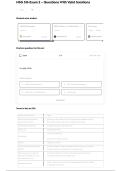
NSG 316 Exam 2 – Questions With Valid Solutions
Save
Students also studied
INBDE Orthodontics NBDE II Review - Prosthodontics Perio Study
201 terms 69 terms Teacher 78 terms
dong_lee82 Preview melissa_jarvis7 Preview Hunter_Charters
Practice questions for this set
Learn 1 /7 Study with Learn
no gag reflex
Choose an answer
1 What is cranial nerve II 2 CN IX abnormal findings
3 What is a +/- Romberg test 4 Presbyopia
Don't know?
Terms in this set (94)
What is cranial nerve II Optic
What is the best method to gentle, circular motion, use the finger pads to palpate and use
assess lymph nodes? both hands at the same time to compare both sides
normal lymph nodes are movable, discrete, contender, soft
Anisocoria unequal pupil size
loss of lens elasticity
Presbyopia
Seen a lot in elderly people
Tinnitus ringing in the ears
The meaning of a vision score the first number is what the patient is able to see at, the second
(20/20) number is what a normal person is able to see at
When someone is unable to shorten the distance until they are able to read the sign and
read from the distance of 20 document where they can read it from
feet, what do you do
when someone is trying to feed themselves and they are unable
Intentional tremors
to because of tremors
, sneezing
runny nose
stuffy nose
itchy nose
s/s of (seasonal) allergy rhinitis
coughing
sore or scratchy throat
itchy eyes
water eyes
4 = very brisk, hyperactive with clonus, indicative of disease
3 = brisker than average, may indicate disease
how reflexes are documented 2 = average, normal
1 = diminished, low normal, or occurs with reinforcement
0 = no response
assesses ability of vestibular apparatus in inner ear to help
maintain standing balance.
person stands with feet together and arms at sides; when in
What is the Romberg test
stable position, ask person to close eyes and hold position for
about 20 seconds
tests balance
+ Romberg test - pt. sways and is unable to hold posture and
What is a +/- Romberg test
balance
Olfactory, smell, sensory
CN I
test by occluding one nostril at a time, eyes closed and trying to
identify smells
Optic, vision, sensory
CN II
test visual acuity and visual fields by confrontation - observe pt.
walking and if they can move around w/o bumping into anything
CN III Oculomotor, eye movement, motor
What is CN IV trochlear, eye movement, motor
trigeminal
Motor - mastication (palpate temporal and master muscles as
person clenches teeth)
What is CN V
Sensory - sensations in ophthalmic, maxillary and mandibular
(close pt. eyes, test light touch sensation by touching cotton wisp
to designated ares on persons face)
What is CN VI abducens, eye movement, motor
What is CN VII facial
What is CN VIII Acoustic (vestibulocochlear)
What is CN IX Glossopharyngeal
What is CN X vagus
What is CN XI spinal accessory
What is CN XII hypoglossal
Motor - mobility and facial symmetry, ability to move face
how does CN VII affect the face
Sensory - taste
If there is trauma or disease to Absent or asymmetric facial movement and possible loss of taste
CN VII, how does it affect the
function
how does the parotid gland
effect the face
Save
Students also studied
INBDE Orthodontics NBDE II Review - Prosthodontics Perio Study
201 terms 69 terms Teacher 78 terms
dong_lee82 Preview melissa_jarvis7 Preview Hunter_Charters
Practice questions for this set
Learn 1 /7 Study with Learn
no gag reflex
Choose an answer
1 What is cranial nerve II 2 CN IX abnormal findings
3 What is a +/- Romberg test 4 Presbyopia
Don't know?
Terms in this set (94)
What is cranial nerve II Optic
What is the best method to gentle, circular motion, use the finger pads to palpate and use
assess lymph nodes? both hands at the same time to compare both sides
normal lymph nodes are movable, discrete, contender, soft
Anisocoria unequal pupil size
loss of lens elasticity
Presbyopia
Seen a lot in elderly people
Tinnitus ringing in the ears
The meaning of a vision score the first number is what the patient is able to see at, the second
(20/20) number is what a normal person is able to see at
When someone is unable to shorten the distance until they are able to read the sign and
read from the distance of 20 document where they can read it from
feet, what do you do
when someone is trying to feed themselves and they are unable
Intentional tremors
to because of tremors
, sneezing
runny nose
stuffy nose
itchy nose
s/s of (seasonal) allergy rhinitis
coughing
sore or scratchy throat
itchy eyes
water eyes
4 = very brisk, hyperactive with clonus, indicative of disease
3 = brisker than average, may indicate disease
how reflexes are documented 2 = average, normal
1 = diminished, low normal, or occurs with reinforcement
0 = no response
assesses ability of vestibular apparatus in inner ear to help
maintain standing balance.
person stands with feet together and arms at sides; when in
What is the Romberg test
stable position, ask person to close eyes and hold position for
about 20 seconds
tests balance
+ Romberg test - pt. sways and is unable to hold posture and
What is a +/- Romberg test
balance
Olfactory, smell, sensory
CN I
test by occluding one nostril at a time, eyes closed and trying to
identify smells
Optic, vision, sensory
CN II
test visual acuity and visual fields by confrontation - observe pt.
walking and if they can move around w/o bumping into anything
CN III Oculomotor, eye movement, motor
What is CN IV trochlear, eye movement, motor
trigeminal
Motor - mastication (palpate temporal and master muscles as
person clenches teeth)
What is CN V
Sensory - sensations in ophthalmic, maxillary and mandibular
(close pt. eyes, test light touch sensation by touching cotton wisp
to designated ares on persons face)
What is CN VI abducens, eye movement, motor
What is CN VII facial
What is CN VIII Acoustic (vestibulocochlear)
What is CN IX Glossopharyngeal
What is CN X vagus
What is CN XI spinal accessory
What is CN XII hypoglossal
Motor - mobility and facial symmetry, ability to move face
how does CN VII affect the face
Sensory - taste
If there is trauma or disease to Absent or asymmetric facial movement and possible loss of taste
CN VII, how does it affect the
function
how does the parotid gland
effect the face