
D459 Task 3 – Four Steps Tool (WGU) – Passed Task
Submission (2025)
Layla Dempsey
D459 Task 3
WGU's Four-Step Tool (based on "Six Steps to Thinking Systemically" by Michael Goodman and
Richard Karash)
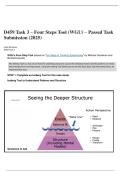
The Iceberg Tool is a way to see how the underlying structure causes the individual events and the patterns or trends
that emerge from recurring events. Using the Iceberg Tool allows you to see the basic facts and interconnections, an
important first step.
STEP 1: Complete an Iceberg Tool for this case study.
Iceberg Tool to Understand Patterns and Structure
Questions to Ask
, 1. What are the key events in this case study?
• Ms. Jackson stocked a craft cart with a lot of different art materials despite a limited budget.
The students used the new materials responsibly at first, but eventually they started using
more to try and impress their teacher. This caused the materials to be used up quickly. As
the year went on, what used to be fun, art time turned into arguments over the little supplies
left. This caused everyone’s excitement for art class to decline.
2. What patterns do you notice in the key events of this case study?
• The patterns show that as the supplies decreased, students' frustration and conflicts
increased.
Submission (2025)
Layla Dempsey
D459 Task 3
WGU's Four-Step Tool (based on "Six Steps to Thinking Systemically" by Michael Goodman and
Richard Karash)
The Iceberg Tool is a way to see how the underlying structure causes the individual events and the patterns or trends
that emerge from recurring events. Using the Iceberg Tool allows you to see the basic facts and interconnections, an
important first step.
STEP 1: Complete an Iceberg Tool for this case study.
Iceberg Tool to Understand Patterns and Structure
Questions to Ask
, 1. What are the key events in this case study?
• Ms. Jackson stocked a craft cart with a lot of different art materials despite a limited budget.
The students used the new materials responsibly at first, but eventually they started using
more to try and impress their teacher. This caused the materials to be used up quickly. As
the year went on, what used to be fun, art time turned into arguments over the little supplies
left. This caused everyone’s excitement for art class to decline.
2. What patterns do you notice in the key events of this case study?
• The patterns show that as the supplies decreased, students' frustration and conflicts
increased.


