Consumer Behavior Exam 3 – Questions With Verifiable
Answers
Save
Students also studied
Perio Study DENT 475 - Implant components NBDE II Review - Pro
Teacher 78 terms 42 terms 69 terms
Hunter_Charters Preview gillphil Preview melissa_jarvis7
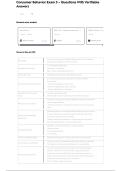
Terms in this set (75)
A person's unique psychological makeup and how it influences
Personality
the way they respond to the environment
Id - immediate gratification
Freudian Theory Terms Superego - conscience
Ego - system that balances the two
Personality Traits Identifiable characteristics that define a person
A culture's ranking of the importance of different values
Core values:
Value Systems and Core Values - time: psychological and economic
- money: frugality (spending vs saving)
- things: materialism vs. minimalism
Terminal and Instrumental Terminal: desired end state
Values Instrumental: actions we take to get to the terminal value
People link very specific product attributes indirectly to terminal
values using laddering
Means-End Chain Model
- attribute, functional consequence, psychosocial consequence,
value
Defines a pattern of consumption that reflects a person's choices
of how to spend their time and money, and these choices are
Lifestyles and Marketing
essential to define consumer identity
Perspective
Lifestyle marketing perspective = things consumers like to do +
how they spend money + how they spend time
Marketers want to tie products to social situations
Lifestyle brands
Lifestyle Marketing
Iconic lifestyle brands
Co-branding
Product Complementarity Products with symbolic meanings that relate to one another
A group or set of complementary products, brands, or activities
Consumption Constellation
that together define a particular lifestyle or social identity
The use of psychological, sociological, and anthropological
factors to determine how the market is segmented by the
propensity of groups within the market, and their reasons, to
Psychographics and AIO
make a particular decision about a product, person, ideology, or
otherwise hold an attitude or use a medium
AIO = activities, interests, opinions
, Sincerity
Excitement
5 Key Brand Personality Types Ruggedness
Sophistication
Competence
We become loyal to brands when they truly speak to our life and
our culture
1. salience (identity: who are you?)
Brand Resonance Pyramid
2. performance/imagery (meaning: what are you?)
3. judgements/feelings (response: what about you?)
4. resonance (relationships: what about you and me?)
Social Identity The part of self that our group memberships define
A group whose members share beliefs, preferences, and
Subculture
experiences that set them apart from others
Social identity is shaped by tension between autonomy (the
freedom to make our own choices) and affiliation (desire to
Dynamics of Identity belong to a group)
Some parts of our identities are always present and others we
may not think about until activated
Seeing ourselves as separate from the immediate cultural
Cultural Distinctiveness environment; when people feel this, they sometimes seek out
products that represent their identity linked to "home"
African Americans
Big Three Ethnic Subcultures Hispanic Americans
Asian Americans
Must be 2.0 to replace the population
Family Unit and Fertility Rate
U.S. is currently 1.62
Extended family - more than 2 generations
Family Unit, Extended Family,
Trends: unpartnered adults, voluntary childless, DINK$, living
and Family Trends
together, boomerang kids, sandwich generation
Factors that determine how couples spend money:
- Age
- Marital status
Family Life Cycle
- Whether they have children
- Age of children
- Who works
Combine data on consumer spending and socioeconomic
Geodemographic Segmentation factors with geographic information
(example: urban vs. rural)
The idea that ingroups consist of individuals who perceive
Social Identity Theory themselves to be members of the same social category and
experience pride through their group membership
Referent power: influence that comes from being liked, admired,
or respected
Information power: influence that comes from access to (and
ability to share) information
Types of Social Power Legitimate power: power granted through authority
Expert power: influence that comes from being an expert in a
certain subject/field
Reward power: power to give a reward (positive reinforcement)
Coercive power: power to punish
Actual or imaginary individual or group that significantly
Reference Groups
influences an individual's attitudes, aspirations, or behavior
Answers
Save
Students also studied
Perio Study DENT 475 - Implant components NBDE II Review - Pro
Teacher 78 terms 42 terms 69 terms
Hunter_Charters Preview gillphil Preview melissa_jarvis7
Terms in this set (75)
A person's unique psychological makeup and how it influences
Personality
the way they respond to the environment
Id - immediate gratification
Freudian Theory Terms Superego - conscience
Ego - system that balances the two
Personality Traits Identifiable characteristics that define a person
A culture's ranking of the importance of different values
Core values:
Value Systems and Core Values - time: psychological and economic
- money: frugality (spending vs saving)
- things: materialism vs. minimalism
Terminal and Instrumental Terminal: desired end state
Values Instrumental: actions we take to get to the terminal value
People link very specific product attributes indirectly to terminal
values using laddering
Means-End Chain Model
- attribute, functional consequence, psychosocial consequence,
value
Defines a pattern of consumption that reflects a person's choices
of how to spend their time and money, and these choices are
Lifestyles and Marketing
essential to define consumer identity
Perspective
Lifestyle marketing perspective = things consumers like to do +
how they spend money + how they spend time
Marketers want to tie products to social situations
Lifestyle brands
Lifestyle Marketing
Iconic lifestyle brands
Co-branding
Product Complementarity Products with symbolic meanings that relate to one another
A group or set of complementary products, brands, or activities
Consumption Constellation
that together define a particular lifestyle or social identity
The use of psychological, sociological, and anthropological
factors to determine how the market is segmented by the
propensity of groups within the market, and their reasons, to
Psychographics and AIO
make a particular decision about a product, person, ideology, or
otherwise hold an attitude or use a medium
AIO = activities, interests, opinions
, Sincerity
Excitement
5 Key Brand Personality Types Ruggedness
Sophistication
Competence
We become loyal to brands when they truly speak to our life and
our culture
1. salience (identity: who are you?)
Brand Resonance Pyramid
2. performance/imagery (meaning: what are you?)
3. judgements/feelings (response: what about you?)
4. resonance (relationships: what about you and me?)
Social Identity The part of self that our group memberships define
A group whose members share beliefs, preferences, and
Subculture
experiences that set them apart from others
Social identity is shaped by tension between autonomy (the
freedom to make our own choices) and affiliation (desire to
Dynamics of Identity belong to a group)
Some parts of our identities are always present and others we
may not think about until activated
Seeing ourselves as separate from the immediate cultural
Cultural Distinctiveness environment; when people feel this, they sometimes seek out
products that represent their identity linked to "home"
African Americans
Big Three Ethnic Subcultures Hispanic Americans
Asian Americans
Must be 2.0 to replace the population
Family Unit and Fertility Rate
U.S. is currently 1.62
Extended family - more than 2 generations
Family Unit, Extended Family,
Trends: unpartnered adults, voluntary childless, DINK$, living
and Family Trends
together, boomerang kids, sandwich generation
Factors that determine how couples spend money:
- Age
- Marital status
Family Life Cycle
- Whether they have children
- Age of children
- Who works
Combine data on consumer spending and socioeconomic
Geodemographic Segmentation factors with geographic information
(example: urban vs. rural)
The idea that ingroups consist of individuals who perceive
Social Identity Theory themselves to be members of the same social category and
experience pride through their group membership
Referent power: influence that comes from being liked, admired,
or respected
Information power: influence that comes from access to (and
ability to share) information
Types of Social Power Legitimate power: power granted through authority
Expert power: influence that comes from being an expert in a
certain subject/field
Reward power: power to give a reward (positive reinforcement)
Coercive power: power to punish
Actual or imaginary individual or group that significantly
Reference Groups
influences an individual's attitudes, aspirations, or behavior