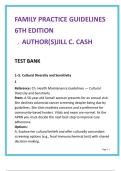
FAMILY PRACTICE GUIDELINES
6TH EDITION
• AUTHOR(S)JILL C. CASH
TEST BANK
1
Reference
Ch. HM-1 — Cultural Diversity and Sensitivity
Stem
A 54-year-old recently immigrated woman from Kenya presents
for an annual exam. She prefers a female clinician, speaks
limited English, and expresses concern about routine pelvic
screening because of cultural modesty. Her history includes
type 2 diabetes and no prior Pap tests in the US. As the APRN,
you must balance preventive care with cultural sensitivity while
ensuring patient safety and guideline-based screening.
Options
A. Insist on performing a Pap/HPV screening today to adhere to
adult preventive guidelines despite her discomfort.
Page | 1
,B. Offer a deferred appointment with a female clinician and
provide interpreter-assisted education on screening benefits
and alternatives.
C. Exempt her from cervical screening permanently because
cultural refusal supersedes guideline recommendations.
D. Recommend self-collected HPV testing only if available,
without further discussion.
Correct Answer
B
Rationales
Correct (B): Offers patient-centered compromise: schedule with
preferred gender, use a qualified interpreter, and provide
culturally tailored education about risks/benefits and
alternatives. This respects autonomy and improves uptake
while aligning with Family Practice Guidelines’ emphasis on
culturally sensitive shared decision-making.
Incorrect (A): Coercion risks loss of trust and decreased
adherence; guidelines emphasize informed consent and cultural
accommodation.
Incorrect (C): Permanent exemption disregards dynamic shared
decision-making; patient refusal is respected but should follow
education and alternatives.
Incorrect (D): Self-collected HPV testing may be an option but
cannot replace dialogue and arranging preferred-gender care;
offering without discussion may fail to address barriers.
Page | 2
,Teaching Point
Use interpreters, gender preference, and shared decision-
making to improve preventive uptake.
Citation
Cash, J. C. (2025). Family Practice Guidelines (6th Ed.). Ch. HM-
1.
2
Reference
Ch. HM-1 — Cultural Diversity and Sensitivity
Stem
During a well-child visit for a 9-year-old whose family practices
strict vegetarianism for religious reasons, the mother refuses
vitamin D supplements stating “we get our nutrients from
food.” Growth is at the 10th percentile but steady. Lab access is
limited. You must assess risk and make a management
recommendation consistent with culturally sensitive practice.
Options
A. Strongly recommend routine vitamin D supplements and
insist parents begin them today.
B. Explore dietary sources acceptable to the family, offer
culturally tailored education, and provide a low-dose vitamin D
option if dietary measures insufficient.
C. Defer any intervention; low growth percentile means
supplementing will be ineffective.
Page | 3
, D. Recommend immediate referral to endocrinology for
metabolic evaluation.
Correct Answer
B
Rationales
Correct (B): Balances cultural beliefs with evidence: assess
dietary intake, offer acceptable food-based sources, and
propose culturally acceptable supplementation if needed.
Family Practice Guidelines encourage negotiation and culturally
appropriate education for nutrition-related prevention.
Incorrect (A): Insistence undermines rapport; better to
negotiate and provide options.
Incorrect (C): Deferral ignores potential deficiency risk in strict
vegetarian diets; proactive counseling is indicated.
Incorrect (D): Endocrinology referral is premature without signs
of metabolic disorder or lab evidence.
Teaching Point
Negotiate culturally congruent nutrition plans before
mandating supplements.
Citation
Cash, J. C. (2025). Family Practice Guidelines (6th Ed.). Ch. HM-
1.
3
Page | 4
6TH EDITION
• AUTHOR(S)JILL C. CASH
TEST BANK
1
Reference
Ch. HM-1 — Cultural Diversity and Sensitivity
Stem
A 54-year-old recently immigrated woman from Kenya presents
for an annual exam. She prefers a female clinician, speaks
limited English, and expresses concern about routine pelvic
screening because of cultural modesty. Her history includes
type 2 diabetes and no prior Pap tests in the US. As the APRN,
you must balance preventive care with cultural sensitivity while
ensuring patient safety and guideline-based screening.
Options
A. Insist on performing a Pap/HPV screening today to adhere to
adult preventive guidelines despite her discomfort.
Page | 1
,B. Offer a deferred appointment with a female clinician and
provide interpreter-assisted education on screening benefits
and alternatives.
C. Exempt her from cervical screening permanently because
cultural refusal supersedes guideline recommendations.
D. Recommend self-collected HPV testing only if available,
without further discussion.
Correct Answer
B
Rationales
Correct (B): Offers patient-centered compromise: schedule with
preferred gender, use a qualified interpreter, and provide
culturally tailored education about risks/benefits and
alternatives. This respects autonomy and improves uptake
while aligning with Family Practice Guidelines’ emphasis on
culturally sensitive shared decision-making.
Incorrect (A): Coercion risks loss of trust and decreased
adherence; guidelines emphasize informed consent and cultural
accommodation.
Incorrect (C): Permanent exemption disregards dynamic shared
decision-making; patient refusal is respected but should follow
education and alternatives.
Incorrect (D): Self-collected HPV testing may be an option but
cannot replace dialogue and arranging preferred-gender care;
offering without discussion may fail to address barriers.
Page | 2
,Teaching Point
Use interpreters, gender preference, and shared decision-
making to improve preventive uptake.
Citation
Cash, J. C. (2025). Family Practice Guidelines (6th Ed.). Ch. HM-
1.
2
Reference
Ch. HM-1 — Cultural Diversity and Sensitivity
Stem
During a well-child visit for a 9-year-old whose family practices
strict vegetarianism for religious reasons, the mother refuses
vitamin D supplements stating “we get our nutrients from
food.” Growth is at the 10th percentile but steady. Lab access is
limited. You must assess risk and make a management
recommendation consistent with culturally sensitive practice.
Options
A. Strongly recommend routine vitamin D supplements and
insist parents begin them today.
B. Explore dietary sources acceptable to the family, offer
culturally tailored education, and provide a low-dose vitamin D
option if dietary measures insufficient.
C. Defer any intervention; low growth percentile means
supplementing will be ineffective.
Page | 3
, D. Recommend immediate referral to endocrinology for
metabolic evaluation.
Correct Answer
B
Rationales
Correct (B): Balances cultural beliefs with evidence: assess
dietary intake, offer acceptable food-based sources, and
propose culturally acceptable supplementation if needed.
Family Practice Guidelines encourage negotiation and culturally
appropriate education for nutrition-related prevention.
Incorrect (A): Insistence undermines rapport; better to
negotiate and provide options.
Incorrect (C): Deferral ignores potential deficiency risk in strict
vegetarian diets; proactive counseling is indicated.
Incorrect (D): Endocrinology referral is premature without signs
of metabolic disorder or lab evidence.
Teaching Point
Negotiate culturally congruent nutrition plans before
mandating supplements.
Citation
Cash, J. C. (2025). Family Practice Guidelines (6th Ed.). Ch. HM-
1.
3
Page | 4