
Page | 1
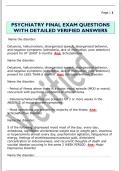
PSYCHIATRY FINAL EXAM QUESTIONS
WITH DETAILED VERIFIED ANSWERS
Name the disorder:
Delusions, hallucinations, disorganized speech, disorganized behavior,
and negative symptoms (anhedonia, lack of motivation, poor attention)
present for AT LEAST 6 months Ans: Schizophrenia
Name the disorder:
Delusions, hallucinations, disorganized speech, disorganized behavior,
and negative symptoms (anhedonia, lack of motivation, poor attention)
present for LESS THAN 6 months Ans: Schizophreniform Disorder
Name the disorder:
- Period of illness where there is a major mood episode (MDD or manic)
concurrent with psychotic symptoms of schizophrenia
- Delusions/hallucinations are presents for 2 or more weeks in the
ABSENCE of mood disorder symptoms
- Mood symptoms are present for majority of the illness Ans:
Schizoaffective Disorder
Name the disorder:
5 of the following: depressed mood most of the day, every day,
anhedonia, significant unintentional weight loss or weight gain, insomnia
or hypersomnia almost every day, psychomotor agitation, fatigue/loss of
energy, feelings of worthlessness/excessive guilt, diminished
concentration or indecisiveness, and recurrent thoughts of death and
suicidal ideation occuring in the same 2 WEEK PERIOD Ans: Major
Depressive Disorder
Name the disorder:
, Page | 2
- Depressed mood for more days than not in 2 YEARS
- 2 of the following: poor appetite/overeating, insomnia/hypersomnia,
low energy/fatigue, low self esteem, poor concentration, and feelings of
hopelessness
- Never without symptoms for more than 2 months at a time Ans:
Persistent Depressive Disorder (Dysthymia)
Name the disorder:
- Mood swings, sudden sadness, increased sensitivity, irritability, anger,
increased interpersonal conflicts, depressed mood, hopelessness, self-
deprecation, anxiety, tension, feeling keyed up or on edge
- Decreased interest, difficulty concentrating, lethargy/lack of energy,
insomnia/hypersomnia, overwhelmed/out of control, physical symptoms
- At least 5 symptoms must be present in FINAL WEEK BEFORE ONSET
OF MENSES and improves within a few weeks after Ans: Premenstrual
Dysphoric Disorder (PMDD)
Name the disorder:
- Severe recurrent temper outbursts, outbursts that are inconsistent with
developmental level, outbursts occur 3+ TIMES PER WEEK, mood
between outbursts is irritable, symptoms present for 12+ MONTHS
without 3 months symptoms free, symptoms present in at least 2
settings, onset is BEFORE AGE 10
- Disorder in children and adolescence only Ans: Disruptive Mood
Dysregulation Disorder (DMDD)
Name the disorder:
- Persistently elevated, expansive, or irritable mood and increased goal
directed activity lasting at least 1 WEEK
, Page | 3
- Inflated self esteem, grandiosity, decreased need for sleep, more
talkative than usual, racing thoughts/flight of ideas, distractibility,
excessive involvement in pleasurable activity with high risk
- MANIA + MAJOR DEPRESSION Ans: Bipolar 1 Disorder
Name the disorder:
- History of one or more major depressive episode and at least one
hypomanic episode
- No history of full manic episode
- HYPOMANIA + MAJOR DEPRESSION Ans: Bipolar 2 Disorder
Name the disorder:
- Numerous periods with hypomanic symptoms (not a full blown episode)
and depressive episodes (not a full blown major depressive episode) for
at least 2 YEARS
- Never symptoms free for more than 2 months
- MINOR DEPRESSION + MINOR HYPOMANIA Ans: Cyclothymic Disorder
False sensory belief that is not associated with an external stimuli is
called? Ans: Hallucination
Fixed false belief that the patient's culture and education cannot account
for; unshakeable even with evidence proving it wrong, is called? Ans:
Delusion
What drug class do the following medications belong to?
Citalopram, escitalopram, fluoxetine, fluvoxamine, paroxetine, and
sertraline? Ans: SSRI
What drug class do the following medications belong to?
PSYCHIATRY FINAL EXAM QUESTIONS
WITH DETAILED VERIFIED ANSWERS
Name the disorder:
Delusions, hallucinations, disorganized speech, disorganized behavior,
and negative symptoms (anhedonia, lack of motivation, poor attention)
present for AT LEAST 6 months Ans: Schizophrenia
Name the disorder:
Delusions, hallucinations, disorganized speech, disorganized behavior,
and negative symptoms (anhedonia, lack of motivation, poor attention)
present for LESS THAN 6 months Ans: Schizophreniform Disorder
Name the disorder:
- Period of illness where there is a major mood episode (MDD or manic)
concurrent with psychotic symptoms of schizophrenia
- Delusions/hallucinations are presents for 2 or more weeks in the
ABSENCE of mood disorder symptoms
- Mood symptoms are present for majority of the illness Ans:
Schizoaffective Disorder
Name the disorder:
5 of the following: depressed mood most of the day, every day,
anhedonia, significant unintentional weight loss or weight gain, insomnia
or hypersomnia almost every day, psychomotor agitation, fatigue/loss of
energy, feelings of worthlessness/excessive guilt, diminished
concentration or indecisiveness, and recurrent thoughts of death and
suicidal ideation occuring in the same 2 WEEK PERIOD Ans: Major
Depressive Disorder
Name the disorder:
, Page | 2
- Depressed mood for more days than not in 2 YEARS
- 2 of the following: poor appetite/overeating, insomnia/hypersomnia,
low energy/fatigue, low self esteem, poor concentration, and feelings of
hopelessness
- Never without symptoms for more than 2 months at a time Ans:
Persistent Depressive Disorder (Dysthymia)
Name the disorder:
- Mood swings, sudden sadness, increased sensitivity, irritability, anger,
increased interpersonal conflicts, depressed mood, hopelessness, self-
deprecation, anxiety, tension, feeling keyed up or on edge
- Decreased interest, difficulty concentrating, lethargy/lack of energy,
insomnia/hypersomnia, overwhelmed/out of control, physical symptoms
- At least 5 symptoms must be present in FINAL WEEK BEFORE ONSET
OF MENSES and improves within a few weeks after Ans: Premenstrual
Dysphoric Disorder (PMDD)
Name the disorder:
- Severe recurrent temper outbursts, outbursts that are inconsistent with
developmental level, outbursts occur 3+ TIMES PER WEEK, mood
between outbursts is irritable, symptoms present for 12+ MONTHS
without 3 months symptoms free, symptoms present in at least 2
settings, onset is BEFORE AGE 10
- Disorder in children and adolescence only Ans: Disruptive Mood
Dysregulation Disorder (DMDD)
Name the disorder:
- Persistently elevated, expansive, or irritable mood and increased goal
directed activity lasting at least 1 WEEK
, Page | 3
- Inflated self esteem, grandiosity, decreased need for sleep, more
talkative than usual, racing thoughts/flight of ideas, distractibility,
excessive involvement in pleasurable activity with high risk
- MANIA + MAJOR DEPRESSION Ans: Bipolar 1 Disorder
Name the disorder:
- History of one or more major depressive episode and at least one
hypomanic episode
- No history of full manic episode
- HYPOMANIA + MAJOR DEPRESSION Ans: Bipolar 2 Disorder
Name the disorder:
- Numerous periods with hypomanic symptoms (not a full blown episode)
and depressive episodes (not a full blown major depressive episode) for
at least 2 YEARS
- Never symptoms free for more than 2 months
- MINOR DEPRESSION + MINOR HYPOMANIA Ans: Cyclothymic Disorder
False sensory belief that is not associated with an external stimuli is
called? Ans: Hallucination
Fixed false belief that the patient's culture and education cannot account
for; unshakeable even with evidence proving it wrong, is called? Ans:
Delusion
What drug class do the following medications belong to?
Citalopram, escitalopram, fluoxetine, fluvoxamine, paroxetine, and
sertraline? Ans: SSRI
What drug class do the following medications belong to?


