Science Medicine Nursing
BSNC 1000 - Module 3 Questions with Correct Answers
4.0 (1 review)
Terms in this set (42)
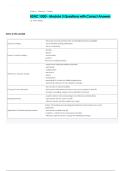
- the process of empowering others and strengthening their capabilities
Capacity building - nurses develop trusting partnerships
- focus on autonomy
- families
- groups
Scope of capacity building - communities
- systems
*focus is on health promotion
- respect and valuing pre-existing capacities
- partnership
- collaboration
- advocacy
Attributes of capacity building
- equity
- social justice
- responding to context and tailoring approaches
- developing well-planned and integrated strategies
- sub-concept of capacity building
Concept of client education - clients learn health-related behaviours that can be applied to daily life
- includes: counselling, support, and coordination of services
- cognitive domain (factual knowledge and intellectual understanding)
Learning domains - psychomotor domain (action or skills)
- affective domain (attitudes, beliefs and values)
A client with paralysis and neurological impairment needs to learn how to self-
catheterize:
Application of all three learning domains - Psychomotor: perform the skill
- Cognitive: understand the physiological principles
- Affective: assist the client in coping with this lifestyle change
BSNC 1000 - Module 3 Questions with Correct Answers
4.0 (1 review)
Terms in this set (42)
- the process of empowering others and strengthening their capabilities
Capacity building - nurses develop trusting partnerships
- focus on autonomy
- families
- groups
Scope of capacity building - communities
- systems
*focus is on health promotion
- respect and valuing pre-existing capacities
- partnership
- collaboration
- advocacy
Attributes of capacity building
- equity
- social justice
- responding to context and tailoring approaches
- developing well-planned and integrated strategies
- sub-concept of capacity building
Concept of client education - clients learn health-related behaviours that can be applied to daily life
- includes: counselling, support, and coordination of services
- cognitive domain (factual knowledge and intellectual understanding)
Learning domains - psychomotor domain (action or skills)
- affective domain (attitudes, beliefs and values)
A client with paralysis and neurological impairment needs to learn how to self-
catheterize:
Application of all three learning domains - Psychomotor: perform the skill
- Cognitive: understand the physiological principles
- Affective: assist the client in coping with this lifestyle change