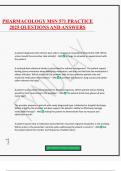
Fall Semester 2025 – December ATI CMS Pharmacology
Comprehensive Study Pack | Updated Drug
Classifications, Medication Actions, Side Effects, Safe
Dosage Calculations, Nursing Considerations, High-
Yield Pharmacology Notes & ATI-Style Practice
Questions with Rationales for Exam Success
Question 1:
Which of the following medications is classified as a beta-blocker?
A. Lisinopril
B. Metoprolol
C. Atorvastatin
D. Furosemide
CORRECT ANSWER: B. Metoprolol
Rationale: Metoprolol is a selective β1-adrenergic blocker used primarily to treat high
blood pressure and heart conditions. Lisinopril is an ACE inhibitor, atorvastatin is a
statin for cholesterol management, and furosemide is a diuretic.
Question 2:
What is the primary use of warfarin?
A. Treating infections
B. Preventing blood clots
C. Lowering cholesterol
D. Reducing inflammation
CORRECT ANSWER: B. Preventing blood clots
Rationale: Warfarin is an anticoagulant prescribed to prevent thromboembolic events,
such as strokes or deep vein thrombosis. It does not have antibacterial, cholesterol-
lowering, or anti-inflammatory properties.
Question 3:
Which type of medication is most commonly prescribed for asthma management?
A. Antihistamines
B. Corticosteroids
C. Beta-agonists
D. Antibiotics
,CORRECT ANSWER: C. Beta-agonists
Rationale: Beta-agonists such as albuterol are bronchodilators commonly used for
quick relief of asthma symptoms. Corticosteroids may also be used for long-term
control, but they are not the first line for immediate relief like beta-agonists.
Question 4:
What is a common side effect of opioids?
A. Insomnia
B. Diarrhea
C. Constipation
D. Hypertension
CORRECT ANSWER: C. Constipation
Rationale: Opioids frequently cause constipation due to their effects on the
gastrointestinal tract by decreasing gut motility. Other options do not typically arise as
common side effects of opioid use.
Question 5:
Which medication should be avoided in patients with a history of peptic ulcers?
A. Acetaminophen
B. Aspirin
C. Ibuprofen
D. All of the above
CORRECT ANSWER: D. All of the above
Rationale: All listed medications can increase the risk of gastrointestinal irritation and
bleeding, which is particularly dangerous for patients with a history of peptic ulcers.
Question 6:
What is the main action of ACE inhibitors?
A. Increase heart rate
B. Lower blood pressure
C. Increase blood glucose
D. Decrease cholesterol
CORRECT ANSWER: B. Lower blood pressure
Rationale: ACE inhibitors work by inhibiting the angiotensin-converting enzyme, leading
to vasodilation and decreased blood pressure.
,Question 7:
Which class of drugs is primarily used to manage hyperlipidemia?
A. Diuretics
B. Statins
C. Beta-blockers
D. Anticoagulants
CORRECT ANSWER: B. Statins
Rationale: Statins are the first-line treatment to lower cholesterol levels and reduce
cardiovascular risk.
Question 8:
What is the antidote for acetaminophen overdose?
A. Naloxone
B. Acetylcysteine
C. Flumazenil
D. Vitamin K
CORRECT ANSWER: B. Acetylcysteine
Rationale: Acetylcysteine acts as an antidote by replenishing glutathione, helping to
neutralize the toxic metabolite of acetaminophen.
Question 9:
Which medication is a selective serotonin reuptake inhibitor (SSRI)?
A. Sertraline
B. Amitriptyline
C. Phenelzine
D. St. John's Wort
CORRECT ANSWER: A. Sertraline
Rationale: Sertraline is an SSRI used primarily to treat depression and anxiety
disorders.
Question 10:
What is a serious side effect of chlorpromazine?
, A. Weight gain
B. Tardive dyskinesia
C. Renal failure
D. Hepatotoxicity
CORRECT ANSWER: B. Tardive dyskinesia
Rationale: Chlorpromazine, an antipsychotic, can cause tardive dyskinesia, a serious
movement disorder resulting from long-term use.
Question 11:
Which of the following best describes a side effect of corticosteroids?
A. Weight loss
B. Insomnia
C. Hyperglycemia
D. Bradycardia
CORRECT ANSWER: C. Hyperglycemia
Rationale: Corticosteroids can increase blood sugar levels, leading to hyperglycemia.
Question 12:
Furosemide is primarily used for which condition?
A. Hypertension
B. Hyperlipidemia
C. Bacterial infections
D. Pain relief
CORRECT ANSWER: A. Hypertension
Rationale: Furosemide is a loop diuretic commonly prescribed to treat hypertension
and edema.
Question 13:
The "three checks" of medication administration ensure what?
A. Compliance
B. Accuracy
C. Efficacy
D. Cost-effectiveness
CORRECT ANSWER: B. Accuracy
Comprehensive Study Pack | Updated Drug
Classifications, Medication Actions, Side Effects, Safe
Dosage Calculations, Nursing Considerations, High-
Yield Pharmacology Notes & ATI-Style Practice
Questions with Rationales for Exam Success
Question 1:
Which of the following medications is classified as a beta-blocker?
A. Lisinopril
B. Metoprolol
C. Atorvastatin
D. Furosemide
CORRECT ANSWER: B. Metoprolol
Rationale: Metoprolol is a selective β1-adrenergic blocker used primarily to treat high
blood pressure and heart conditions. Lisinopril is an ACE inhibitor, atorvastatin is a
statin for cholesterol management, and furosemide is a diuretic.
Question 2:
What is the primary use of warfarin?
A. Treating infections
B. Preventing blood clots
C. Lowering cholesterol
D. Reducing inflammation
CORRECT ANSWER: B. Preventing blood clots
Rationale: Warfarin is an anticoagulant prescribed to prevent thromboembolic events,
such as strokes or deep vein thrombosis. It does not have antibacterial, cholesterol-
lowering, or anti-inflammatory properties.
Question 3:
Which type of medication is most commonly prescribed for asthma management?
A. Antihistamines
B. Corticosteroids
C. Beta-agonists
D. Antibiotics
,CORRECT ANSWER: C. Beta-agonists
Rationale: Beta-agonists such as albuterol are bronchodilators commonly used for
quick relief of asthma symptoms. Corticosteroids may also be used for long-term
control, but they are not the first line for immediate relief like beta-agonists.
Question 4:
What is a common side effect of opioids?
A. Insomnia
B. Diarrhea
C. Constipation
D. Hypertension
CORRECT ANSWER: C. Constipation
Rationale: Opioids frequently cause constipation due to their effects on the
gastrointestinal tract by decreasing gut motility. Other options do not typically arise as
common side effects of opioid use.
Question 5:
Which medication should be avoided in patients with a history of peptic ulcers?
A. Acetaminophen
B. Aspirin
C. Ibuprofen
D. All of the above
CORRECT ANSWER: D. All of the above
Rationale: All listed medications can increase the risk of gastrointestinal irritation and
bleeding, which is particularly dangerous for patients with a history of peptic ulcers.
Question 6:
What is the main action of ACE inhibitors?
A. Increase heart rate
B. Lower blood pressure
C. Increase blood glucose
D. Decrease cholesterol
CORRECT ANSWER: B. Lower blood pressure
Rationale: ACE inhibitors work by inhibiting the angiotensin-converting enzyme, leading
to vasodilation and decreased blood pressure.
,Question 7:
Which class of drugs is primarily used to manage hyperlipidemia?
A. Diuretics
B. Statins
C. Beta-blockers
D. Anticoagulants
CORRECT ANSWER: B. Statins
Rationale: Statins are the first-line treatment to lower cholesterol levels and reduce
cardiovascular risk.
Question 8:
What is the antidote for acetaminophen overdose?
A. Naloxone
B. Acetylcysteine
C. Flumazenil
D. Vitamin K
CORRECT ANSWER: B. Acetylcysteine
Rationale: Acetylcysteine acts as an antidote by replenishing glutathione, helping to
neutralize the toxic metabolite of acetaminophen.
Question 9:
Which medication is a selective serotonin reuptake inhibitor (SSRI)?
A. Sertraline
B. Amitriptyline
C. Phenelzine
D. St. John's Wort
CORRECT ANSWER: A. Sertraline
Rationale: Sertraline is an SSRI used primarily to treat depression and anxiety
disorders.
Question 10:
What is a serious side effect of chlorpromazine?
, A. Weight gain
B. Tardive dyskinesia
C. Renal failure
D. Hepatotoxicity
CORRECT ANSWER: B. Tardive dyskinesia
Rationale: Chlorpromazine, an antipsychotic, can cause tardive dyskinesia, a serious
movement disorder resulting from long-term use.
Question 11:
Which of the following best describes a side effect of corticosteroids?
A. Weight loss
B. Insomnia
C. Hyperglycemia
D. Bradycardia
CORRECT ANSWER: C. Hyperglycemia
Rationale: Corticosteroids can increase blood sugar levels, leading to hyperglycemia.
Question 12:
Furosemide is primarily used for which condition?
A. Hypertension
B. Hyperlipidemia
C. Bacterial infections
D. Pain relief
CORRECT ANSWER: A. Hypertension
Rationale: Furosemide is a loop diuretic commonly prescribed to treat hypertension
and edema.
Question 13:
The "three checks" of medication administration ensure what?
A. Compliance
B. Accuracy
C. Efficacy
D. Cost-effectiveness
CORRECT ANSWER: B. Accuracy