

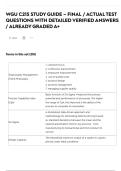
WGU C215 STUDY GUIDE – FINAL / ACTUAL TEST
QUESTIONS WITH DETAILED VERIFIED ANSWERS
/ ALREADY GRADED A+
Save
Terms in this set (218)
1. customer focus
2. continuous improvement
3. employee empowerment
Total Quality Management
4. use of quality tools
(TQM) Philosophy
5. product design
6. process management
7. managing supplier quality
Basic function of Six Sigma. Measures the process
Process Capability Index potential and performance of processes. The higher
(Cpk) the range of Cpk, the improved is the ability of the
process to complete its necessities.
A disciplined, data-driven approach and
methodology for eliminating defects (driving toward
six standard deviations between the mean and the
Six Sigma
nearest specification limit) in any process - from
manufacturing to transactional and from product to
service.
The theoretical maximum output of a system in a given
Design Capacity
period under ideal conditions.
, proximity to customers, transportation, source of
labor, community attitude, proximity to suppliers, and
Location Analysis many other factors.
The technique for determining location decisions.
A type of process used to produce a large volume of
a standardized product.
Line Processes
■ Limited customization and high volume
A type of process used to produce a small number of
products in groups or batches based on customer
Batch Processes orders or specifications.
■ High customization moderate volume
A type of process used to make a one-at-a-time
product exactly to customer specifications.
Project Processes
■ Most custom and lowest volume
A type of process that operates continually to
produce a high volume of a fully standardized
Continuous Processes product.
- No customization and as high a volume as possible
Bottleneck Longest task in the process.
A type of automated system that combines the
Flexible Manufacturing
flexibility of intermittent operations with the efficiency
System (FMS)
of continuous operations.
A technique for monitoring the flow of jobs between
Output/Input Control
work centers.
The net increase created during the transformation of
Value-Added
inputs into final outputs.
QUESTIONS WITH DETAILED VERIFIED ANSWERS
/ ALREADY GRADED A+
Save
Terms in this set (218)
1. customer focus
2. continuous improvement
3. employee empowerment
Total Quality Management
4. use of quality tools
(TQM) Philosophy
5. product design
6. process management
7. managing supplier quality
Basic function of Six Sigma. Measures the process
Process Capability Index potential and performance of processes. The higher
(Cpk) the range of Cpk, the improved is the ability of the
process to complete its necessities.
A disciplined, data-driven approach and
methodology for eliminating defects (driving toward
six standard deviations between the mean and the
Six Sigma
nearest specification limit) in any process - from
manufacturing to transactional and from product to
service.
The theoretical maximum output of a system in a given
Design Capacity
period under ideal conditions.
, proximity to customers, transportation, source of
labor, community attitude, proximity to suppliers, and
Location Analysis many other factors.
The technique for determining location decisions.
A type of process used to produce a large volume of
a standardized product.
Line Processes
■ Limited customization and high volume
A type of process used to produce a small number of
products in groups or batches based on customer
Batch Processes orders or specifications.
■ High customization moderate volume
A type of process used to make a one-at-a-time
product exactly to customer specifications.
Project Processes
■ Most custom and lowest volume
A type of process that operates continually to
produce a high volume of a fully standardized
Continuous Processes product.
- No customization and as high a volume as possible
Bottleneck Longest task in the process.
A type of automated system that combines the
Flexible Manufacturing
flexibility of intermittent operations with the efficiency
System (FMS)
of continuous operations.
A technique for monitoring the flow of jobs between
Output/Input Control
work centers.
The net increase created during the transformation of
Value-Added
inputs into final outputs.


