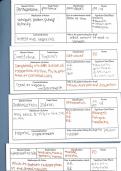
1/B, the amount of one equal part
Give this one a try later!
unit fraction
infinite decimal expansion without repeat; plotting on a number line would involve
infinite many zoom-ins; never falls exactly on a tick mark
Give this one a try later!
non-terminating decimals
the largest number that can be made from a finite number of lower places to the right
, Give this one a try later!
the value of the place is always GREATER THAN
A<B
Give this one a try later!
a fraction A/B is proper if
the fraction with the smaller denominator is the larger fraction
Give this one a try later!
if numerator is the same
right of the ones digit
Give this one a try later!
decimal point is placed to the
for any counting number, N, A/B is equivalent to NxA/NxB because each unit fraction
is divided into N times as many parts, but you take N times as many copies
Give this one a try later!
Give this one a try later!
unit fraction
infinite decimal expansion without repeat; plotting on a number line would involve
infinite many zoom-ins; never falls exactly on a tick mark
Give this one a try later!
non-terminating decimals
the largest number that can be made from a finite number of lower places to the right
, Give this one a try later!
the value of the place is always GREATER THAN
A<B
Give this one a try later!
a fraction A/B is proper if
the fraction with the smaller denominator is the larger fraction
Give this one a try later!
if numerator is the same
right of the ones digit
Give this one a try later!
decimal point is placed to the
for any counting number, N, A/B is equivalent to NxA/NxB because each unit fraction
is divided into N times as many parts, but you take N times as many copies
Give this one a try later!