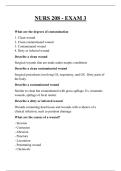
NURS 208 - EXAM 3
What are the degrees of contamination
1. Clean wound
2. Clean contaminated wound
3. Contaminated wound
4. Dirty or infected wound
Describe a clean wound
Surgical wounds that are made under aseptic conditions
Describe a clean contaminated wound
Surgical procedures involving GI, respiratory, and GU. Dirty parts of
the body.
Describe a contaminated wound
Similar to clean but contaminated with gross spillage. Ex. traumatic
wounds, spillage of fecal matter.
Describe a dirty or infected wound
Wounds containing dead tissue and wounds with evidence of a
clinical infection, such as purulent drainage
What are the causes of a wound?
- Incision
- Contusion
- Abrasion
- Puncture
- Laceration
- Penetrating wound
- Chemicals
,- Pressure injury
- Ulcers
What is the #1 sign of infection?
Fever
What are the phases of wound healing?
1. Hemostasis
2. Inflammatory
3. Proliferation
4. Maturation/remodeling
Describe hemostasis
- Process of stopping bleeding after an injury to a blood vessel
(Vasoconstriction)
- Formation of a platelet plug
- Clotting cascade creates a fibrin clot to seal the wound
Describe the inflammatory phase of wound healing
- 2-3 Days
- Vasodilation
- WBCs enter the wound site to induce inflammation
- Redness, swelling, pain and heat
Describe the proliferation phase of wound healing
- Weeks
- Angiogenesis (Formation of granulation tissue)
- Replaces damaged tissues from the bottom up
Describe the maturation/remodeling phase of wound healing
- 3 Weeks-months
- New collagen is deposited
What are the local and systemic factors that affect wound
healing?
,- Pressure
- Desiccation
- Maceration
- Trauma
- Edema
- Infection
- Excessive bleeding
- Necrosis
- Presence of biofilm
- Age
- Medications
- Tissue perfusion
- Obesity
- Chronic disease
- Smoking
What are the levels of healing?
1. Primary intention
2. Secondary intention
3. Tertiary intention
Describe primary intention
- Little to no tissue loss
- Approximated edges
- Low risk of infection
- No or minimal scarring
Describe secondary intention
- Loss of tissue
- Edges are not approximated
- Increased risk of infection
- Heals by granulation (Scarring)
Describe tertiary intention
, - Widely separated
- Spontaneous opening of a closed wound
- Extensive drainage and tissue debris
- Long healing time, possible closure later
What are the 5 assessment standards of a wound?
1. Appearance
2. Drainage
3. Wound closure
4. Status
5. Pain
Describe what to assess for for wound appearance
- Color
- Length, width, and depth
- Approximation of skin edges
- Location
- Integrity of surrounding skin
- Presence of infection
Describe what to assess for for drainage of a wound
- Amount
- Color
- Consistency
- Skin integrity
- Skin around the drain
1g Of drainage = How many mLs?
1mL
What are the types of drainage?
- Serous
- Sanguineous
- Serosanguineous
What are the degrees of contamination
1. Clean wound
2. Clean contaminated wound
3. Contaminated wound
4. Dirty or infected wound
Describe a clean wound
Surgical wounds that are made under aseptic conditions
Describe a clean contaminated wound
Surgical procedures involving GI, respiratory, and GU. Dirty parts of
the body.
Describe a contaminated wound
Similar to clean but contaminated with gross spillage. Ex. traumatic
wounds, spillage of fecal matter.
Describe a dirty or infected wound
Wounds containing dead tissue and wounds with evidence of a
clinical infection, such as purulent drainage
What are the causes of a wound?
- Incision
- Contusion
- Abrasion
- Puncture
- Laceration
- Penetrating wound
- Chemicals
,- Pressure injury
- Ulcers
What is the #1 sign of infection?
Fever
What are the phases of wound healing?
1. Hemostasis
2. Inflammatory
3. Proliferation
4. Maturation/remodeling
Describe hemostasis
- Process of stopping bleeding after an injury to a blood vessel
(Vasoconstriction)
- Formation of a platelet plug
- Clotting cascade creates a fibrin clot to seal the wound
Describe the inflammatory phase of wound healing
- 2-3 Days
- Vasodilation
- WBCs enter the wound site to induce inflammation
- Redness, swelling, pain and heat
Describe the proliferation phase of wound healing
- Weeks
- Angiogenesis (Formation of granulation tissue)
- Replaces damaged tissues from the bottom up
Describe the maturation/remodeling phase of wound healing
- 3 Weeks-months
- New collagen is deposited
What are the local and systemic factors that affect wound
healing?
,- Pressure
- Desiccation
- Maceration
- Trauma
- Edema
- Infection
- Excessive bleeding
- Necrosis
- Presence of biofilm
- Age
- Medications
- Tissue perfusion
- Obesity
- Chronic disease
- Smoking
What are the levels of healing?
1. Primary intention
2. Secondary intention
3. Tertiary intention
Describe primary intention
- Little to no tissue loss
- Approximated edges
- Low risk of infection
- No or minimal scarring
Describe secondary intention
- Loss of tissue
- Edges are not approximated
- Increased risk of infection
- Heals by granulation (Scarring)
Describe tertiary intention
, - Widely separated
- Spontaneous opening of a closed wound
- Extensive drainage and tissue debris
- Long healing time, possible closure later
What are the 5 assessment standards of a wound?
1. Appearance
2. Drainage
3. Wound closure
4. Status
5. Pain
Describe what to assess for for wound appearance
- Color
- Length, width, and depth
- Approximation of skin edges
- Location
- Integrity of surrounding skin
- Presence of infection
Describe what to assess for for drainage of a wound
- Amount
- Color
- Consistency
- Skin integrity
- Skin around the drain
1g Of drainage = How many mLs?
1mL
What are the types of drainage?
- Serous
- Sanguineous
- Serosanguineous