NURS-307 WEEK 6 EXAM 3 QUESTIONS WITH
CORRECT ANSWERS GRADED A+
TEST QUESTIONS:
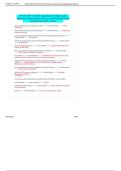
1. In what condition should the nurse increase the fluid requirements in children?
(Select all that apply.)
A. Hear failure
B. Increased intracranial pressure
*C. Fever
*D. Nausea and vomiting
*E. Phototherapy
*F. Radiant wormer
2. The nurse is caring for a child with hypokalemia. The nurse evaluates the
child for which signs and symptoms of hypokalemia? (Select all that apply.)
A. Twitching
*B. Hypotension
C. Hyperreflexia
*D. Muscle weakness
*E. Cardiac arrhythmias
3. The most common pathological cause of renal failure in children is:
A. Bacterial infection
*B. Severe dehydration
C. Viral infection
D. Genetic anomalies
4. A 7-year-old child with acute diarrhea has been rehydrated with oral
rehydration solution (ORS). The nurse should recommend that the child’s diet
be advanced to what kind of diet?
*A. Regular diet
B. Clear liquids
C. High carbohydrate diet
, D. BRAT (bananas, rice, applesauce, and toast or tea) diet
5. What is the most frequent cause of hypovolemic shock in children?
A. Sepsis
*B. Blood loss
C. Anaphylaxis
D. Heart failure
6. After the acute stage and during the healing process, what is the
primary complication from burn injury?
A. Change body image
B. Asphyxia
*C. Infection
D. Renal shutdown
7. What is the purpose of a high-protein diet for a child with major burns?
A. Promote growth
B. Improve appetite
C. Diminish risk of stress-induced hyperglycemia
*D. Minimize protein breakdown
8. What is the required number of milliliters of fluid needed per day for a 14-
kg child?
A. 800
B. 1000
*C. 1200
D. 1400
9. Nurse should explain to mother that the surgery for bladder exstrophy
should be done at age of:
*A. 1-2 days of life
B. 1-2 weeks of life
C. 1-2 months of life
D. 1-2 years of life
10. Clinical manifestations of sodium excess (hypernatremia) include which
signs or symptoms?
A. Hyperreflexia
B. Abdominal cramps
CORRECT ANSWERS GRADED A+
TEST QUESTIONS:
1. In what condition should the nurse increase the fluid requirements in children?
(Select all that apply.)
A. Hear failure
B. Increased intracranial pressure
*C. Fever
*D. Nausea and vomiting
*E. Phototherapy
*F. Radiant wormer
2. The nurse is caring for a child with hypokalemia. The nurse evaluates the
child for which signs and symptoms of hypokalemia? (Select all that apply.)
A. Twitching
*B. Hypotension
C. Hyperreflexia
*D. Muscle weakness
*E. Cardiac arrhythmias
3. The most common pathological cause of renal failure in children is:
A. Bacterial infection
*B. Severe dehydration
C. Viral infection
D. Genetic anomalies
4. A 7-year-old child with acute diarrhea has been rehydrated with oral
rehydration solution (ORS). The nurse should recommend that the child’s diet
be advanced to what kind of diet?
*A. Regular diet
B. Clear liquids
C. High carbohydrate diet
, D. BRAT (bananas, rice, applesauce, and toast or tea) diet
5. What is the most frequent cause of hypovolemic shock in children?
A. Sepsis
*B. Blood loss
C. Anaphylaxis
D. Heart failure
6. After the acute stage and during the healing process, what is the
primary complication from burn injury?
A. Change body image
B. Asphyxia
*C. Infection
D. Renal shutdown
7. What is the purpose of a high-protein diet for a child with major burns?
A. Promote growth
B. Improve appetite
C. Diminish risk of stress-induced hyperglycemia
*D. Minimize protein breakdown
8. What is the required number of milliliters of fluid needed per day for a 14-
kg child?
A. 800
B. 1000
*C. 1200
D. 1400
9. Nurse should explain to mother that the surgery for bladder exstrophy
should be done at age of:
*A. 1-2 days of life
B. 1-2 weeks of life
C. 1-2 months of life
D. 1-2 years of life
10. Clinical manifestations of sodium excess (hypernatremia) include which
signs or symptoms?
A. Hyperreflexia
B. Abdominal cramps