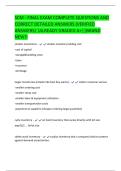
Ginseng
Give this one a try later!
increases physical endurance
factors affecting sleep: lifestyle and habits
,Give this one a try later!
traveling, change in work hours, shift change, watching TV or playing video
games before bed
Anxiety
Give this one a try later!
- most common stress response
- a vague, uneasy feeling of discomfort or dread
- source of this feeling is often nonspecific or unknown
end-of-life care tips
Give this one a try later!
- Prioritize management of symptoms causing the most discomfort.
Administer medications as ordered to manage symptoms.
- Perform ongoing assessment of symptoms to determine the effectiveness
of treatment and need for changes in the treatment plan.
- Manage medication adverse effects.
- Reposition frequently to maintain comfort, airway patency, and skin and
mucous membrane integrity.
- Maintain an environment that promotes the patient's self-esteem and
dignity.
- Promote patient control by encouraging patient decision-making in
health care, foods, and activities.
- Encourage and assist the patient to perform activities of daily living as
they are able and wish to do so.
- Encourage relaxation techniques if indicated.
- Use therapeutic touch as appropriate.
- Provide care and support to the patient and family.
- Utilize therapeutic communication to develop and maintain
, communication among the patient, family, and healthcare team.
- Assist with the understanding of information about progression of disease
and options for treatment.
- Assist the patient in clarifying personal goals to assist in effective
decision-making.
- Support the use of coping mechanisms the patient has had success within
the past as appropriate.
- Support the patient in participation in religious practices that provide
strength and comfort as appropriate.
- Be aware of comments in the presence of unconscious clients as hearing
is the last sensation lost.
factors affecting sleep: motivation
Give this one a try later!
time to sleep
Undoing (defense mechanism)
Give this one a try later!
making up for previously bad acts
Clinical Signs of Approaching Death
Give this one a try later!
, - labored breathing
- collection of mucus in large airways
- decreased level of consciousness
- relaxation of facial muscles
- inability to swallow
- slow and weak pulse
- decreased blood pressure
- bowel and/or bladder incontinence
- decreased urine output
- cool, mottled (cyanotic) extremities
- perspiration
- diminished sensation of touch
- difficulty speaking
- nausea, abdominal distention, and/or flatus
- agitation or restlessness
- loss of movements and reflexes
Bargaining
Give this one a try later!
An attempt to negotiate for a cure or more time; "I will be good for the rest
of my life"
Ginkgo biloba
Give this one a try later!
improves memory
Mind-body interaction
Give this one a try later!
increases physical endurance
factors affecting sleep: lifestyle and habits
,Give this one a try later!
traveling, change in work hours, shift change, watching TV or playing video
games before bed
Anxiety
Give this one a try later!
- most common stress response
- a vague, uneasy feeling of discomfort or dread
- source of this feeling is often nonspecific or unknown
end-of-life care tips
Give this one a try later!
- Prioritize management of symptoms causing the most discomfort.
Administer medications as ordered to manage symptoms.
- Perform ongoing assessment of symptoms to determine the effectiveness
of treatment and need for changes in the treatment plan.
- Manage medication adverse effects.
- Reposition frequently to maintain comfort, airway patency, and skin and
mucous membrane integrity.
- Maintain an environment that promotes the patient's self-esteem and
dignity.
- Promote patient control by encouraging patient decision-making in
health care, foods, and activities.
- Encourage and assist the patient to perform activities of daily living as
they are able and wish to do so.
- Encourage relaxation techniques if indicated.
- Use therapeutic touch as appropriate.
- Provide care and support to the patient and family.
- Utilize therapeutic communication to develop and maintain
, communication among the patient, family, and healthcare team.
- Assist with the understanding of information about progression of disease
and options for treatment.
- Assist the patient in clarifying personal goals to assist in effective
decision-making.
- Support the use of coping mechanisms the patient has had success within
the past as appropriate.
- Support the patient in participation in religious practices that provide
strength and comfort as appropriate.
- Be aware of comments in the presence of unconscious clients as hearing
is the last sensation lost.
factors affecting sleep: motivation
Give this one a try later!
time to sleep
Undoing (defense mechanism)
Give this one a try later!
making up for previously bad acts
Clinical Signs of Approaching Death
Give this one a try later!
, - labored breathing
- collection of mucus in large airways
- decreased level of consciousness
- relaxation of facial muscles
- inability to swallow
- slow and weak pulse
- decreased blood pressure
- bowel and/or bladder incontinence
- decreased urine output
- cool, mottled (cyanotic) extremities
- perspiration
- diminished sensation of touch
- difficulty speaking
- nausea, abdominal distention, and/or flatus
- agitation or restlessness
- loss of movements and reflexes
Bargaining
Give this one a try later!
An attempt to negotiate for a cure or more time; "I will be good for the rest
of my life"
Ginkgo biloba
Give this one a try later!
improves memory
Mind-body interaction