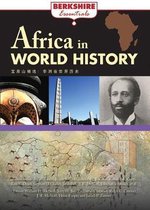
HISTORY OF AFRICA - A006652A
SUMMARY OF THE HANDBOOK
PROF. MATHYS
,History of Africa 2025-2026
AFRICA IN WORLD HISTORY : FROM
PREHISTORY TO THE PRESENT
ERIK GILBERT AND JONATHAN T. REYNOLDS
CLASS 1 - AFRICA: WHAT'S IN A NAME? 2
Preface
CLASS 2 - EARLY AFRICAN HISTORY AND THE BANTU EXPANSION 3
Chapter 2 : p.15-35 and pdf
CLASS 3 - AFRICA, ISLAM AND CHRISTIANITY 8
Chapter 5 : p.82-93, chapter 6 : p95-103 ; p.112-116 and chapter 7 : p.117-129
CLASS 4 - THE ATLANTIC WORLD AND SLAVERY 20
Chapter 8 : p.143-164 ; p.167-174
CLASS 5 - CENTRAL AND WEST -AFRICA 1500-1850 29
Chapter 9 : p.175-200
CLASS 6 - SOUTH AFRICA BEFORE 1880 AND SUDAN AND NORTH AFRICA 35
Chapter 10 : p.207-221 and chapter 12 : p.244-264
CLASS 7 - EAST AFRICA BEFORE 1880 43
Chapter 11 : p.223-243
CLASS 8 - UNDERSTANDING COLONIALISM: AN INTRODUCTION 48
Chapter 13 : p.265-286
CLASS 9 - COLONIALISM: POLITICAL AND ECONOMIC CHANGES 54
Chapter 14 : p.287-315 and chapter 15 : p.316-341
CLASS 10 - DECOLONISATION AND INDEPENDENCE 69
Chapter 17 : p.363-393
CLASS 11 - AFRICA POST-INDEPENDENCE 76
Chapter 18 : p.394-420
1
,History of Africa 2025-2026
CLASS 1 - AFRICA: WHAT'S IN A NAME?
For centuries, Western scholars denied that Africa had a history of its own. Thinkers like Hegel and Trevor-
Roper described the continent as unchanging and outside the flow of human progress, reinforcing racist
and colonial ideas that justified European domination.
Since the mid-twentieth century, African scholars and historians such as Bohannan, Achebe, and
Davidson have challenged these myths, arguing that Africa has a complex and dynamic history equal to
that of any other region.
Despite this progress, popular media still promote distorted images of Africa—portraying it as either
violent and chaotic or pure and untouched. These opposing views both remove Africa from history,
presenting it as timeless or static.
The authors of Africa in World History aim to correct these misconceptions. They emphasize that Africa’s
past is diverse, full of change, and deeply connected to global events. Their goal is not to idealize or
condemn Africa, but to present it truthfully—showing that understanding African history is essential to
understanding world history itself.
STEREOTYPES DESCRIPTION
Primitive Africa Africa is viewed as undeveloped or “static”; a
place without change, “stuck in the past.” People
are seen as living as ancient tribes, in the “Stone
Age,” and without writing. It suggests that visiting
Africa is like traveling back in time.
Wild and dangerous Africa Africa is imagined as a land of jungles and deserts
filled with wild animals and violent people.
Common media images include lions, rhinos,
disease, and endless wars. It portrays Africa as
untamed and threatening.
Exotic Africa Focuses on Africa’s differences from the West;
people are shown as strange, colorful, or
mysterious. Emphasizes ceremonies, unusual
clothing, and “superstitious” beliefs. Often seen
in travel media and magazines (e.g., National
Geographic depictions of the Maasai).
Unspoiled Africa Africa is portrayed as pure and untouched by
modernity; a paradise free from greed, pollution,
or conflict. It suggests that Africa’s lack of
“progress” keeps it innocent and natural (e.g., The
Gods Must Be Crazy).
Utopian Africa Presents Africa as an idealized homeland; a place
of equality, harmony, and freedom, especially for
the African diaspora. It blames suffering on the
destruction of African unity by outside (colonial)
forces.
Broken Africa The modern stereotype of a continent in decay;
defined by poverty, disease, corruption, and
failure. Sometimes used to justify hopelessness
about Africa’s future (“Afro-Pessimism”). Media
often depicts it as civilization defeated by chaos
or nature.
2
, History of Africa 2025-2026
CLASS 2 - EARLY AFRICAN HISTORY AND THE BANTU EXPANSION
Physical Context of African History: Geography and Environment
Geography and environment have deeply influenced Africa’s history and its relations with the wider world.
While not determining events, they shaped human choices, opportunities, and interactions. Favorable
coastlines enabled trade and contact, while vast distances and disease limited it elsewhere. Africa, the
birthplace of modern humans, has always been marked by environmental change—shifting forests,
deserts, and climates to which people continually adapted. The study of African history thus begins with
understanding this dynamic relationship between humans and their physical world.
Physical Features of the Continent
→Africa’s immense size makes it one of the most geographically and climatically diverse continents in
the world.
→There is no single “African environment”—the continent includes glaciers, deserts, rainforests,
grasslands, and Mediterranean zones.
→The Sahara Desert: vast and dominant; currently very dry, but was wetter 30,000–10,000 years ago—
once supported lakes, grasslands, and early steps toward agriculture.
→The Savannah: stretches across most of Sub-Saharan Africa; a mix of grass and trees; fertile and
human-friendly; major center of African history.
→Rainforest Zone: dense tropical forests in West and Central Africa (e.g., Congo Basin); high rainfall;
challenging for farming and livestock but altered by humans over time.
→Human impact: evidence that people have shaped environments—possibly creating forest “islands”
within savannah zones.
→Southern Africa (Cape Region): small Mediterranean climate similar to North Africa; supports grapes,
wheat, apples, etc.
→Climate symmetry: because Africa straddles the equator, climatic zones repeat north to south —
Mediterranean (North Coast) → desert (Sahara)→ savannah → rainforest → savannah → desert
(Kalahari/Namib)→ Mediterranean (Cape region).
Challenges of the African Environment
1. Poor Soils
Most African soils are ancient, leached, and nutrient-poor because the continent is geologically old and
inactive. Constant warmth causes organic material to decompose year-round, leaving soils low in fertility.
Farmers must work hard to replenish nutrients.
2. Uneven Rainfall
Rainfall is often cyclical and concentrated into short rainy seasons rather than spread evenly throughout
the year. This makes agriculture unpredictable and dependent on precise timing. The Intertropical
Convergence Zone (ITCZ) causes these seasonal rain shifts by moving north and south annually.
3. Disease Environment (Human Diseases)
Africa’s long human habitation allowed microbes to evolve into virulent diseases such as malaria and
yellow fever. Malaria (especially Plasmodium falciparum) is widespread and deadly, particularly for
children; outsiders often died quickly upon exposure. Yellow fever is milder for Africans but often fatal to
outsiders; immunity develops in childhood, and vaccination now prevents it.
3
SUMMARY OF THE HANDBOOK
PROF. MATHYS
,History of Africa 2025-2026
AFRICA IN WORLD HISTORY : FROM
PREHISTORY TO THE PRESENT
ERIK GILBERT AND JONATHAN T. REYNOLDS
CLASS 1 - AFRICA: WHAT'S IN A NAME? 2
Preface
CLASS 2 - EARLY AFRICAN HISTORY AND THE BANTU EXPANSION 3
Chapter 2 : p.15-35 and pdf
CLASS 3 - AFRICA, ISLAM AND CHRISTIANITY 8
Chapter 5 : p.82-93, chapter 6 : p95-103 ; p.112-116 and chapter 7 : p.117-129
CLASS 4 - THE ATLANTIC WORLD AND SLAVERY 20
Chapter 8 : p.143-164 ; p.167-174
CLASS 5 - CENTRAL AND WEST -AFRICA 1500-1850 29
Chapter 9 : p.175-200
CLASS 6 - SOUTH AFRICA BEFORE 1880 AND SUDAN AND NORTH AFRICA 35
Chapter 10 : p.207-221 and chapter 12 : p.244-264
CLASS 7 - EAST AFRICA BEFORE 1880 43
Chapter 11 : p.223-243
CLASS 8 - UNDERSTANDING COLONIALISM: AN INTRODUCTION 48
Chapter 13 : p.265-286
CLASS 9 - COLONIALISM: POLITICAL AND ECONOMIC CHANGES 54
Chapter 14 : p.287-315 and chapter 15 : p.316-341
CLASS 10 - DECOLONISATION AND INDEPENDENCE 69
Chapter 17 : p.363-393
CLASS 11 - AFRICA POST-INDEPENDENCE 76
Chapter 18 : p.394-420
1
,History of Africa 2025-2026
CLASS 1 - AFRICA: WHAT'S IN A NAME?
For centuries, Western scholars denied that Africa had a history of its own. Thinkers like Hegel and Trevor-
Roper described the continent as unchanging and outside the flow of human progress, reinforcing racist
and colonial ideas that justified European domination.
Since the mid-twentieth century, African scholars and historians such as Bohannan, Achebe, and
Davidson have challenged these myths, arguing that Africa has a complex and dynamic history equal to
that of any other region.
Despite this progress, popular media still promote distorted images of Africa—portraying it as either
violent and chaotic or pure and untouched. These opposing views both remove Africa from history,
presenting it as timeless or static.
The authors of Africa in World History aim to correct these misconceptions. They emphasize that Africa’s
past is diverse, full of change, and deeply connected to global events. Their goal is not to idealize or
condemn Africa, but to present it truthfully—showing that understanding African history is essential to
understanding world history itself.
STEREOTYPES DESCRIPTION
Primitive Africa Africa is viewed as undeveloped or “static”; a
place without change, “stuck in the past.” People
are seen as living as ancient tribes, in the “Stone
Age,” and without writing. It suggests that visiting
Africa is like traveling back in time.
Wild and dangerous Africa Africa is imagined as a land of jungles and deserts
filled with wild animals and violent people.
Common media images include lions, rhinos,
disease, and endless wars. It portrays Africa as
untamed and threatening.
Exotic Africa Focuses on Africa’s differences from the West;
people are shown as strange, colorful, or
mysterious. Emphasizes ceremonies, unusual
clothing, and “superstitious” beliefs. Often seen
in travel media and magazines (e.g., National
Geographic depictions of the Maasai).
Unspoiled Africa Africa is portrayed as pure and untouched by
modernity; a paradise free from greed, pollution,
or conflict. It suggests that Africa’s lack of
“progress” keeps it innocent and natural (e.g., The
Gods Must Be Crazy).
Utopian Africa Presents Africa as an idealized homeland; a place
of equality, harmony, and freedom, especially for
the African diaspora. It blames suffering on the
destruction of African unity by outside (colonial)
forces.
Broken Africa The modern stereotype of a continent in decay;
defined by poverty, disease, corruption, and
failure. Sometimes used to justify hopelessness
about Africa’s future (“Afro-Pessimism”). Media
often depicts it as civilization defeated by chaos
or nature.
2
, History of Africa 2025-2026
CLASS 2 - EARLY AFRICAN HISTORY AND THE BANTU EXPANSION
Physical Context of African History: Geography and Environment
Geography and environment have deeply influenced Africa’s history and its relations with the wider world.
While not determining events, they shaped human choices, opportunities, and interactions. Favorable
coastlines enabled trade and contact, while vast distances and disease limited it elsewhere. Africa, the
birthplace of modern humans, has always been marked by environmental change—shifting forests,
deserts, and climates to which people continually adapted. The study of African history thus begins with
understanding this dynamic relationship between humans and their physical world.
Physical Features of the Continent
→Africa’s immense size makes it one of the most geographically and climatically diverse continents in
the world.
→There is no single “African environment”—the continent includes glaciers, deserts, rainforests,
grasslands, and Mediterranean zones.
→The Sahara Desert: vast and dominant; currently very dry, but was wetter 30,000–10,000 years ago—
once supported lakes, grasslands, and early steps toward agriculture.
→The Savannah: stretches across most of Sub-Saharan Africa; a mix of grass and trees; fertile and
human-friendly; major center of African history.
→Rainforest Zone: dense tropical forests in West and Central Africa (e.g., Congo Basin); high rainfall;
challenging for farming and livestock but altered by humans over time.
→Human impact: evidence that people have shaped environments—possibly creating forest “islands”
within savannah zones.
→Southern Africa (Cape Region): small Mediterranean climate similar to North Africa; supports grapes,
wheat, apples, etc.
→Climate symmetry: because Africa straddles the equator, climatic zones repeat north to south —
Mediterranean (North Coast) → desert (Sahara)→ savannah → rainforest → savannah → desert
(Kalahari/Namib)→ Mediterranean (Cape region).
Challenges of the African Environment
1. Poor Soils
Most African soils are ancient, leached, and nutrient-poor because the continent is geologically old and
inactive. Constant warmth causes organic material to decompose year-round, leaving soils low in fertility.
Farmers must work hard to replenish nutrients.
2. Uneven Rainfall
Rainfall is often cyclical and concentrated into short rainy seasons rather than spread evenly throughout
the year. This makes agriculture unpredictable and dependent on precise timing. The Intertropical
Convergence Zone (ITCZ) causes these seasonal rain shifts by moving north and south annually.
3. Disease Environment (Human Diseases)
Africa’s long human habitation allowed microbes to evolve into virulent diseases such as malaria and
yellow fever. Malaria (especially Plasmodium falciparum) is widespread and deadly, particularly for
children; outsiders often died quickly upon exposure. Yellow fever is milder for Africans but often fatal to
outsiders; immunity develops in childhood, and vaccination now prevents it.
3