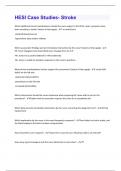
A = Airway with simultaneous cervical spine protection
B = Breathing
What is the Mnemonic for the Initial
C = Circulation
Assessment?
D = Disability (neurologic status)
E = Expose/Environmental controls (remove clothing and keep the patient wa
F = Full set of VS/Focused adjuncts (includes cardiac monitor, urinary cathete
gastric tube)/Family presence
What is the Mnemonic for the Secondary G = Give comfort measures (verbal reassurance, touch, and pharmacologic an
Assessment? nonpharmacologic management of pain).
H = Hx and Head-to-toe assessment
I = Inspect posterior surfaces
Where do you listen to auscultate breath Auscultate the lungs bilaterally at the second intercostal space midclavicular
sounds? and at the fifth intercostal space at the anterior axillary line.
What are the late signs of breathing - Tracheal deviation
compromise? - JVD
, - AMS
- Cyanosis, especially around the mouth
- Asymmetric expansion of chest wall
- Paradoxical movement of the chest wall during inspiration and expiration
- Use of accessory muscles or abdominal muscles or both or diaphragmatic
What are signs of ineffective breathing?
breathing
- Sucking chest wounds
- Absent or diminished breath sounds
- Administer O2 via NRB or assist ventilations with a bag-mask device, as indic
- Anticipate definitive airway management to support ventilation.
Upon initial assessment, what type of A tight-fitting nonrebreather mask at 12-15 lpm.
oxygen should be used for a pt breathing
effectively?
What intervention should be done if a pt - Insert 2 large caliber IV's
presents with effective circulation? - Administer warmed isotonic crystalloid solution at an appropriate rate
- Tachycardia
- AMS
- Uncontrolled external bleeding
What are signs of ineffective circulation?
- Pale, cool, moist skin
- Distended or abnormally flattened external jugular veins
- Distant heart sounds
, - Control any uncontrolled external bleeding by:
- Applying direct pressure over bleeding site
- Elevating bleeding extremity
- Applying pressure over arterial pressure points
- Using tourniquet (last resort).
- Cannulate 2 large-caliber IV's and initiate infusions of an isotonic crystalloid
solution
- Use warmed solution
What are the interventions for
- Use pressure bags to increase speed of IVF infusion
Effective/Ineffective Circulation?
- Use blood administration tubing for possible administration of blood
- Use rapid infusion device based on protocol
- Use NS 0.9% in same tubing as blood product
- IV = surgical cut-down, central line, or both.
- Blood sample to determine ABO and Rh group
- IO in sternum, legs, arms or pelvis
- Administer blood products
- PASG (without interfering with fluid resuscitation)
, DISABILITY
A = Alert
V = Verbal
P = Pain
U = Unresponsive
How do you assess Mnemonic "D"?
- GCS
- PERRL?
- Determine presence of lateralizing signs including:
- Unilateral deterioration in motor movements or unequal pupils
- Symptoms that help to locate area of injury in brain
- If assessment indicates a decreased LOC, conduct further investigation duri
secondary focused assessments
What are the interventions for Disability? - If pt is not alert or verbal, continue to monitor for any compromise to ABC's
- If pt demonstrates signs of herniation or neurologic deterioration, consider
hyperventilation.
- Remove clothing
What is assessed and intervened for - Ensure appropriate decontamination if exposed to hazardous material
Expose/Environmental Controls? - Keep pt warm
- Keep clothing for evidence
B = Breathing
What is the Mnemonic for the Initial
C = Circulation
Assessment?
D = Disability (neurologic status)
E = Expose/Environmental controls (remove clothing and keep the patient wa
F = Full set of VS/Focused adjuncts (includes cardiac monitor, urinary cathete
gastric tube)/Family presence
What is the Mnemonic for the Secondary G = Give comfort measures (verbal reassurance, touch, and pharmacologic an
Assessment? nonpharmacologic management of pain).
H = Hx and Head-to-toe assessment
I = Inspect posterior surfaces
Where do you listen to auscultate breath Auscultate the lungs bilaterally at the second intercostal space midclavicular
sounds? and at the fifth intercostal space at the anterior axillary line.
What are the late signs of breathing - Tracheal deviation
compromise? - JVD
, - AMS
- Cyanosis, especially around the mouth
- Asymmetric expansion of chest wall
- Paradoxical movement of the chest wall during inspiration and expiration
- Use of accessory muscles or abdominal muscles or both or diaphragmatic
What are signs of ineffective breathing?
breathing
- Sucking chest wounds
- Absent or diminished breath sounds
- Administer O2 via NRB or assist ventilations with a bag-mask device, as indic
- Anticipate definitive airway management to support ventilation.
Upon initial assessment, what type of A tight-fitting nonrebreather mask at 12-15 lpm.
oxygen should be used for a pt breathing
effectively?
What intervention should be done if a pt - Insert 2 large caliber IV's
presents with effective circulation? - Administer warmed isotonic crystalloid solution at an appropriate rate
- Tachycardia
- AMS
- Uncontrolled external bleeding
What are signs of ineffective circulation?
- Pale, cool, moist skin
- Distended or abnormally flattened external jugular veins
- Distant heart sounds
, - Control any uncontrolled external bleeding by:
- Applying direct pressure over bleeding site
- Elevating bleeding extremity
- Applying pressure over arterial pressure points
- Using tourniquet (last resort).
- Cannulate 2 large-caliber IV's and initiate infusions of an isotonic crystalloid
solution
- Use warmed solution
What are the interventions for
- Use pressure bags to increase speed of IVF infusion
Effective/Ineffective Circulation?
- Use blood administration tubing for possible administration of blood
- Use rapid infusion device based on protocol
- Use NS 0.9% in same tubing as blood product
- IV = surgical cut-down, central line, or both.
- Blood sample to determine ABO and Rh group
- IO in sternum, legs, arms or pelvis
- Administer blood products
- PASG (without interfering with fluid resuscitation)
, DISABILITY
A = Alert
V = Verbal
P = Pain
U = Unresponsive
How do you assess Mnemonic "D"?
- GCS
- PERRL?
- Determine presence of lateralizing signs including:
- Unilateral deterioration in motor movements or unequal pupils
- Symptoms that help to locate area of injury in brain
- If assessment indicates a decreased LOC, conduct further investigation duri
secondary focused assessments
What are the interventions for Disability? - If pt is not alert or verbal, continue to monitor for any compromise to ABC's
- If pt demonstrates signs of herniation or neurologic deterioration, consider
hyperventilation.
- Remove clothing
What is assessed and intervened for - Ensure appropriate decontamination if exposed to hazardous material
Expose/Environmental Controls? - Keep pt warm
- Keep clothing for evidence