IPOL End term summary
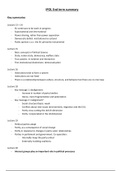
Key summaries
Lecture 13 + 14
- EU continues to be work-in-progress
- Supranational and international
- Power sharing, rather than power separation
- Democratic deficit: institutional vs cultural
- Public opinion v.a.v. the EU primarily instrumental
Lecture 15
- Basic concepts in Political Science
- State, nation state, democracy, welfare state
- Four powers: in isolation and interaction
- First institutional distinctions: democratisation
Lecture 16
- Institutions tend to form a system
- Institutions are not fixed
- There is a relationship between culture, structure, and behavior but there are no iron laws
Lecture 18
- Key message 1: dealignment
- Increase in number of party families
- Hence, more fragmentation and polarization
- Key message 2: realignment?
- Social structural basis: weak
- Conflicts about new issues (environment, migration and the EU):
- Partly cross-cutting the old LR-dimension
- Partly incorporated in the LR-dimension
Lecture 19
- Political parties adapt
- Partly, as a consequence of social change
- Partly in response to changes in party-voter relationships
- Parties in parliament and government. Co-operation:
- Internally: keep the party united
- Externally: building coalitions
Lecture 20
- Interest groups play an important role in political processes
, - Their political influence and the way they exercise influence depends on:
- Institutional context (i.e., the three ‘regimes’)
- Their relationship with politicians and parties
- Their resources
Lecture 21
- No theoretical model explains differences in protest activities over time, across countries and between
types of movements.
- We cannot claim that one model is completely wrong and others are ‘correct’.
- Rather: some are better at explaining some aspects than others.
Lecture 22
- Trust vs scepticism vs cynicism
- Support for democratic values,Varying satisfaction with procedures, scepticism on actors
- Structural and longitudinal sources
- Big gap in our knowledge: Does support really matter?
Lecture 13: United States political system
America → a lot of pop culture songs can be government inspired. Not so much in the Netherlands. America
uses a lot of backdrops about American politics. America grounded on civic nationalism which creates an
emphasis on its political body, it is theatrical, freedom of speech, it is a big power, and most importantly the
element of the President (personalised form of politics) → these factors show why America is under the
spotlight.
How America is perceived → mediatised image, fatherly figure, US as heroic, capitalist, quite forceful.
Brief overview of the United States:
1. Constitution produced by the revolution (1789)
2. American civil war (confederalism vs federalism)
3. End of American isolationism → America partaking in WW1
4. 1960s informal rights abolished (Jim Crow laws ---> racial discrimination)
5. 1970s-1990s → conservative revival against the 1930s-1960s period of Big government.
6. 1990s onwards→ polarisation of US politics on the basis of ideological grounds
Bill of rights
Example on Privacy: Whether it is ethical under the administration of Obama in relation to the NSA → How far
can the government spy on people?
James Madison:
Constitution : Main function is to limit the execution of power by the majority.
,Indirect elections because it was viewed that direct democracy will become negative → forcing the will of the
majority on everyone.
Commander in chief: can decide to deploy troops for less than 60 days, if more needs congressional approval.
Monarchical tendency in the United States:
President → gets more power, largely determines the political agenda by their co-partisans in the house of the
senate. Except for Trump.
- Vetoes, decrees (congress cannot interfere, only the Supreme Court)
Powers increased → ability to declare war.
Presidential elections:
Primaries ( a preliminary election to appoint delegates to a party conference or to select the candidates for a
principal, especially presidential, election)
Benefit of 2 parties: differences within parties, they face it. (don’t quote me on this, refer to the lecture)
Downside of 2 parties: f or example in 2016, both candidates were unpopular. Identity politics.
Indirect(electoral college):
- Importance of small states and swing states ( a lot of money is given to this to get the votes)
- Not necessarily in line with the popular vote.
Legislative: Congress
- House of representatives (general American population votes)
- Senate (representatives of the state)
Equal partners, they coordinate
House of representatives: 2 year terms, chosen by districts (gerrymandering comes into play)
Senate: a ⅓ of the senate changes every few years.
Pork barreling → I will support you if you do this.
Presidency goes back and forth between republicans and democrats. However, the senate usually is
dominated by the Democrats. Usually if there is a republican in power, democrats occupy congress and vice
versa. Balances out.
Polarisation increases between Republicans and Democrats, beyond 1995 parties cannot agree.
Judiciary: Supreme Court (SCOTUS)
- Members of the Supreme Court cannot be impeached
- Long legacy of the President for decades to come if they can appoint a supreme court justice
- More polarised, partisan politics comes into play depending on the President’s party
- Supreme court becoming highly politicised
, Checks and balances: Congress
- Congress decides the new president in the case of smtg wrong with the electoral college, senate
selects the vice president.
Checks and balances: SCOTUS
- Interpret the laws
Checks and balances: President
- Veto power, Congress can overrule
- Declaration of decrees (state of emergency)
- Pardon for federal crimes
Fiscal Cliff:
Needs to be reviewed in the lecture video.
American political culture:
1. Strive for economic independence
2. Turnout for the elections were low because of level of inequality, difficult to have access to voting
stations, formal ID required which those who are in poverty cannot always have.
Role of Political Parties:
- Political Party organisation weak (top down)
- Needs to be reviewed
Role of religion:
- Importance of religion
Societal polarisation:
- Prorgessive vs conservative media
- Against meeting people who support the other party.
State of Madisonian Democracy:
- slide
Lecture 14
Definitions: Inter vs super governmental
- 3 pillars:
- Economic integration
- Foreign affairs and security
- Interior affairs and justice
- 4 internal markets:
- Goods
- Labour
- Capital
Key summaries
Lecture 13 + 14
- EU continues to be work-in-progress
- Supranational and international
- Power sharing, rather than power separation
- Democratic deficit: institutional vs cultural
- Public opinion v.a.v. the EU primarily instrumental
Lecture 15
- Basic concepts in Political Science
- State, nation state, democracy, welfare state
- Four powers: in isolation and interaction
- First institutional distinctions: democratisation
Lecture 16
- Institutions tend to form a system
- Institutions are not fixed
- There is a relationship between culture, structure, and behavior but there are no iron laws
Lecture 18
- Key message 1: dealignment
- Increase in number of party families
- Hence, more fragmentation and polarization
- Key message 2: realignment?
- Social structural basis: weak
- Conflicts about new issues (environment, migration and the EU):
- Partly cross-cutting the old LR-dimension
- Partly incorporated in the LR-dimension
Lecture 19
- Political parties adapt
- Partly, as a consequence of social change
- Partly in response to changes in party-voter relationships
- Parties in parliament and government. Co-operation:
- Internally: keep the party united
- Externally: building coalitions
Lecture 20
- Interest groups play an important role in political processes
, - Their political influence and the way they exercise influence depends on:
- Institutional context (i.e., the three ‘regimes’)
- Their relationship with politicians and parties
- Their resources
Lecture 21
- No theoretical model explains differences in protest activities over time, across countries and between
types of movements.
- We cannot claim that one model is completely wrong and others are ‘correct’.
- Rather: some are better at explaining some aspects than others.
Lecture 22
- Trust vs scepticism vs cynicism
- Support for democratic values,Varying satisfaction with procedures, scepticism on actors
- Structural and longitudinal sources
- Big gap in our knowledge: Does support really matter?
Lecture 13: United States political system
America → a lot of pop culture songs can be government inspired. Not so much in the Netherlands. America
uses a lot of backdrops about American politics. America grounded on civic nationalism which creates an
emphasis on its political body, it is theatrical, freedom of speech, it is a big power, and most importantly the
element of the President (personalised form of politics) → these factors show why America is under the
spotlight.
How America is perceived → mediatised image, fatherly figure, US as heroic, capitalist, quite forceful.
Brief overview of the United States:
1. Constitution produced by the revolution (1789)
2. American civil war (confederalism vs federalism)
3. End of American isolationism → America partaking in WW1
4. 1960s informal rights abolished (Jim Crow laws ---> racial discrimination)
5. 1970s-1990s → conservative revival against the 1930s-1960s period of Big government.
6. 1990s onwards→ polarisation of US politics on the basis of ideological grounds
Bill of rights
Example on Privacy: Whether it is ethical under the administration of Obama in relation to the NSA → How far
can the government spy on people?
James Madison:
Constitution : Main function is to limit the execution of power by the majority.
,Indirect elections because it was viewed that direct democracy will become negative → forcing the will of the
majority on everyone.
Commander in chief: can decide to deploy troops for less than 60 days, if more needs congressional approval.
Monarchical tendency in the United States:
President → gets more power, largely determines the political agenda by their co-partisans in the house of the
senate. Except for Trump.
- Vetoes, decrees (congress cannot interfere, only the Supreme Court)
Powers increased → ability to declare war.
Presidential elections:
Primaries ( a preliminary election to appoint delegates to a party conference or to select the candidates for a
principal, especially presidential, election)
Benefit of 2 parties: differences within parties, they face it. (don’t quote me on this, refer to the lecture)
Downside of 2 parties: f or example in 2016, both candidates were unpopular. Identity politics.
Indirect(electoral college):
- Importance of small states and swing states ( a lot of money is given to this to get the votes)
- Not necessarily in line with the popular vote.
Legislative: Congress
- House of representatives (general American population votes)
- Senate (representatives of the state)
Equal partners, they coordinate
House of representatives: 2 year terms, chosen by districts (gerrymandering comes into play)
Senate: a ⅓ of the senate changes every few years.
Pork barreling → I will support you if you do this.
Presidency goes back and forth between republicans and democrats. However, the senate usually is
dominated by the Democrats. Usually if there is a republican in power, democrats occupy congress and vice
versa. Balances out.
Polarisation increases between Republicans and Democrats, beyond 1995 parties cannot agree.
Judiciary: Supreme Court (SCOTUS)
- Members of the Supreme Court cannot be impeached
- Long legacy of the President for decades to come if they can appoint a supreme court justice
- More polarised, partisan politics comes into play depending on the President’s party
- Supreme court becoming highly politicised
, Checks and balances: Congress
- Congress decides the new president in the case of smtg wrong with the electoral college, senate
selects the vice president.
Checks and balances: SCOTUS
- Interpret the laws
Checks and balances: President
- Veto power, Congress can overrule
- Declaration of decrees (state of emergency)
- Pardon for federal crimes
Fiscal Cliff:
Needs to be reviewed in the lecture video.
American political culture:
1. Strive for economic independence
2. Turnout for the elections were low because of level of inequality, difficult to have access to voting
stations, formal ID required which those who are in poverty cannot always have.
Role of Political Parties:
- Political Party organisation weak (top down)
- Needs to be reviewed
Role of religion:
- Importance of religion
Societal polarisation:
- Prorgessive vs conservative media
- Against meeting people who support the other party.
State of Madisonian Democracy:
- slide
Lecture 14
Definitions: Inter vs super governmental
- 3 pillars:
- Economic integration
- Foreign affairs and security
- Interior affairs and justice
- 4 internal markets:
- Goods
- Labour
- Capital