
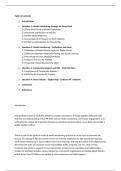
Table of Contents
1. Introduction
2. Question 1: Media Monitoring Strategy for GreenTech
2.1 Three Main Goals of Media Monitoring
2.2 Keywords and Phrases to Monitor
2.3 Online Media Platforms
2.4 Areas/Aspects to Monitor on Each Platform
2.5 Problems and Solutions for Monitoring
3. Question 2: Media Monitoring – Definitions and Facts
2.1 Definition of Media Monitoring in the Digital World
2.2 Difference Between Media Monitoring and Social Listening
2.3 Percentage of Users Sharing Feedback
2.4 Subjects That Can Be Tracked
2.5 Projected E-Retail Revenues by 2025
4. Question 3: Community Support and CSR – Solar-Me-Now
3.1 Importance of Community Support 5
3.2 CEO Plan for Community Support
5. Question 4: Press Release – Digital Help “Code for All” Initiative
6. Conclusion
7. References
Introduction
This portfolio is part of my Public Relations module assessment. It brings together different tasks
that test my understanding of key PR skills such as media monitoring, community engagement, and
writing for the media. Each question focuses on practical scenarios where I must think and act like a
public relations officer.
The first part of the portfolio looks at media monitoring and how it can be used to measure the
success of campaigns, like the launch of new eco-friendly smartphones. The second part explains
what media monitoring is, how it differs from social listening, and why it is useful in the digital world.
The third part looks at corporate social responsibility (CSR), using the case of a clean energy
company that needs to support its local community to improve its reputation and relationships.
Finally, the portfolio includes a press release for a non-profit organisation promoting digital literacy,
which shows how PR officers use writing to raise awareness and build support.
, Question 1: GreenTech Media Monitoring Strategy
1.1
Measure Brand Awareness
The first goal is to check how often people mention GreenTech and the new eco-friendly
smartphone. If many people talk about it online, it means the launch is reaching the audience. Media
monitoring helps to see whether the company is gaining attention or being ignored (Edwards, 2021).
Understand Customer Sentiment
The second goal is to look at whether comments are positive, neutral, or negative. Sentiment
analysis will help GreenTech know if customers like the product or have concerns. This shows if the
eco-friendly idea is being accepted or criticized (Edwards, 2021).
Track Competitors and Market Position
The third goal is to compare GreenTech’s “share of voice” with competitors. This shows how much
attention GreenTech gets compared to other smartphone brands. It helps the company know if they
are standing out in the eco-friendly market or falling behind (Edwards, 2021).
1.2
“GreenTech eco-smartphone” – This is the official product name. Tracking it helps measure how
often people directly talk about the new launch.
“Recycled materials phone” – Customers may not know the exact product name, but they might
search or talk about phones made from recycled materials. Monitoring this phrase helps catch
indirect mentions (Edwards, 2021).
1. Introduction
2. Question 1: Media Monitoring Strategy for GreenTech
2.1 Three Main Goals of Media Monitoring
2.2 Keywords and Phrases to Monitor
2.3 Online Media Platforms
2.4 Areas/Aspects to Monitor on Each Platform
2.5 Problems and Solutions for Monitoring
3. Question 2: Media Monitoring – Definitions and Facts
2.1 Definition of Media Monitoring in the Digital World
2.2 Difference Between Media Monitoring and Social Listening
2.3 Percentage of Users Sharing Feedback
2.4 Subjects That Can Be Tracked
2.5 Projected E-Retail Revenues by 2025
4. Question 3: Community Support and CSR – Solar-Me-Now
3.1 Importance of Community Support 5
3.2 CEO Plan for Community Support
5. Question 4: Press Release – Digital Help “Code for All” Initiative
6. Conclusion
7. References
Introduction
This portfolio is part of my Public Relations module assessment. It brings together different tasks
that test my understanding of key PR skills such as media monitoring, community engagement, and
writing for the media. Each question focuses on practical scenarios where I must think and act like a
public relations officer.
The first part of the portfolio looks at media monitoring and how it can be used to measure the
success of campaigns, like the launch of new eco-friendly smartphones. The second part explains
what media monitoring is, how it differs from social listening, and why it is useful in the digital world.
The third part looks at corporate social responsibility (CSR), using the case of a clean energy
company that needs to support its local community to improve its reputation and relationships.
Finally, the portfolio includes a press release for a non-profit organisation promoting digital literacy,
which shows how PR officers use writing to raise awareness and build support.
, Question 1: GreenTech Media Monitoring Strategy
1.1
Measure Brand Awareness
The first goal is to check how often people mention GreenTech and the new eco-friendly
smartphone. If many people talk about it online, it means the launch is reaching the audience. Media
monitoring helps to see whether the company is gaining attention or being ignored (Edwards, 2021).
Understand Customer Sentiment
The second goal is to look at whether comments are positive, neutral, or negative. Sentiment
analysis will help GreenTech know if customers like the product or have concerns. This shows if the
eco-friendly idea is being accepted or criticized (Edwards, 2021).
Track Competitors and Market Position
The third goal is to compare GreenTech’s “share of voice” with competitors. This shows how much
attention GreenTech gets compared to other smartphone brands. It helps the company know if they
are standing out in the eco-friendly market or falling behind (Edwards, 2021).
1.2
“GreenTech eco-smartphone” – This is the official product name. Tracking it helps measure how
often people directly talk about the new launch.
“Recycled materials phone” – Customers may not know the exact product name, but they might
search or talk about phones made from recycled materials. Monitoring this phrase helps catch
indirect mentions (Edwards, 2021).


