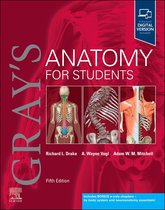
GRAY'S ANATOMY FOR STUDENTS
5TH EDITION
• AUTHOR(S)RICHARD L. DRAKE
TEST BANK
1
Reference: Ch. 1 — The Body — What is anatomy? (Levels of
structural organization)
Stem: A 68-year-old man arrives with progressive shortness of
breath. The nurse reviews his chart noting reduced gas
exchange surface area from emphysematous destruction at the
alveolar level. Which level of structural organization best links
,the microscopic alveolar wall changes to the patient’s impaired
organ function?
Options:
A. Cell
B. Tissue
C. Organ
D. Organ system
Correct answer: B
Rationale — Correct (B):
Tissues are groups of similar cells and extracellular matrix
performing a common function; alveolar wall destruction alters
respiratory tissue architecture, impairing diffusion and thereby
organ (lung) function. This links cellular injury to reduced tissue-
level gas exchange per Gray’s description of organizational
levels. Clinically, recognizing tissue-level pathology guides
nursing interventions (e.g., oxygen therapy, monitoring).
Rationale — Incorrect:
A. Cell — Cellular injury is fundamental but does not directly
describe the collective functional impairment at the alveolar-
network scale.
C. Organ — An organ is composed of multiple tissue types;
selecting organ skips the intermediate tissue explanation that
explains gas-exchange impairment.
D. Organ system — Too broad; organ systems aggregate organs
and mask the specific tissue-derived mechanism of impaired
diffusion.
,Teaching point: Tissue-level destruction explains loss of organ
function from clustered cellular damage.
Citation: Drake, R. L. (2024). Gray’s Anatomy for Students (5th
Ed.). Ch. 1.
2
Reference: Ch. 1 — The Body — What is anatomy? (Anatomical
position and directional terms)
Stem: During a neurologic assessment, a nurse instructs a
patient to point to a structure that is both lateral to the nose
and inferior to the eyes. Which surface structure should the
patient indicate?
Options:
A. Chin (mental region)
B. Zygomatic (cheek) region
C. Frontal (forehead) region
D. Nasal bridge
Correct answer: B
Rationale — Correct (B):
The zygomatic (cheek) region is lateral to the nose and inferior
to the orbits (eyes) when using standard anatomical directional
terms. Gray’s emphasizes using anatomical position and
directional planes for consistent localization, which is crucial for
documenting findings and planning care.
, Rationale — Incorrect:
A. Chin — Inferior to the nose but midline, not lateral.
C. Frontal — Superior to the eyes, not inferior.
D. Nasal bridge — Midline and superior to the nose tip; it’s not
lateral to the nose.
Teaching point: Use anatomical position and directional terms
to localize findings accurately.
Citation: Drake, R. L. (2024). Gray’s Anatomy for Students (5th
Ed.). Ch. 1.
3
Reference: Ch. 1 — The Body — Imaging (X-ray basics and tissue
radiodensity)
Stem: A trauma patient’s chest X-ray shows a large radiopaque
area overlying the right hemithorax. The nurse knows
radiopaque (white) areas indicate tissues that attenuate X-rays
strongly. Which tissue type is most likely causing a focal
radiopaque shadow?
Options:
A. Air within a pneumothorax
B. Consolidated lung (pneumonia)
C. Soft tissue of the breast
D. Fat in the subcutaneous tissue
Correct answer: B
5TH EDITION
• AUTHOR(S)RICHARD L. DRAKE
TEST BANK
1
Reference: Ch. 1 — The Body — What is anatomy? (Levels of
structural organization)
Stem: A 68-year-old man arrives with progressive shortness of
breath. The nurse reviews his chart noting reduced gas
exchange surface area from emphysematous destruction at the
alveolar level. Which level of structural organization best links
,the microscopic alveolar wall changes to the patient’s impaired
organ function?
Options:
A. Cell
B. Tissue
C. Organ
D. Organ system
Correct answer: B
Rationale — Correct (B):
Tissues are groups of similar cells and extracellular matrix
performing a common function; alveolar wall destruction alters
respiratory tissue architecture, impairing diffusion and thereby
organ (lung) function. This links cellular injury to reduced tissue-
level gas exchange per Gray’s description of organizational
levels. Clinically, recognizing tissue-level pathology guides
nursing interventions (e.g., oxygen therapy, monitoring).
Rationale — Incorrect:
A. Cell — Cellular injury is fundamental but does not directly
describe the collective functional impairment at the alveolar-
network scale.
C. Organ — An organ is composed of multiple tissue types;
selecting organ skips the intermediate tissue explanation that
explains gas-exchange impairment.
D. Organ system — Too broad; organ systems aggregate organs
and mask the specific tissue-derived mechanism of impaired
diffusion.
,Teaching point: Tissue-level destruction explains loss of organ
function from clustered cellular damage.
Citation: Drake, R. L. (2024). Gray’s Anatomy for Students (5th
Ed.). Ch. 1.
2
Reference: Ch. 1 — The Body — What is anatomy? (Anatomical
position and directional terms)
Stem: During a neurologic assessment, a nurse instructs a
patient to point to a structure that is both lateral to the nose
and inferior to the eyes. Which surface structure should the
patient indicate?
Options:
A. Chin (mental region)
B. Zygomatic (cheek) region
C. Frontal (forehead) region
D. Nasal bridge
Correct answer: B
Rationale — Correct (B):
The zygomatic (cheek) region is lateral to the nose and inferior
to the orbits (eyes) when using standard anatomical directional
terms. Gray’s emphasizes using anatomical position and
directional planes for consistent localization, which is crucial for
documenting findings and planning care.
, Rationale — Incorrect:
A. Chin — Inferior to the nose but midline, not lateral.
C. Frontal — Superior to the eyes, not inferior.
D. Nasal bridge — Midline and superior to the nose tip; it’s not
lateral to the nose.
Teaching point: Use anatomical position and directional terms
to localize findings accurately.
Citation: Drake, R. L. (2024). Gray’s Anatomy for Students (5th
Ed.). Ch. 1.
3
Reference: Ch. 1 — The Body — Imaging (X-ray basics and tissue
radiodensity)
Stem: A trauma patient’s chest X-ray shows a large radiopaque
area overlying the right hemithorax. The nurse knows
radiopaque (white) areas indicate tissues that attenuate X-rays
strongly. Which tissue type is most likely causing a focal
radiopaque shadow?
Options:
A. Air within a pneumothorax
B. Consolidated lung (pneumonia)
C. Soft tissue of the breast
D. Fat in the subcutaneous tissue
Correct answer: B