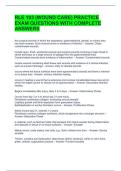
RLE 103 (WOUND CARE) PRACTICE
EXAM QUESTIONS WITH COMPLETE
ANSWERS
Are surgical wounds in which the respiratory, gastrointestinal, genital, or urinary tract
has been entered. Such wounds show no evidence of infection. - Answer- Clean-
contaminated wounds
include open, fresh, accidental wounds and surgical wounds involving a major break in
sterile technique or a large amount of spillage from the gastrointestinal tract.
Contaminated wounds show evidence of inflammation. - Answer- Contaminated wounds
include wounds containing dead tissue and wounds with evidence of a clinical infection,
such as purulent drainage. - Answer- Dirty or infected wounds
occurs where the tissue surfaces have been approximated (closed) and there is minimal
or no tissue loss - Answer- primary intention healing
occurs in healing a wound that is extensive and involves considerable tissue loss and in
which the edges cannot or should not be approximated. - Answer- Secondary intention
healing
Begins immediately after injury, lasts 3 to 6 days. - Answer- Inflammatory Phase
Occurs from day 3 or 4 to about day 21 post-injury.
Fibroblasts synthesize collagen, increasing wound strength.
Capillary growth and fibrin deposition form granulation tissue.
Epithelialization or eschar formation occurs. - Answer- Proliferative Phase
Starts around day 21, extends 1-2 years.
Fibroblasts continue collagen synthesis, which reorganizes into a stronger structure. -
Answer- Maturation Phase
is material, such as fluid and cells, that escapes from blood vessels during inflammation
and deposits in tissue or on tissue surfaces. - Answer- Exudate
Mainly serum, looks watery, few cells; e.g., fluid in blister from burn. - Answer- Serous
exudate
Thicker, contains pus (leukocytes, dead tissue debris, bacteria), varies in color (blue,
green, yellow), suppuration process. - Answer- Purulent exudate
, Large amounts of red blood cells, indicates severe capillary damage, commonly seen in
open wounds. - Answer- Sanguineous exudate
Clear and blood-tinged drainage, commonly in surgical incisions. - Answer-
Serosanguineous
Pus and blood, often seen in new infected wounds. - Answer- Purosanguineous
Normal bleeding, but excessive bleeding is abnormal.
Causes: clot dislodgement, slipped stitch, vessel erosion. - Answer- Hemorrhage
Inevitable wound colonization by microorganisms.
Hinders healing, may progress to infection.
Signs: color change, pain, odor, drainage; confirmed by culture. - Answer- Infection
Sutured wound partially or fully ruptures.
Evisceration: internal organs protrude through incision. - Answer- Dehiscence with
Possible Evisceration:
Healthy children and adults generally heal faster than older adults.
Older adults often have chronic diseases hindering healing; reduced liver function can
impair clotting factor synthesis. - Answer- Developmental Considerations
Wound healing increases body's demands.
Clients need diets rich in protein, carbohydrates, lipids, vitamins (A and C), and
minerals (iron, zinc, copper). - Answer- Nutrition
Regular exercise promotes good circulation, aiding in quicker healing.
Smoking reduces functional hemoglobin, limiting oxygen-carrying capacity of blood and
constricting arterioles. - Answer- Lifestyle
Anti-inflammatory drugs (e.g., steroids, aspirin) and antineoplastic agents hinder
healing.
Prolonged antibiotic use may increase susceptibility to infection by resistant organisms.
- Answer- Medications
PREVENTING PRESSURE ULCERS - Answer- Providing Nutrition
Maintaining Skin Hygiene
Avoiding Skin Trauma
Providing Supportive Devices
Made of polyvinyl, silicone, or Silastic filled with gelatinous substance resembling fat. -
Answer- Gel Flotation Pads
Support positioning and alleviate bone-on-bone contact. - Answer- Pillows and Wedges:
EXAM QUESTIONS WITH COMPLETE
ANSWERS
Are surgical wounds in which the respiratory, gastrointestinal, genital, or urinary tract
has been entered. Such wounds show no evidence of infection. - Answer- Clean-
contaminated wounds
include open, fresh, accidental wounds and surgical wounds involving a major break in
sterile technique or a large amount of spillage from the gastrointestinal tract.
Contaminated wounds show evidence of inflammation. - Answer- Contaminated wounds
include wounds containing dead tissue and wounds with evidence of a clinical infection,
such as purulent drainage. - Answer- Dirty or infected wounds
occurs where the tissue surfaces have been approximated (closed) and there is minimal
or no tissue loss - Answer- primary intention healing
occurs in healing a wound that is extensive and involves considerable tissue loss and in
which the edges cannot or should not be approximated. - Answer- Secondary intention
healing
Begins immediately after injury, lasts 3 to 6 days. - Answer- Inflammatory Phase
Occurs from day 3 or 4 to about day 21 post-injury.
Fibroblasts synthesize collagen, increasing wound strength.
Capillary growth and fibrin deposition form granulation tissue.
Epithelialization or eschar formation occurs. - Answer- Proliferative Phase
Starts around day 21, extends 1-2 years.
Fibroblasts continue collagen synthesis, which reorganizes into a stronger structure. -
Answer- Maturation Phase
is material, such as fluid and cells, that escapes from blood vessels during inflammation
and deposits in tissue or on tissue surfaces. - Answer- Exudate
Mainly serum, looks watery, few cells; e.g., fluid in blister from burn. - Answer- Serous
exudate
Thicker, contains pus (leukocytes, dead tissue debris, bacteria), varies in color (blue,
green, yellow), suppuration process. - Answer- Purulent exudate
, Large amounts of red blood cells, indicates severe capillary damage, commonly seen in
open wounds. - Answer- Sanguineous exudate
Clear and blood-tinged drainage, commonly in surgical incisions. - Answer-
Serosanguineous
Pus and blood, often seen in new infected wounds. - Answer- Purosanguineous
Normal bleeding, but excessive bleeding is abnormal.
Causes: clot dislodgement, slipped stitch, vessel erosion. - Answer- Hemorrhage
Inevitable wound colonization by microorganisms.
Hinders healing, may progress to infection.
Signs: color change, pain, odor, drainage; confirmed by culture. - Answer- Infection
Sutured wound partially or fully ruptures.
Evisceration: internal organs protrude through incision. - Answer- Dehiscence with
Possible Evisceration:
Healthy children and adults generally heal faster than older adults.
Older adults often have chronic diseases hindering healing; reduced liver function can
impair clotting factor synthesis. - Answer- Developmental Considerations
Wound healing increases body's demands.
Clients need diets rich in protein, carbohydrates, lipids, vitamins (A and C), and
minerals (iron, zinc, copper). - Answer- Nutrition
Regular exercise promotes good circulation, aiding in quicker healing.
Smoking reduces functional hemoglobin, limiting oxygen-carrying capacity of blood and
constricting arterioles. - Answer- Lifestyle
Anti-inflammatory drugs (e.g., steroids, aspirin) and antineoplastic agents hinder
healing.
Prolonged antibiotic use may increase susceptibility to infection by resistant organisms.
- Answer- Medications
PREVENTING PRESSURE ULCERS - Answer- Providing Nutrition
Maintaining Skin Hygiene
Avoiding Skin Trauma
Providing Supportive Devices
Made of polyvinyl, silicone, or Silastic filled with gelatinous substance resembling fat. -
Answer- Gel Flotation Pads
Support positioning and alleviate bone-on-bone contact. - Answer- Pillows and Wedges: