NR 601 Midterm Exam Study Guide Weeks 1-4
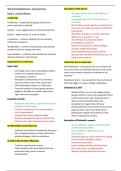
NR 601 Midterm Exam Study Guide Weeks 1-4 content Week Topics 1 ⦁ Developmental changes Review Kennedy and Dunphy readings for age related changes Replicative senescence is theory states that cells can replicate or divide a specific number of times. This ability tends to decrease with age. Oxidative damage is the cumulative result of the aerobic metabolism, which generates chemicals called free radicals. Free radicals may interact with other chemicals in the body and cause damage to cells. Telomere shortening is a theory that links aging to a reduction in cell division. Weakening of the immune response leaves older adults more vulnerable to infection and debilitating diseases. Travel Increased risk for thromboembolic events, altitude sickness with effect on cardiac and cerebral functioning, effect on pulmonary function from air pollution, dehydration and inability to tolerate temperature changes, anxiety r/t change of place (central nervous changes), decreased hearing (sensory changes), increased risk for accidents due to decreased vision, longer reaction times, some vaccines are less effective for older adults. Routine immunizations for older adult’s r/t travel, Influenza, pneumococcal, Td/Tdap, zoster, Hep B for some, and certain vaccines based on destination Yellow fever not effective until 10 days post administration and if a herpes zoster vaccine has been given, they must wait 30 days to receive the yellow fever vaccine. If the patient has received a yellow fever vaccine, they must wait 28 days for a herpes zoster vaccine. Beer’s Criteria The Beers Criteria for Potentially Inappropriate Medication Use in Older Adults, commonly called the Beers List, are guidelines for healthcare professionals to help improve the safety of prescribing medications for older adults. They emphasize deprescribing medications that are unnecessary, which helps to reduce the problems of polypharmacy, drug interactions, and adverse drug reactions, thereby improving the risk–benefit ratio of medication regimens in at-risk people. Exercise in Older Adults - OA: walking, aquatic, tai chi, resistance exercises, cycling - Anxiety: walking, biking, weightlifting, - Fibromyalgia: Aerobic, aquatic, strengthening, tai chi, Pilates - Sleep: Tai chi, walking, aqua therapy, biking -Preferred amount of exercise: 30 minutes per day for 5 days a week of moderate exercise; if weight management is part of this, 60 minutes per day is advised (Can be completed in 10 min. intervals) Laboratory Changes in Older Adults • Protein rises slightly renal pathology, UTI, aging kidney changes ⦁ Specific gravity: lower maximum in elderly: 1.016-1.022-decline in nephrons ability to concentrate urine • ESR: increases-not sensitive/nor specific in the aging adult • Iron binding-decreases • Hgb: decreases-anemia is common in the elderly • HCT: slight decrease-decline in hematopoiesis • Leukocytes: drop-drugs/sepsis • Lymphocytes-T and B cell fall-risk for infection is higher-immunization encouraged • Platelets: no change in number • Albumin-decline-smaller liver-and enzymes-protein energy malnutrition • Globulin: slight increase • Total serum protein: decreases indicate malnutrition, infection and liver disease • BUN: increases and decline in GFR-decreased cardiac output • CR: increases-r/t lean body mass decrease • CR clearance: decreases-10% per 10 years after 40-careful prescribing drugs that are excreted by kidneys • Glucose tolerance: increase of 10 mg/dL/decade after 30-diabetes more prevalent-drugs can cause glucose intolerance • Alk phosp: increase-elevations> 2 Geriatric Syndromes • Sleep Disturbances • Problems with eating or feeding • Incontinence • Confusion • Evidence of falls • Skin breakdown Categories for Aging • Young – old = 65–74 years • Old = 75–84 • Oldest-old = 85 and older Comprehensive Geriatric Assessment Physical Health -Beers Criteria: avoid Polypharmacy & Potentially Inappropriate Medication the elderly/ADR -STOPP Screening Tool of Older Persons Prescriptions: medications that might likely need to be stopped for the older adult -START Screening Tool to Alert Doctors to Right Treatment: includes medications that need to be added. -MINI Nutritional Assessment Instrument: identifies older adults who have or at risk of malnutrition -Nutrition Health Checklist: identifies older adults who have or at risk of malnutrition Functional Health - KATZ : Activities of Daily Living Scale - Lawton and Brody Scale: Instrumentals activities of daily living - Hendrich II Fall Risk Model: assessment of falls, useful in acute care, ambulatory, assisted living, and long-term care. - Timed Get up and Go Test: mobility screen - Tinetti’s Performance Oriented Mobility Assessment is a task-oriented test that measures gait and balance abilities Physiological Health - DSM-5: describes the characteristics of delirium and mild to moderate neurocognitive mental disorders - MMSE Mini Mental Status Examination: - GDS: SF Geriatric Depression Scale -Short form: consists of 15 questions requiring yes or no response. Can be completed in any healthcare setting. -PHQ-9 Patient Health Questionnaire Socioenvironmental Supports -Lubben Social Network Scale -6 item version • Important contribution to family and friendship • Helps identify patients at risk for social isolation who can benefit from intervention • Include the following geriatric assessment to help improves patient’s social support ■ Is there any one special person you could call or contact if you need help? (If yes, identify.) ■ In general, other than your children, how many relatives do you feel close to and have contact with at least once a month? (Number.) ■ In general, how many friends do you feel close to and have contact with at least once a month? (Number.) Additional social and economic resources are assessed by exploring the following: MIDTERM STUDY GUIDE FOR NR 601-AGING ADULT 66 ■ Living situation ■ Housing ■ Transportation ■ Income ■ Assets ■ Degree of financial burden resulting from health concerns Quality of Life Measures: -Medical Outcomes Study-Short Form 36: • looks at physical, mental, and social domains GOLD standard for quality of life instruments because of its longevity, applicability, and ease of administration and analysis. ⦁ Lab results- Dunphy Table 77.2 Lab Test Normal Changes with age Comments UA Protein 0-5mg/100ml Rises slightly May be due to kidney changes with age, urinary tract infection, renal pathology Specific Gravity 1.005-1.020 Lower max in elderly 1.016-1.022 Decline in nephrons impairs ability to concentrate urine Hematology ESR Men: 0-20 Women: 0-30 Significant increase Neither sensitive nor specific in aged Iron Binding 50-160mcg/dl 230-410mcg/dl Slight decrease Decrease Hemoglobin Men: 13-18g/100ml Women: 12-16g Men: 10-17g Women: None noted Anemia common in the elderly Hematocrit Men: 45-52% Women 37-48% Slight decreased speculated Decline in hematopoiesisLeu Leukocytes 4,300–10,800/mm3 Drop to 3,100–9,000/mm3 Decrease may be due to drugs or sepsis and should not be attributed immediately to age Lymphocytes 00–2,400 T cells/mm3 50–200 B cells/mm3 T-cell and B-cell levels fall Infection risk higher; immunization encouraged Platelet 150,000–350,000/ No change in number Blood Chemistry Albumin 3.5–5.0 Decline Related to decrease in liver size and enzymes; protein-energy malnutrition common Globulin 2.3–3.5 Slight increase Total serum protein 6.0–8.4 g No change Decreases may indicate malnutrition, infection, liver disease Blood urea nitrogen Men: 10–25 Women: 8–20 mg Increases significantly up to 69 mg Increases significantly up to 69 mg Creatinine 0.6–1.5 mg Increases to 1.9 mg Related to lean body mass decrease Creatinine clearance 104–124 mL/min Decreases 10%/decade after age 40 years Used for prescribing medications for drugs excreted by kidney Glucose tolerance 62–110 mg/dL after fasting; >120 mg/dL after 2 hours postprandial Slight increase of 10 mg/dL/decade after 30 years of age Diabetes increasingly prevalent; drugs may cause glucose intolerance Alkaline phosphatase 13–39 IU/L Increase by 8–10 IU/L Elevations >20% usually due to disease; elevations may be found with bone abnormalities, drugs (e.g., narcotics), and eating a fatty meal ⦁ Atypical disease presentations Erroneously associating aging with disease, disuse, and disability, older adults perceive this change as inevitable and either fail to present to the health-care provider or, if they do, fail to challenge the assumption that this represents normal aging. At times an acute symptom such as pain or dyspnea is superimposed on a chronic symptom, and the older adult may not recognize that it represents a new or exacerbated pathology TABLE 1-1 Presentation of Illness in Older Adults ILLNESS ATYPICAL PRESENTATIONS Acute abdomen Absence of symptoms or vague symptoms Acute confusion Mild discomfort and constipation Some tachypnea and possibly vague respiratory symptoms Appendicitis pain may begin in right lower quadrant and become diffuse Depression Anorexia, vague abdominal complaints, new onset of constipation, insomnia, hyperactivity, lack of sadness Hyperthyroidism Hyperthyroidism presenting as “apathetic thyrotoxicosis,” i.e., fatigue and weakness; weight loss may result instead of weight gain; patients report palpitations, tachycardia, new onset of atrial fibrillation, and heart failure may occur with undiagnosed hyperthyroidism Hypothyroidism Hypothyroidism often presents with confusion and agitation; new onset of anorexia, weight loss, and arthralgias may occur Malignancy New or worsening back pain secondary to metastases from slow growing breast masses Silent masses of the bowel Myocardial Absence of chest pain infarction (MI) Vague symptoms of fatigue, nausea, and a decrease in functional and cognitive status; classic presentations: dyspnea, epigastric discomfort, weakness, vomiting; history of previous cardiac failure Higher prevalence in females versus males Non-Q-wave MI Overall infectious diseases process Absence of fever or low-grade fever Malaise Sepsis without usual leukocytosis and fever Falls, anorexia, new onset of confusion and/or alteration in change in mental status, decrease in usual functional status Peptic ulcer disease Absence of abdominal pain, dyspepsia, early satiety Painless, bloodless New onset of confusion, unexplained tachycardia, and/or hypotension Pneumonia Absence of fever; mild coughing without copious sputum, especially in dehydrated patients; tachycardia and tachypnea; anorexia and malaise are common; alteration in cognition. Pulmonary edema Lack of paroxysmal nocturnal dyspnea or coughing; insidious onset with changes in function, food or fluid intake, or confusion Tuberculosis (TB) Atypical signs of TB in older adults include hepatosplenomegaly, abnormalities in liver function tests, and anemia Urinary tract infection Absence of fever, worsening mental or functional status, dizziness, anorexia, fatigue, weakness ⦁ Geriatric syndromes • Sleep Disturbances • Problems with eating or feeding • Incontinence • Confusion • Evidence of falls • Skin breakdown ⦁ Categories of aging- know age ranges for old, young old, old-old, etc. • Young – old = 65–74 years • Old = 75–84 • Oldest-old = 85 and older TABLE 1-2 Select Bimodal Presentations of Illness in Younger Adults versus Older Adults TYPE OF CONDITION YOUNGER ADULTS OLDER ADULTS Dermatological Psoriasis Late teens to 20s Irregular course which tends to generalize Hereditary factors 50s—males 60s—females Sporadic onset Gastrointestinal Inflammatory bowel disease Ulcerative colitis (UC) Crohn’s disease (CD) 20–40 years old Right lower UC Insidious onset >60–75 years old a second peak occurs More often older women Proctitis Left-sided UC Higher rates of anemia May present as chronic diarrhea Fistula development Increased cases of associated malnutrition Extraintestinal manifestations including: arthritis spondylitis, uveitis, and erythema nodosum More comorbid conditions May be confused with other forms of colitis Malignancies Hodgkin’s lymphoma 20–30 years old Possible infectious etiology >50 years old Increased mortality Neurodegenerative Myasthenia gravis (MG) Women 20–40 years old More thymus abnormalities Men—50–70 years old Women—70 years old Dysphonia More frequent ocular form MG Increased rate of AChR seropositivity Exercise in older adults (Kennedy) ⦁ Recommended exercises for sleep and flexibility ⦁ Exercise recommendations for specific diagnoses (Kennedy) Osteoarthritis Walking, aquatic activities, tai chi, resistance exercises, cycling Vary type and intensity to avoid overstressing joints; heated pool Coronary artery disease Walking, treadmill walking, cycle ergometry Supervised program with BP and heart rate monitoring Congestive heart failure Walking, treadmill walking, cycle ergometry Individualize to client; supervised program Type 2 diabetes mellitus Resistive, aerobic, aquatic, recreational activities Proper shoe fit; may need insulin reduction if insulin dependent Anxiety disorders Walking, biking, weight lifting If able to do high-intensity exercise, this benefits anxiety Depression Walking, cycling, recreational activities Group participation helpful to keep patient engaged Fibromyalgia Aerobic, aquatic therapy, strengthening, tai chi, Pilates Heated pool, gentle stretches, counsel about possible increased pain initially Chronic obstructive pulmonary disease Cycle ergometer, treadmill walking; individualize Supervised program—consider pulmonary rehabilitation program Chronic venous insufficiency Walking, standing exercises Supervised program Osteoporosis Weight-bearing exercises, weight training Assess balance and risk for falls before beginning Parkinson’s disease Walking, treadmill walking, stationary bike, dancing, tai chi, Pilates, boxing Assess balance and risk for falls before beginning; American Parkinson’s Disease Association resources Peripheral arterial disease Lower extremity exercises, treadmill walking, walking Very short intervals initially, progress as tolerated Age-related sleep disorders Tai chi, walking, aquatherapy, biking Assess balance and risk for falls before beginning Dementia Walking, recreational activities Provide safe environment, assess fall risk and ability to participate. ⦁ Testing prior to exercise initiation ⦁ Recommended testing prior to exercise initiation ⦁ Barriers, facilitators and contraindications to exercise Barriers ■ Lack of time ■ Perceived need for equipment ■ Perceived barrier to beginning exercise/physical activity ■ Disability or functional limitation ■ Unsafe neighborhood or weather conditions ■ No parks or walking trails ■ Depression ■ High body mass index (BMI) ■ Lack of motivation ■ Interpersonal loss or significant life event ■ Ignorance of what to do Patient Facilitators ■ Social support ■ Positive self-efficacy ■ Motivation to engage in physical activity ■ Good health, no functional limitations ■ Frequent contact with prescriber ■ Regular schedule, planned program ■ Satisfaction with program ■ Insurance incentive ■ Improvement in mobility or health condition ■ Staff Contraindications ■ Unstable angina ■ Uncompensated heart failure ■ Severe anemia ■ Uncontrolled blood glucose ■ Unstable aortic aneurysm ■ Uncontrolled hypertension or tachycardia ■ Severe dehydration or heat stroke ■ Low oxygen saturation ⦁ Health promotion (Dunphy and Kennedy) ⦁ Immunizations Shingrix is a new vaccine for zoster and is recommended over Zostavax. It is administered in two doses. The second dose can be given from 2 to 6 months after the initial one. Persons who have had Zostavax should now be immunized with Shingrix. Those who have had a prior episode of zoster should be vaccinated (CDC, Adult Immunization Schedule) ⦁ Travel (Kennedy) Risks related to travel: Patients with chronic disease that is well managed at home may decompensate in foreign environments because of heat, humidity, altitude, fatigue, changes in diet, and exposure to infectious diseases.Fever is not always a reliable indicator of illness in the older adult. Seroconversion rates decrease with age, rendering some vaccines less effective for older travelers. Immunizations for travel: all immunizations should be current. influenza, pneumococcal, Td/Tdap (tetanus, diphtheria, and acellular pertussis), zoster, and for some, hepatitis B vaccination. Yellow fever and herpes zoster vaccine are the only live virus vaccines that people over age 50 receive. Immune response can be impaired if live virus vaccines are given within a 28- to 30-day interval of each other. Yellow fever vaccine is not effective until 10 days after administration. If the NP gives a patient a herpes zoster vaccine, that patient cannot receive a yellow fever vaccine for 30 days. If the patient is required to have a yellow fever vaccine for travel, he or she cannot enter a yellow fever country until 10 days after receiving the yellow fever vaccine. If a patient receives a yellow fever vaccine, he or she cannot receive a herpes zoster vaccine for 28 days. The patient may receive both vaccines on the same day with no decrease in immune response The most common vaccines used for protecting travelers are hepatitis A, hepatitis B, typhoid fever, yellow fever, adult booster polio, Japanese encephalitis, meningococcal, and rabies. Comprehensive Geriatric Assessment Physical Health Screening Tools -Beers Criteria: avoid Polypharmacy & Potentially Inappropriate Medication the elderly/ADR -STOPP Screening Tool of Older Persons Prescriptions: medications that might likely need to be stopped for the older adult -START Screening Tool to Alert Doctors to Right Treatment: includes medications that need to be added. -MINI Nutritional Assessment Instrument: identifies older adults who have or at risk of malnutrition -Nutrition Health Checklist: identifies older adults who have or at risk of malnutrition Functional Health Screening Tools - KATZ : Activities of Daily Living Scale - Lawton and Brody Scale: Instrumentals activities of daily living - Hendrich II Fall Risk Model: assessment of falls, useful in acute care, ambulatory, assisted living, and long-term care. - Timed Get up and Go Test: mobility screen - Tinetti’s Performance Oriented Mobility Assessment is a task-oriented test that measures gait and balance abilities Physiological Health Screening Tools - DSM-5: describes the characteristics of delirium and mild to moderate neurocognitive mental disorders - MMSE Mini Mental Status Examination: - GDS: SF Geriatric Depression Scale -Short form: consists of 15 questions requiring yes or no response. Can be completed in any healthcare setting. -PHQ-9 Patient Health Questionnaire Socioenvironmental Supports Screening Tools -Lubben Social Network Scale -6 item version • Important contribution to family and friendship • Helps identify patients at risk for social isolation who can benefit from intervention • Include the following geriatric assessment to help improves patient’s social support ■ Is there any one special person you could call or contact if you need help? (If yes, identify.) ■ In general, other than your children, how many relatives do you feel close to and have contact with at least once a month? (Number.) ■ In general, how many friends do you feel close to and have contact with at least once a month? (Number.) Polypharmacy (Kennedy) Multiple definitions (review discussion) ⦁ Prescribing many drugs, prescribing 5 or more drugs, or prescribing potentially inappropriate medications. ⦁ The use of multiple pharmacies (providers & self-prescribers) ⦁ Providers should routinely evaluate medication appropriateness to avoid the risk of polypharmacy Prevention strategies ⦁ Have new patients bring in all medications to their first visit ⦁ Review med list at every visit ⦁ Ask if any other provider has changed or added any meds ⦁ Update med list at every visit Screening tools ⦁ Three available tools to evaluate patient’s prescriptions ⦁ STOPP (screening tool of older persons’ potentially inappropriate prescriptions ⦁ MAI (Medication Appropriateness Index) ⦁ ARMOR (Assess, Review, Minimize, Optimize, Reassess)
Written for
Document information
- Uploaded on
- February 7, 2021
- Number of pages
- 30
- Written in
- 2020/2021
- Type
- Exam (elaborations)
- Contains
- Questions & answers
Subjects
- nr 601 midterm
- nr 601
- nr 601 midterm exam
-
nr 601 midterm exam study guide
-
nr 601 midterm exam study guide weeks 1 4