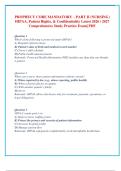
PROPHECY CORE MANDATORY – PART II (NURSING)
HIPAA, Patient Rights, & Confidentiality Latest
Comprehensive Study Practice Exam| PDF
Question 1
Which of the following is protected under HIPAA?
A) Hospital cafeteria menu
B) Patient’s date of birth and medical record number
C) Nurse’s shift schedule
D) Public health announcements
Rationale: Protected Health Information (PHI) includes any data that can identify
a patient.
Question 2
When can a nurse share patient information without consent?
A) When required by law (e.g., abuse reporting, public health)
B) When a friend asks for an update
C) With another patient’s family
D) Never
Rationale: HIPAA allows disclosure only for treatment, payment, operations, or
legal obligations.
Question 3
HIPAA’s main goal is to:
A) Improve nurse staffing ratios
B) Protect the privacy and security of patient information
C) Increase hospital profits
D) Manage patient flow
Rationale: HIPAA safeguards confidentiality of all identifiable health data.
,Question 4
Which situation violates HIPAA regulations?
A) Discussing a patient in private with a provider
B) Leaving a patient chart open on a screen unattended
C) Using secure hospital email for clinical updates
D) Storing files in a locked cabinet
Rationale: Unattended displays of PHI risk unauthorized access.
Question 5
If a nurse discovers a coworker accessing a patient’s record without authorization,
what should be done?
A) Ignore it
B) Report the incident to the privacy officer or supervisor
C) Ask them why they did it
D) Tell the patient directly
Rationale: Unauthorized access is a reportable HIPAA breach.
Question 6
HIPAA stands for:
A) Health Integrity and Patient Access Act
B) Health Insurance Portability and Accountability Act
C) Health Information Protection and Access Agreement
D) Health Industry Policy Accountability Act
Rationale: Correct federal act enacted in 1996 to protect patient information.
Question 7
Which example best represents PHI?
A) A chart labeled “Room 8”
B) An x-ray with patient name and ID number
C) Anonymous survey results
D) Facility infection rate reports
, Rationale: Any health data linked to patient identifiers qualifies as PHI.
Question 8 A nurse overhears gossip about a patient in the hallway.
What’s the proper response? A) Ignore it
B) Remind staff that such discussions violate HIPAA
C) Join in to clarify facts
D) Report to the family
Rationale: Conversations about patients should occur in private spaces only.
Question 9
Releasing patient details to another provider directly involved in care is:
A) Permitted under HIPAA
B) A violation
C) Unethical
D) Optional
Rationale: HIPAA allows sharing for treatment purposes.
Question 10
If a visitor asks for a patient’s location, what must the nurse do first?
A) Tell them
B) Check if the patient opted out of directory information
C) Refer them to the waiting area
D) Give partial info
Rationale: Patients may choose to keep their hospital stay confidential.
Question 11
Patients have the right to:
A) Edit their medical record
B) Access and request copies of their medical record
C) Restrict doctor access
D) Delete diagnoses
HIPAA, Patient Rights, & Confidentiality Latest
Comprehensive Study Practice Exam| PDF
Question 1
Which of the following is protected under HIPAA?
A) Hospital cafeteria menu
B) Patient’s date of birth and medical record number
C) Nurse’s shift schedule
D) Public health announcements
Rationale: Protected Health Information (PHI) includes any data that can identify
a patient.
Question 2
When can a nurse share patient information without consent?
A) When required by law (e.g., abuse reporting, public health)
B) When a friend asks for an update
C) With another patient’s family
D) Never
Rationale: HIPAA allows disclosure only for treatment, payment, operations, or
legal obligations.
Question 3
HIPAA’s main goal is to:
A) Improve nurse staffing ratios
B) Protect the privacy and security of patient information
C) Increase hospital profits
D) Manage patient flow
Rationale: HIPAA safeguards confidentiality of all identifiable health data.
,Question 4
Which situation violates HIPAA regulations?
A) Discussing a patient in private with a provider
B) Leaving a patient chart open on a screen unattended
C) Using secure hospital email for clinical updates
D) Storing files in a locked cabinet
Rationale: Unattended displays of PHI risk unauthorized access.
Question 5
If a nurse discovers a coworker accessing a patient’s record without authorization,
what should be done?
A) Ignore it
B) Report the incident to the privacy officer or supervisor
C) Ask them why they did it
D) Tell the patient directly
Rationale: Unauthorized access is a reportable HIPAA breach.
Question 6
HIPAA stands for:
A) Health Integrity and Patient Access Act
B) Health Insurance Portability and Accountability Act
C) Health Information Protection and Access Agreement
D) Health Industry Policy Accountability Act
Rationale: Correct federal act enacted in 1996 to protect patient information.
Question 7
Which example best represents PHI?
A) A chart labeled “Room 8”
B) An x-ray with patient name and ID number
C) Anonymous survey results
D) Facility infection rate reports
, Rationale: Any health data linked to patient identifiers qualifies as PHI.
Question 8 A nurse overhears gossip about a patient in the hallway.
What’s the proper response? A) Ignore it
B) Remind staff that such discussions violate HIPAA
C) Join in to clarify facts
D) Report to the family
Rationale: Conversations about patients should occur in private spaces only.
Question 9
Releasing patient details to another provider directly involved in care is:
A) Permitted under HIPAA
B) A violation
C) Unethical
D) Optional
Rationale: HIPAA allows sharing for treatment purposes.
Question 10
If a visitor asks for a patient’s location, what must the nurse do first?
A) Tell them
B) Check if the patient opted out of directory information
C) Refer them to the waiting area
D) Give partial info
Rationale: Patients may choose to keep their hospital stay confidential.
Question 11
Patients have the right to:
A) Edit their medical record
B) Access and request copies of their medical record
C) Restrict doctor access
D) Delete diagnoses