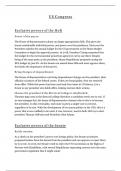
1.2: Golden Years: 1923 - 1929 POLITICS FOREIGN POLICY
USPD DDP BVP DNVP Stresemann: Rational Republican. 1920s politician who wanted a
ECONOMIC RECOVERY constitutional monarchy but came to support a democratic Weimar
Republic (out of necessity). Foreign Minister 1923-29. Ensured political
Stresemann’s first 100 days: Resumed Rep. Payments: French Leave stability/loyalty. Questionable whether he could have stopped collapse.
Ruhr, Passive Resistance Stopped – recognise need for international
KPD SPD DNVP
sympathy. Govt. Expenditure Cuts: 700,000 Govt. employees sacked. Z NSDAP Aims: (1) Free G. from the limitations of ToV. (2) Restore G. to a
New Currency (Rentenmark), stabilising inflation . Dawes Plan: Fixed Rep status of Great Power. (3) MUST be achieved through diplomacy
Payments in April 1924 + arranged US Loans. Extremists defeated. NOT offensive action.
Feb 1928: President Ebert dies: Hindenburg wins + tries to
exclude SPD from Govt. whilst supporting DNVP, showing
Strengths of Econ: Industry: 1928=1913 Levels, industries continued support for old-style authoritarian regimes. Objectives: Become Friends with France: had legitimate
became cartels. Foreign Investment: Ford/General Motors. security concerns + dominated Europe. Sought Goodwill/Co-
Social Welfare: Pensions and Sickness Pay. Social Legislation. operation from Britain and USA. Stay friends with USSR: sought
Politically Stable calmness. Encourage Co-operation and Peace.
Economic Growth: Fluctuates but rises. Unemployment: 5-10%
of pop. UK currently 3.8%. Flow of Money: Received more than
it paid. No Uprisings: Extreme Parties reduced power. 1928 League of Nations: Based from WW 14 Points - G joins in 1926. G no
NSDAP = 2.6% longer an outcast: given an international platform to raise issues. G given
SPD, Z + Moderates in Govt. status as a permanent member with Veto abilities.
Social Legislation: Housing: 2m+ built, No Rival Govts. - legitimacy unchallenged
Homelessness reduced by 60%. Working conditions: No protests or assassinations
48Hr Working Week. Benefits/Pensions: War Treaties / Acts of Government
Wounded and Widows. (1922) National Youth
Welfare Law: Opportunities for poorer backgrounds. Politically Weak
Unemployment Pay 1924 Dawes Plan: Recognised G economic problems, including
gaining loans/investments: reparations re-calculated to reflect G
6 Govts. in 6 years, all minority ones with 4/6 having ability to pay.
Weaknesses of Econ: Uneven Economic Growth: Imports minority vote: unstable coalitions with frequent
higher than exports + 1926 production declined. disagreements
Unemployment: Always 1.3m+. Agriculture: Failing incomes Hindenburg influenced Reichstag: Kept SPD Out Pros: Economic problems acknowledged by
and rising debt. 1929= 3/4 of 1913 grain production international community. Loans/Subsequent
investments revitalised G. France leave Ruhr in 1925.
Evaluation/Judgement
Fundamental Economic Problems
Cons: Solely dependant on US Loans – dangerous for
While democracy functioned, divisions between moderates, G future: fortunes tied to USA. RW: viewed conciliatory
Word economic/trade conditions: didn't return to Pre-War levels nationalists, and communists created tension. BUT stable politics as seen as accepting demands of ToV.
G Agriculture.: No profit, demand down
Investment: Too Reliant
Changing G. Pop: More school leavers, higher workforce: not 1925 Locarno Pact: Feared a British/French military alliance –
proposed international security pact. Mutual guarantee of F, G
enough jobs
1928 Kellog-Briand Pact: Declaration which outlawed war and B borders: would not use force unless for self-defence. DMZ
Public Spending: Spending 26% of GNP - Double Pre-War
of Rhineland permanent.
as an instrument of National policy. Ensured co-operation
with 68 other nations. No realistic practical effect + no
Impacts on workers – Living / Working Conditions sanctions – purely figurative
Pros: Germany no longer isolated – achieved lots +
gave little (in no position to challenge). Little French
Positives Negatives Evaluation/Judgement aggression
Wages for Unionised Workers Agri. wages 1/2 national average
Rose by 1929 Restored Germany’s international status – No longer seen as an Cons: Poland angry – Eastern borders not confirmed
8Hr Working Day limit Increased Tax Burden on outcast. Reduced tensions with Britain and France – Made war less
business: Less profit likely. Helped economic recovery – Through loans and trade
Welfare Benefits and Pensions Extremes of Wealth and Poverty 1929 Young Plan: Allies leave Rhineland for final rep payments
agreements. Gained diplomatic flexibility – Germany improved
in 1929. Rep sum reduced to £1850m: 1/4 of the total sum in
relations with both the West and the Soviet Union.
1921. G agree to pay until 1988. RW didn't like recognition of the
CULTURE
Evaluation/Judgement INDIVIDUAL CONTRIBUTIONS TOPIC ANALYSIS
ToV and rep payments.
BUT Nationalists hated Stresemann’s diplomacy, believing it was too
soft on the Treaty of Versailles. Reparations Key Question: How successful/stable was the Weimar
Crucial
Imperial because it stabilised
G VS W.R.: ImperialGermany
Germany:after the chaos ofAuthoritarian.
Conservative, hyperinflationW.R: The Elite were still unpopular, 1926 Treaty of Berlin: Stayed friends with USSR – agree to
and allowed
Liberal, for prosperity—though
Tolerant, it was fragile.
Reduced Censorship. despite reductions. Germany’s eastern borders were unsettled, Republic during the Golden Years?
continue positive relationship. Reduce strategic fears on Eastern
causing tension with Poland and Czechoslovakia.
borders/placed pressure on Poland to agree to demands.
5% of Pop: retained through money/assets. Factor Successful?
G Flourished: Berlin challenged Paris as cultural capital. Possibility of trade/military co-operation with USSR.
Object of Envy. Economic Recovery Need stable economy to ensure G
Kaiserreich Censorship Lifted: developments in architecture, Threatened by the organised working class. prosperity. Reduces extremism as
USPD DDP BVP DNVP Stresemann: Rational Republican. 1920s politician who wanted a
ECONOMIC RECOVERY constitutional monarchy but came to support a democratic Weimar
Republic (out of necessity). Foreign Minister 1923-29. Ensured political
Stresemann’s first 100 days: Resumed Rep. Payments: French Leave stability/loyalty. Questionable whether he could have stopped collapse.
Ruhr, Passive Resistance Stopped – recognise need for international
KPD SPD DNVP
sympathy. Govt. Expenditure Cuts: 700,000 Govt. employees sacked. Z NSDAP Aims: (1) Free G. from the limitations of ToV. (2) Restore G. to a
New Currency (Rentenmark), stabilising inflation . Dawes Plan: Fixed Rep status of Great Power. (3) MUST be achieved through diplomacy
Payments in April 1924 + arranged US Loans. Extremists defeated. NOT offensive action.
Feb 1928: President Ebert dies: Hindenburg wins + tries to
exclude SPD from Govt. whilst supporting DNVP, showing
Strengths of Econ: Industry: 1928=1913 Levels, industries continued support for old-style authoritarian regimes. Objectives: Become Friends with France: had legitimate
became cartels. Foreign Investment: Ford/General Motors. security concerns + dominated Europe. Sought Goodwill/Co-
Social Welfare: Pensions and Sickness Pay. Social Legislation. operation from Britain and USA. Stay friends with USSR: sought
Politically Stable calmness. Encourage Co-operation and Peace.
Economic Growth: Fluctuates but rises. Unemployment: 5-10%
of pop. UK currently 3.8%. Flow of Money: Received more than
it paid. No Uprisings: Extreme Parties reduced power. 1928 League of Nations: Based from WW 14 Points - G joins in 1926. G no
NSDAP = 2.6% longer an outcast: given an international platform to raise issues. G given
SPD, Z + Moderates in Govt. status as a permanent member with Veto abilities.
Social Legislation: Housing: 2m+ built, No Rival Govts. - legitimacy unchallenged
Homelessness reduced by 60%. Working conditions: No protests or assassinations
48Hr Working Week. Benefits/Pensions: War Treaties / Acts of Government
Wounded and Widows. (1922) National Youth
Welfare Law: Opportunities for poorer backgrounds. Politically Weak
Unemployment Pay 1924 Dawes Plan: Recognised G economic problems, including
gaining loans/investments: reparations re-calculated to reflect G
6 Govts. in 6 years, all minority ones with 4/6 having ability to pay.
Weaknesses of Econ: Uneven Economic Growth: Imports minority vote: unstable coalitions with frequent
higher than exports + 1926 production declined. disagreements
Unemployment: Always 1.3m+. Agriculture: Failing incomes Hindenburg influenced Reichstag: Kept SPD Out Pros: Economic problems acknowledged by
and rising debt. 1929= 3/4 of 1913 grain production international community. Loans/Subsequent
investments revitalised G. France leave Ruhr in 1925.
Evaluation/Judgement
Fundamental Economic Problems
Cons: Solely dependant on US Loans – dangerous for
While democracy functioned, divisions between moderates, G future: fortunes tied to USA. RW: viewed conciliatory
Word economic/trade conditions: didn't return to Pre-War levels nationalists, and communists created tension. BUT stable politics as seen as accepting demands of ToV.
G Agriculture.: No profit, demand down
Investment: Too Reliant
Changing G. Pop: More school leavers, higher workforce: not 1925 Locarno Pact: Feared a British/French military alliance –
proposed international security pact. Mutual guarantee of F, G
enough jobs
1928 Kellog-Briand Pact: Declaration which outlawed war and B borders: would not use force unless for self-defence. DMZ
Public Spending: Spending 26% of GNP - Double Pre-War
of Rhineland permanent.
as an instrument of National policy. Ensured co-operation
with 68 other nations. No realistic practical effect + no
Impacts on workers – Living / Working Conditions sanctions – purely figurative
Pros: Germany no longer isolated – achieved lots +
gave little (in no position to challenge). Little French
Positives Negatives Evaluation/Judgement aggression
Wages for Unionised Workers Agri. wages 1/2 national average
Rose by 1929 Restored Germany’s international status – No longer seen as an Cons: Poland angry – Eastern borders not confirmed
8Hr Working Day limit Increased Tax Burden on outcast. Reduced tensions with Britain and France – Made war less
business: Less profit likely. Helped economic recovery – Through loans and trade
Welfare Benefits and Pensions Extremes of Wealth and Poverty 1929 Young Plan: Allies leave Rhineland for final rep payments
agreements. Gained diplomatic flexibility – Germany improved
in 1929. Rep sum reduced to £1850m: 1/4 of the total sum in
relations with both the West and the Soviet Union.
1921. G agree to pay until 1988. RW didn't like recognition of the
CULTURE
Evaluation/Judgement INDIVIDUAL CONTRIBUTIONS TOPIC ANALYSIS
ToV and rep payments.
BUT Nationalists hated Stresemann’s diplomacy, believing it was too
soft on the Treaty of Versailles. Reparations Key Question: How successful/stable was the Weimar
Crucial
Imperial because it stabilised
G VS W.R.: ImperialGermany
Germany:after the chaos ofAuthoritarian.
Conservative, hyperinflationW.R: The Elite were still unpopular, 1926 Treaty of Berlin: Stayed friends with USSR – agree to
and allowed
Liberal, for prosperity—though
Tolerant, it was fragile.
Reduced Censorship. despite reductions. Germany’s eastern borders were unsettled, Republic during the Golden Years?
continue positive relationship. Reduce strategic fears on Eastern
causing tension with Poland and Czechoslovakia.
borders/placed pressure on Poland to agree to demands.
5% of Pop: retained through money/assets. Factor Successful?
G Flourished: Berlin challenged Paris as cultural capital. Possibility of trade/military co-operation with USSR.
Object of Envy. Economic Recovery Need stable economy to ensure G
Kaiserreich Censorship Lifted: developments in architecture, Threatened by the organised working class. prosperity. Reduces extremism as