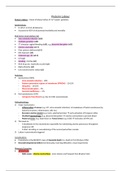
The Psychology of Emotion and cognition
Summary: emotion and cognition
• Emotion modifies cognitive processes - it is fundamental to our cognition
• How emotion and cognition relate is a difficult but crucial question to answer- as it has
become a test of the adequacy of our approach - and there are multiple views
• The recent scientific emphasis on how it works is productive: exploring brain areas (e.g.,
amygdala), and phenomena such as anxiety, decision-making, etc. to look for patterns of
functioning
Opens the way to other topics: How do children’s emotional concepts develop? How should we
treat depression?
*************************************************
1 Thinking and feeling
Our experiences combine thought and feeling, e.g.
Empathy and suspicion
Guilt and worry
Stress and coping
Embarrassment
These experiences involve cognitive appraisal
(e.g., perceived stress)
In return, emotion influences cognition
(e.g., increased attention to threat in the anxious)
What scientists do
There has been a large growth in the cognitive sciences of affect
e.g., in attention, memory, decision-making and consciousness
• The key question is: How do emotion and cognition relate?
- There are big implications for how we view the mind
e.g., is our cognitive account of the mind adequate?
, Is emotion cognitive? Early views
The question was: are attention and emotion distinct processes, or are they bound together in one
cognitive system?
• Zajonc and MacLean – they are separate
• Lazarus – they are bound together because appraisal is a key part of emotion
MacLean’s error: emotion is the reptile brain that lies within (MacLean, 1960)
Ancient limbic cortex emotion
Neocortex cognition
This underestimates both the interaction and cognition. Emotion and cognition may not just coexist
– they may be inextricable.
How can two things relate?
A null relation – they don’t relate: the two are independent or do different things
They relate partially- limited or problematic interactions: they interfere, or influence each other
from time to time, or one takes over
Brief sketch: Emotion-cognition relations from bottom to top:
The bottom end- biology
LeDoux (1998): there is something briefly separate and special about threat and fear processing
The top end- thinking
Damasio (1994): What about emotion and cognition in the mind’s ‘higher’ functioning: how does
thinking work?
Summary: emotion and cognition
• Emotion modifies cognitive processes - it is fundamental to our cognition
• How emotion and cognition relate is a difficult but crucial question to answer- as it has
become a test of the adequacy of our approach - and there are multiple views
• The recent scientific emphasis on how it works is productive: exploring brain areas (e.g.,
amygdala), and phenomena such as anxiety, decision-making, etc. to look for patterns of
functioning
Opens the way to other topics: How do children’s emotional concepts develop? How should we
treat depression?
*************************************************
1 Thinking and feeling
Our experiences combine thought and feeling, e.g.
Empathy and suspicion
Guilt and worry
Stress and coping
Embarrassment
These experiences involve cognitive appraisal
(e.g., perceived stress)
In return, emotion influences cognition
(e.g., increased attention to threat in the anxious)
What scientists do
There has been a large growth in the cognitive sciences of affect
e.g., in attention, memory, decision-making and consciousness
• The key question is: How do emotion and cognition relate?
- There are big implications for how we view the mind
e.g., is our cognitive account of the mind adequate?
, Is emotion cognitive? Early views
The question was: are attention and emotion distinct processes, or are they bound together in one
cognitive system?
• Zajonc and MacLean – they are separate
• Lazarus – they are bound together because appraisal is a key part of emotion
MacLean’s error: emotion is the reptile brain that lies within (MacLean, 1960)
Ancient limbic cortex emotion
Neocortex cognition
This underestimates both the interaction and cognition. Emotion and cognition may not just coexist
– they may be inextricable.
How can two things relate?
A null relation – they don’t relate: the two are independent or do different things
They relate partially- limited or problematic interactions: they interfere, or influence each other
from time to time, or one takes over
Brief sketch: Emotion-cognition relations from bottom to top:
The bottom end- biology
LeDoux (1998): there is something briefly separate and special about threat and fear processing
The top end- thinking
Damasio (1994): What about emotion and cognition in the mind’s ‘higher’ functioning: how does
thinking work?