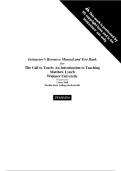
Criminalistics: An Introduction to
Forensic Science– 13th Edition
UV
MANUAL & TEST
IA
BANK
_A
PP
Richard Saferstein
RO
Comprehensive Manual & Test Bank for
VE
Instructors and Students
D?
© Richard Saferstein
??
All rights reserved. Reproduction or distribution without permission is prohibited.
??
©Medexcellence ✅��
, Contents
To the Instructor iv
Syllabi v
UV
Chapter 1: Introduction 1
Chapter 2: The Crime Scene 9
Chapter 3: Physical Evidence 16
Chapter 4: Crime-Scene Reconstruction: Bloodstain Pattern Analysis 21
IA
Chapter 5: Death Investigation 30
Chapter 6: Fingerprints 38
Chapter 7: Forensic Biometrics 46
_A
Chapter 8: The Microscope 54
Chapter 9: Firearms, Tool Marks, and Other Impressions 61
Chapter 10: Matter, Light, and Glass Examination 71
Chapter 11: Hairs and Fibers 80
PP
Chapter 12: Drugs 86
Chapter 13: Forensic Toxicology 97
Chapter 14: Metals, Paint, and Soil 105
Chapter 15: Forensic Serology 113
RO
Chapter 16: DNA: The Indispensable Forensic Science Tool 120
Chapter 17: Forensic Aspects of Fire and Explosion Investigation 127
Chapter 18: Document Examination 136
Chapter 19: Computer Forensics 141
VE
Chapter 20: Mobile Device Forensics 148
Test Bank
D?
Chapter 1 154
Chapter 2 180
Chapter 3 211
Chapter 4 229
??
Chapter 5 250
Chapter 6 275
Chapter 7 300
Chapter 8 320
??
Chapter 9 341
iii
Copyright © 2021 Pearson Education, Inc.
, Chapter 10 363
Chapter 11 388
Chapter 12 411
Chapter 13 442
UV
Chapter 14 467
Chapter 15 487
Chapter 16 506
Chapter 17 530
IA
Chapter 18 560
Chapter 19 575
Chapter 20 598
_A
PP
RO
VE
D?
??
??
iv
Copyright © 2021 Pearson Education, Inc.
, Chapter 1
Introduction
UV
CHAPTER OVERVIEW
• Forensic science is the application of science to criminal and civil laws that are enforced by
police agencies in a criminal justice system.
• The development of crime laboratories in the United States has been characterized by rapid
growth accompanied by a lack of national and regional planning and coordination.
IA
• The technical support provided by crime laboratories can be assigned to five basic services:
the physical science unit, the biology unit, the firearms unit, the document unit, and the
photography unit.
• Some crime laboratories may offer optional services such as toxicology, fingerprint analysis,
voiceprint analysis, crime scene investigation, and polygraph administration.
_A
• A forensic scientist must be skilled in applying the principles and techniques of the physical
and natural sciences to the analysis of evidence that may be recovered during a criminal
investigation.
• An expert witness evaluates evidence based on specialized training and experience.
• Forensic scientists train law enforcement personnel in the proper recognition, collection, and
PP
preservation of physical evidence.
• The Frye v. United States decision set guidelines for determining the admissibility of
scientific evidence into the courtroom. To meet the Frye standard, the evidence in question
must be “generally accepted” by the scientific community.
• In the case of Daubert v. Merrell Dow Pharmaceuticals, Inc., the U.S. Supreme Court ruled
RO
that trial judges were responsible for the admissibility and validity of scientific evidence
presented in their courts.
• Special forensic science services available to the law enforcement community include
forensic psychiatry, forensic odontology, and forensic engineering.
LEARNING OBJECTIVES
VE
1. Distinguish between forensic science and criminalistics.
2. Describe the organization and services of a typical comprehensive crime laboratory in the
criminal justice system.
3. Explain how physical evidence is analyzed and presented in the courtroom by the forensic
D?
scientist, and how admissibility of evidence is determined in the courtroom.
4. Explain the role and responsibilities of the expert witness and what specialized forensic
services, aside from the crime laboratory, are generally available to law enforcement
personnel.
??
LECTURE OUTLINE
DEFINITION AND SCOPE OF FORENSIC SCIENCE
HISTORY AND DEVELOPMENT OF FORENSIC SCIENCE
??
Literary Roots
Important Contributors to Forensic Science
1
Copyright © 2021 Pearson Education, Inc.
Forensic Science– 13th Edition
UV
MANUAL & TEST
IA
BANK
_A
PP
Richard Saferstein
RO
Comprehensive Manual & Test Bank for
VE
Instructors and Students
D?
© Richard Saferstein
??
All rights reserved. Reproduction or distribution without permission is prohibited.
??
©Medexcellence ✅��
, Contents
To the Instructor iv
Syllabi v
UV
Chapter 1: Introduction 1
Chapter 2: The Crime Scene 9
Chapter 3: Physical Evidence 16
Chapter 4: Crime-Scene Reconstruction: Bloodstain Pattern Analysis 21
IA
Chapter 5: Death Investigation 30
Chapter 6: Fingerprints 38
Chapter 7: Forensic Biometrics 46
_A
Chapter 8: The Microscope 54
Chapter 9: Firearms, Tool Marks, and Other Impressions 61
Chapter 10: Matter, Light, and Glass Examination 71
Chapter 11: Hairs and Fibers 80
PP
Chapter 12: Drugs 86
Chapter 13: Forensic Toxicology 97
Chapter 14: Metals, Paint, and Soil 105
Chapter 15: Forensic Serology 113
RO
Chapter 16: DNA: The Indispensable Forensic Science Tool 120
Chapter 17: Forensic Aspects of Fire and Explosion Investigation 127
Chapter 18: Document Examination 136
Chapter 19: Computer Forensics 141
VE
Chapter 20: Mobile Device Forensics 148
Test Bank
D?
Chapter 1 154
Chapter 2 180
Chapter 3 211
Chapter 4 229
??
Chapter 5 250
Chapter 6 275
Chapter 7 300
Chapter 8 320
??
Chapter 9 341
iii
Copyright © 2021 Pearson Education, Inc.
, Chapter 10 363
Chapter 11 388
Chapter 12 411
Chapter 13 442
UV
Chapter 14 467
Chapter 15 487
Chapter 16 506
Chapter 17 530
IA
Chapter 18 560
Chapter 19 575
Chapter 20 598
_A
PP
RO
VE
D?
??
??
iv
Copyright © 2021 Pearson Education, Inc.
, Chapter 1
Introduction
UV
CHAPTER OVERVIEW
• Forensic science is the application of science to criminal and civil laws that are enforced by
police agencies in a criminal justice system.
• The development of crime laboratories in the United States has been characterized by rapid
growth accompanied by a lack of national and regional planning and coordination.
IA
• The technical support provided by crime laboratories can be assigned to five basic services:
the physical science unit, the biology unit, the firearms unit, the document unit, and the
photography unit.
• Some crime laboratories may offer optional services such as toxicology, fingerprint analysis,
voiceprint analysis, crime scene investigation, and polygraph administration.
_A
• A forensic scientist must be skilled in applying the principles and techniques of the physical
and natural sciences to the analysis of evidence that may be recovered during a criminal
investigation.
• An expert witness evaluates evidence based on specialized training and experience.
• Forensic scientists train law enforcement personnel in the proper recognition, collection, and
PP
preservation of physical evidence.
• The Frye v. United States decision set guidelines for determining the admissibility of
scientific evidence into the courtroom. To meet the Frye standard, the evidence in question
must be “generally accepted” by the scientific community.
• In the case of Daubert v. Merrell Dow Pharmaceuticals, Inc., the U.S. Supreme Court ruled
RO
that trial judges were responsible for the admissibility and validity of scientific evidence
presented in their courts.
• Special forensic science services available to the law enforcement community include
forensic psychiatry, forensic odontology, and forensic engineering.
LEARNING OBJECTIVES
VE
1. Distinguish between forensic science and criminalistics.
2. Describe the organization and services of a typical comprehensive crime laboratory in the
criminal justice system.
3. Explain how physical evidence is analyzed and presented in the courtroom by the forensic
D?
scientist, and how admissibility of evidence is determined in the courtroom.
4. Explain the role and responsibilities of the expert witness and what specialized forensic
services, aside from the crime laboratory, are generally available to law enforcement
personnel.
??
LECTURE OUTLINE
DEFINITION AND SCOPE OF FORENSIC SCIENCE
HISTORY AND DEVELOPMENT OF FORENSIC SCIENCE
??
Literary Roots
Important Contributors to Forensic Science
1
Copyright © 2021 Pearson Education, Inc.