NUR 600 - Final Exam
Study online at https://quizlet.com/_dtqohu
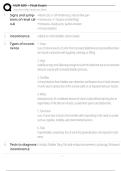
1. Signs and symp- • Renal Colic (+ CVA Tenderness), intense flank pain
toms of renal cal- • Severe pain (+/- Nausea and Vomiting)
culi • Hematuria, cloudy urine, painful urination
• Urinary retention
2. incontinence inability to control bladder and/or bowels
3. Types of inconti- 1. Stress
nence Loss of small amounts of urine from increased abdominal pressure without blad-
der muscle contraction with laughing, sneezing, or lifting.
2. Urge
Inability to stop urine flow long enough to reach the bathroom due to an overactive
detrusor muscle with increased bladder pressure,
3. Overflow
Urinary retention from bladder over-distention and frequent loss of small amounts
of urine due to obstruction of the urinary outlet or an impaired detrusor muscle.
4. Reflex
Involuntary loss of a moderate amount of urine usually without warning due to
hyperrflexia, of the detrusor muscle, usually from spinal cord dysfunction.
5. Functional
Loss of urine due to factors that interfere with responding to the need to urinate
such as cognitive, mobility, and environmental barriers.
6. Total
Unpredictable, involuntary loss of urine that generally does not respond to treat-
ment,
4. Tests to diagnose Urinalysis, Bladder Diary, Post void residual measurement, cystoscopy, Ultrasound
incontinence
, NUR 600 - Final Exam
Study online at https://quizlet.com/_dtqohu
5. Treatment for in- -bladder training
continence -scheduled toileting
-fluid/diet management
-pelvic muscle exercises (stress and urge)
-pharmacological interventions
-surgery
6. Patient education Urinate only every 3 to 6 hours to "re-train" your bladder.
for incontinence Know that consumption of diuretics, antidepressants, antihistamines, and
cough-cold preparations exacerbates urinary incontinence.
Eat fruits, vegetables, and whole grains daily to prevent constipation.
Stop smoking (nicotine irritates the bladder).
7. Patient education Limit the amount of salt (sodium) in your diet. Eat a balanced diet that is not
for urolethiasis too high in protein. Limit foods that are high in a substance called oxalate, which
can cause kidney stones. These foods include dark green vegetables, rhubarb,
chocolate, wheat bran, nuts, cranberries, and beans.
8. Treatment for TURP (transurethral resection of the prostate)
BPH terazosin (Hytrin), doxazosin (Cardura), tamsulosin (Flomax), alfuzosin (Uroxatral),
and silodosin (Rapaflo).
Prostatic Urethral Lift or Water Vapor Therapy
9. Symptoms of being able to get an erection sometimes, but not every time you want to have sex.
erectile dysfunc- being able to get an erection, but not having it last long enough for sex.
tion being unable to get an erection at any time.
10. Treatment of Sildenafil, prostoglandins, intraurethral prostoglandins, vacuum-assisted devices,
erectile dysfunc- implants
tion
11. Psychological causes, such as performance anxiety, a strained relationship, lack
of sexual arousability and mental health disorders, including depression and
Study online at https://quizlet.com/_dtqohu
1. Signs and symp- • Renal Colic (+ CVA Tenderness), intense flank pain
toms of renal cal- • Severe pain (+/- Nausea and Vomiting)
culi • Hematuria, cloudy urine, painful urination
• Urinary retention
2. incontinence inability to control bladder and/or bowels
3. Types of inconti- 1. Stress
nence Loss of small amounts of urine from increased abdominal pressure without blad-
der muscle contraction with laughing, sneezing, or lifting.
2. Urge
Inability to stop urine flow long enough to reach the bathroom due to an overactive
detrusor muscle with increased bladder pressure,
3. Overflow
Urinary retention from bladder over-distention and frequent loss of small amounts
of urine due to obstruction of the urinary outlet or an impaired detrusor muscle.
4. Reflex
Involuntary loss of a moderate amount of urine usually without warning due to
hyperrflexia, of the detrusor muscle, usually from spinal cord dysfunction.
5. Functional
Loss of urine due to factors that interfere with responding to the need to urinate
such as cognitive, mobility, and environmental barriers.
6. Total
Unpredictable, involuntary loss of urine that generally does not respond to treat-
ment,
4. Tests to diagnose Urinalysis, Bladder Diary, Post void residual measurement, cystoscopy, Ultrasound
incontinence
, NUR 600 - Final Exam
Study online at https://quizlet.com/_dtqohu
5. Treatment for in- -bladder training
continence -scheduled toileting
-fluid/diet management
-pelvic muscle exercises (stress and urge)
-pharmacological interventions
-surgery
6. Patient education Urinate only every 3 to 6 hours to "re-train" your bladder.
for incontinence Know that consumption of diuretics, antidepressants, antihistamines, and
cough-cold preparations exacerbates urinary incontinence.
Eat fruits, vegetables, and whole grains daily to prevent constipation.
Stop smoking (nicotine irritates the bladder).
7. Patient education Limit the amount of salt (sodium) in your diet. Eat a balanced diet that is not
for urolethiasis too high in protein. Limit foods that are high in a substance called oxalate, which
can cause kidney stones. These foods include dark green vegetables, rhubarb,
chocolate, wheat bran, nuts, cranberries, and beans.
8. Treatment for TURP (transurethral resection of the prostate)
BPH terazosin (Hytrin), doxazosin (Cardura), tamsulosin (Flomax), alfuzosin (Uroxatral),
and silodosin (Rapaflo).
Prostatic Urethral Lift or Water Vapor Therapy
9. Symptoms of being able to get an erection sometimes, but not every time you want to have sex.
erectile dysfunc- being able to get an erection, but not having it last long enough for sex.
tion being unable to get an erection at any time.
10. Treatment of Sildenafil, prostoglandins, intraurethral prostoglandins, vacuum-assisted devices,
erectile dysfunc- implants
tion
11. Psychological causes, such as performance anxiety, a strained relationship, lack
of sexual arousability and mental health disorders, including depression and