1|Page
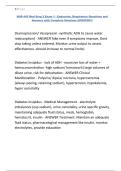
NUR 445 Med Surg 3 Exam 1 - Endocrine, Respiratory Questions and
Answers with Complete Solutions UPDATED!!!
Desmopression/ Vasopressin -synthetic ADH to cause water
reabsorption) - ANSWER Take even if symptoms improve, Dont
stop taking unless ordered, Monitor urine output to assess
effectiveness -should increase to normal limits)
Diabetes Insipidus - lack of ADH - excessive loss of water =
hemoconcentration -high sodium/ hematocrit) large volumes of
dilute urine, risk for dehydration - ANSWER Clinical
Manifestation - Polyuria/ dipsia/ nocturia, hypernatremia
(always peeing, retaining sodium), hypertension, hypokalemia,
hyper osmolality
Diabetes Insipidus - Medical Management - electrolyte
imbalances (esp sodium), urine osmolality, urine specific gravity,
maintaining adequate fluid status, meds, hemoglobin,
hematocrit, insulin - ANSWER Treatment: Maintain an adequate
fluid status, pharmacological management like insulin, monitor
electrolytes, provide education
, 2|Page
Diabetes Insipidus - Complications: - ANSWER Diabetic
Ketoacidosis (DKA), Hyperosmolar hyperglycemia state (HHS)
Diabetes Insipidus - Nursing considerations - Fluid volume
deficit, ↓ blood pressure = hypotension), Intake and output
=increased Urinary Output), Educate to drink and DO NOT limit
fluid intake. Monitor Serum sodium (hypernatremia) and serum
osmolality ( ↑SO) Patient should watch for dry mouth,
dizziness, and dehydration. - ANSWER Educate to take
desmopressin or vasopressin as ordered. Educate to report
swelling or persistent cough when discharged. Educate to go to
the ER if gaining ≥ 2 lbs a day. Report weight loss of ≥ 2 lbs in a
24-hour period
Syndrome of Inappropriate ADH (SIADH) - In SIADH, excess ADH
causes water retention, diluting the blood and leading to
hyponatremia (low sodium). Thick sticky pee. → Low sodium
from fluid retention in SIADH can cause neurologic symptoms
like confusion and lethargy. - ANSWER → SIADH leads to
dilution of the blood, causing low serum osmolality due to
excess water retention.→ In SIADH, the kidneys reabsorb water
under the influence of ADH, leading to concentrated urine and
a high specific gravity. -Excess secretion of the antidiuretic
hormone (ADH) that causes hyperglycemic hyperosmolar state.
NUR 445 Med Surg 3 Exam 1 - Endocrine, Respiratory Questions and
Answers with Complete Solutions UPDATED!!!
Desmopression/ Vasopressin -synthetic ADH to cause water
reabsorption) - ANSWER Take even if symptoms improve, Dont
stop taking unless ordered, Monitor urine output to assess
effectiveness -should increase to normal limits)
Diabetes Insipidus - lack of ADH - excessive loss of water =
hemoconcentration -high sodium/ hematocrit) large volumes of
dilute urine, risk for dehydration - ANSWER Clinical
Manifestation - Polyuria/ dipsia/ nocturia, hypernatremia
(always peeing, retaining sodium), hypertension, hypokalemia,
hyper osmolality
Diabetes Insipidus - Medical Management - electrolyte
imbalances (esp sodium), urine osmolality, urine specific gravity,
maintaining adequate fluid status, meds, hemoglobin,
hematocrit, insulin - ANSWER Treatment: Maintain an adequate
fluid status, pharmacological management like insulin, monitor
electrolytes, provide education
, 2|Page
Diabetes Insipidus - Complications: - ANSWER Diabetic
Ketoacidosis (DKA), Hyperosmolar hyperglycemia state (HHS)
Diabetes Insipidus - Nursing considerations - Fluid volume
deficit, ↓ blood pressure = hypotension), Intake and output
=increased Urinary Output), Educate to drink and DO NOT limit
fluid intake. Monitor Serum sodium (hypernatremia) and serum
osmolality ( ↑SO) Patient should watch for dry mouth,
dizziness, and dehydration. - ANSWER Educate to take
desmopressin or vasopressin as ordered. Educate to report
swelling or persistent cough when discharged. Educate to go to
the ER if gaining ≥ 2 lbs a day. Report weight loss of ≥ 2 lbs in a
24-hour period
Syndrome of Inappropriate ADH (SIADH) - In SIADH, excess ADH
causes water retention, diluting the blood and leading to
hyponatremia (low sodium). Thick sticky pee. → Low sodium
from fluid retention in SIADH can cause neurologic symptoms
like confusion and lethargy. - ANSWER → SIADH leads to
dilution of the blood, causing low serum osmolality due to
excess water retention.→ In SIADH, the kidneys reabsorb water
under the influence of ADH, leading to concentrated urine and
a high specific gravity. -Excess secretion of the antidiuretic
hormone (ADH) that causes hyperglycemic hyperosmolar state.